

A pausar el contacto íntimo sin perder la conexión, di lo que necesitas en un breve, frase clara y detener el movimiento primero. puedes pedir agua, un cambio de posición, limpieza, un control de comodidad, tranquilo, o una parada completa. El siguiente paso debería permanecer abierto: continuar, cambiar de rumbo, reconectarse sin actividad sexual, o finalizar la actividad.
Una pausa no es una promesa de reiniciar, y no necesita una explicación dramática. La conexión surge de cómo ambas personas manejan la nueva información, sin culpa., adivinación, negociación, o presión. Si quieres antecedentes neutrales sobre la actividad en sí., esta guía para Contexto básico sobre el juego con los dedos. está separado del enfoque de comunicación aquí.
Cómo pausar el contacto íntimo sin perder la conexión
La pausa más simple tiene tres partes.:
- Di la pausa: “¿Podemos hacer una pausa por un minuto??"
- detener el movimiento: no sigas tocando mientras esperas una explicación.
- Deja el siguiente paso abierto: “Quiero un poco de agua, luego lo comprobaré conmigo mismo”.
El tercer paso puede ser diferente cada vez.. Quizás ya sepas que quieres parar, o quizás necesites un minuto antes de decidir. Ambas son respuestas completas.. Una pareja cariñosa no necesita tener certeza sobre una fecha límite.

Una pausa es información., no rechazo
La gente hace una pausa por razones comunes. Alguien puede tener sed, necesito el baño, quiero mover una almohada, notar una muñeca acalambrada, sentirse distraído, quiero limpiar, o darse cuenta de que su comodidad ha cambiado. Ninguna de esas razones define automáticamente lo que sienten por su pareja o la relación..
una solicitud para pausar el contacto íntimo También puede ocurrir antes de que la persona pueda nombrar una razón.. Esa incertidumbre importa. Guía de consentimiento de RAINN describe el consentimiento como claro, voluntario, y en curso, y dice que se puede retirar durante una actividad. Cuando las palabras o el comportamiento se vuelven inciertos, La respuesta útil es detenerse y comprobarlo, no continuar mientras se intenta interpretar el momento..
Intenta no traducir “pausa” por “hiciste algo mal” o “no te quiero”. En su lugar, pregunte sobre la opción actual.. Si ocurrió un problema, la pausa crea espacio para nombrarlo sin tener que gestionar la decepción de la otra persona al mismo tiempo.
Utilice un reinicio de tres partes
Una vez que el movimiento se ha detenido, un breve reinicio puede evitar que la pausa se convierta en una entrevista:
- Presente: “¿Cómo te sientes ahora??"
- Preferencia: “¿Te gustaría tener espacio?, ayuda con algo practico, o empresa?"
- Elección: “¿Quieres decidir qué sigue ahora?, o más tarde?"
Haga una pregunta a la vez y permita el silencio.. No apilar varias alternativas tan rápido que la otra persona tenga que elegir la menos incómoda.. Si dicen "no lo sé","Trata eso como una razón para seguir haciendo pausas..
Palabras que aclaran una pausa.
El lenguaje de pausa funciona mejor cuando es directo y no oculta la solicitud dentro de una disculpa.. Las opciones útiles incluyen:
- "Pausa, por favor. Necesito un minuto”.
- “¿Podemos parar mientras cambio de posición??"
- "Quiero un poco de agua antes de decidir qué quiero a continuación".
- “Esto no me hace sentir cómodo ahora, así que quiero parar”.
- “Todavía quiero estar cerca, pero no quiero más contacto en este momento”.
Puedes dar una razón si quieres., pero no tienes que justificar la pausa. Guía de comunicación sexual de Planned Parenthood enfatiza hablar de me gusta, no le gusta, y límites porque las preferencias difieren y pueden cambiar. Para una conversación más amplia fuera del momento, Callimis también tiene una guía para hablando abiertamente sobre la intimidad.
Responde bien cuando tu pareja te pida una pausa
Tu primera respuesta marca la pauta. "Por supuesto,"Podemos parar,” o “Gracias por decírmelo” reconoce la solicitud sin que la persona te consuele. Deténgase antes de hacer preguntas de seguimiento. Si el contacto necesita terminar gradualmente para lograr comodidad física, dejar que la persona que solicitó la pausa guíe ese movimiento.
Evite ponerse de mal humor, preguntando repetidas veces, broma que minimiza la solicitud, o "Pero pensé que te gustaba esto". El interés pasado no decide el momento presente. Guía de relaciones saludables de ACOG explica que las personas pueden establecer límites sexuales y no se les debe presionar para que tengan actividad sexual. Respetar la pausa es la prioridad inmediata; Hablar de sentimientos puede esperar hasta que ambas personas quieran esa conversación..
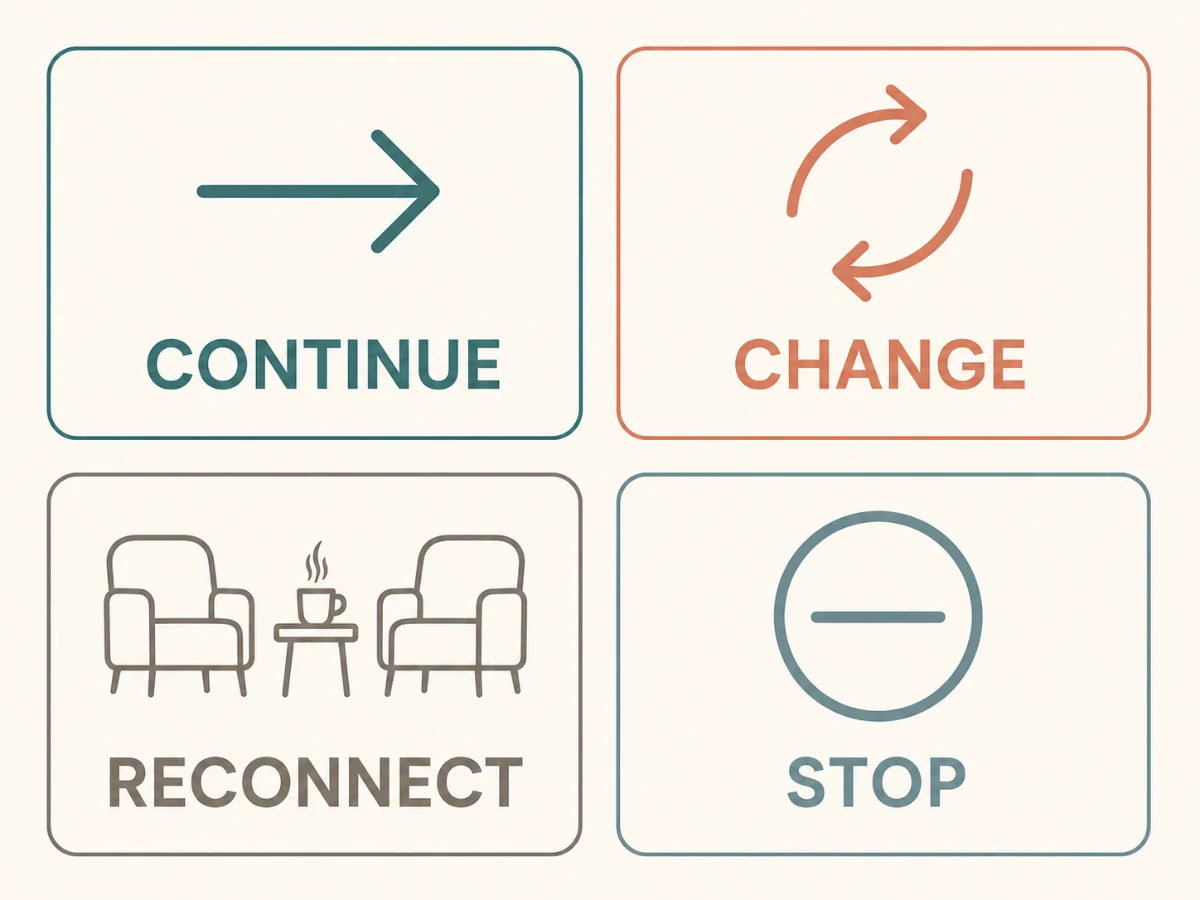
Mantenga cada paso siguiente realmente disponible
Un check-in no es neutral si "continuar" es la única respuesta que será bienvenida. Ofrecer opciones con el mismo peso:
- Continuar: sólo después de una clara, actual, elección sin presión sobre el siguiente paso específico.
- Cambiar: ajustar la posición, paso, configuración, o actividad si todos quieren el cambio.
- Reconectar: hablar, compartir agua, siéntate cerca, o elegir otro tipo de cercanía sin tratarla como una ruta de regreso a la actividad sexual.
- Detener: terminar la actividad sin castigo, negociación, o la obligación de explicar.
Los socios pueden querer cosas diferentes después de la misma pausa. El objetivo no es encontrar un compromiso que mantenga vivo el plan original.. Es elegir sólo una opción que todos aceptan libremente.. El mismo principio se aplica cuando los socios tienen diferentes preferencias de intimidad: ninguna respuesta compartida es mejor que una respuesta que le pide a una persona que cruce un límite.
Haz un práctico reseteo sin crear obligación
La ayuda práctica puede facilitar la pausa: traer agua, mover una almohada, ajustar la luz, ofrecer una toalla, silenciar un teléfono, o darle espacio a la persona. Pregunte antes de ayudar en lugar de asumir que se sentirá solidario.. “¿El agua ayudaría?"deja más opciones que estar junto a alguien con una lista de soluciones.
Mantenga el reinicio separado de la decisión de reanudar. Ponerse cómodo, aceptando una bebida, tomados de la mano, o permanecer en la misma habitación no genera consentimiento para más contacto. Una persona puede apreciar la atención y aun así elegir detenerse por el día..

Cuando no reiniciar
No reiniciar mientras alguien no esté seguro, silencioso, congelado, temeroso, afligido, significativamente deteriorado, o incapaz de tomar una decisión clara. Detenerse si se cruzó un límite, si se está debatiendo una solicitud, o si una persona sigue preguntando después de que la otra se ha negado. Nunca se requiere la continuación inmediata para demostrar la atracción., confianza, perdón, o conexión.
El dolor también cambia la decisión.. No lo presiones ni utilices una actividad diferente para comprobar si el dolor desaparecerá.. Orientación de ACOG sobre relaciones sexuales dolorosas recomienda consultar a un obstetra u otro profesional de la salud si tiene dolor frecuente o intenso. Ese también es un límite conservador aquí.: Detener la actividad y buscar atención individualizada cuando el dolor sea frecuente., severo, o de otro modo relacionado con.
Preguntas frecuentes
¿Necesito explicar por qué quiero hacer una pausa??
No. Una breve explicación puede ayudar si quieres dar una., pero la pausa no depende de persuadir a otra persona de que tu razón es suficiente. "Necesito parar un minuto" es bastante claro..
¿Hacer una pausa arruina el estado de ánimo??
cambia el momento, pero el cambio no es lo mismo que el fracaso. Una pausa respetuosa puede proteger la elección y facilitar la comunicación honesta. La actividad podrá reanudarse, cambiar, o terminar; Ninguno de esos resultados debe ser tratado como una velada arruinada..
¿Qué pasa si una persona quiere continuar??
No continúe la actividad sexual a menos que todos quieran claramente el siguiente paso específico.. La decepción puede ser real sin que sea responsabilidad de la otra persona resolverla mediante más contacto..
¿Podemos planificar una señal de pausa con antelación??
Sí. una palabra, señal de mano, o tocar puede ser útil cuando se discute su significado de antemano. Una señal no reemplaza la atención.: deténgase cuando note incertidumbre incluso si no se ha utilizado la señal planificada.
El resultado final
A pausar el contacto íntimo con conexión intacta, ser claro, detener el movimiento, y mantener cada paso siguiente disponible. Responder a una pausa sin presión., ofrecer atención práctica sólo cuando sea necesario, y no hagas de reiniciar la medida de un buen resultado. La conexión puede parecer continua, cambiando de rumbo, compartiendo tranquilidad, hablando luego, o detenerse respetuosamente.