

Las diferentes preferencias de higiene en una relación son manejables cuando ambos miembros pueden indicar qué les ayuda a sentirse cómodos., escuchar a la otra persona sin vergüenza, y elegir sólo opciones que ambos acepten libremente. El objetivo no es demostrar qué rutina es la correcta.. Es encontrar un acuerdo que respete a ambas personas y hacer una pausa cuando ningún acuerdo se siente bien..
Una discrepancia puede ser sorprendentemente personal. Una persona puede querer una rutina predecible antes de la intimidad., mientras que otro puede preferir la espontaneidad o menos pasos. Esa diferencia no significa automáticamente que cualquiera de las personas sea descuidada., demandante, o rechazar al otro. Pensamiento en comodidad compartida en torno a la higiene de la intimidad puede ayudar a alejar la conversación de la culpa y acercarla a lo que cada persona necesita.
Por qué las preferencias de higiene de la intimidad pueden diferir
Las personas construyen rutinas personales en torno al hábito., comodidad sensorial, privacidad, cultura, necesidades de acceso, tiempo disponible, y experiencias pasadas. Algunos se sienten más relajados después de seguir una secuencia específica.. Otros se sienten incómodos cuando la preparación se vuelve demasiado estructurada.. Una persona también puede querer rutinas diferentes en días diferentes..
Es útil tratar estas posiciones como un espectro en lugar de una competencia entre lo “limpio” y lo “inmundo”. Una preferencia describe lo que ayuda a alguien a sentirse preparado.. No es prueba del carácter de otra persona., salud, o intenciones.
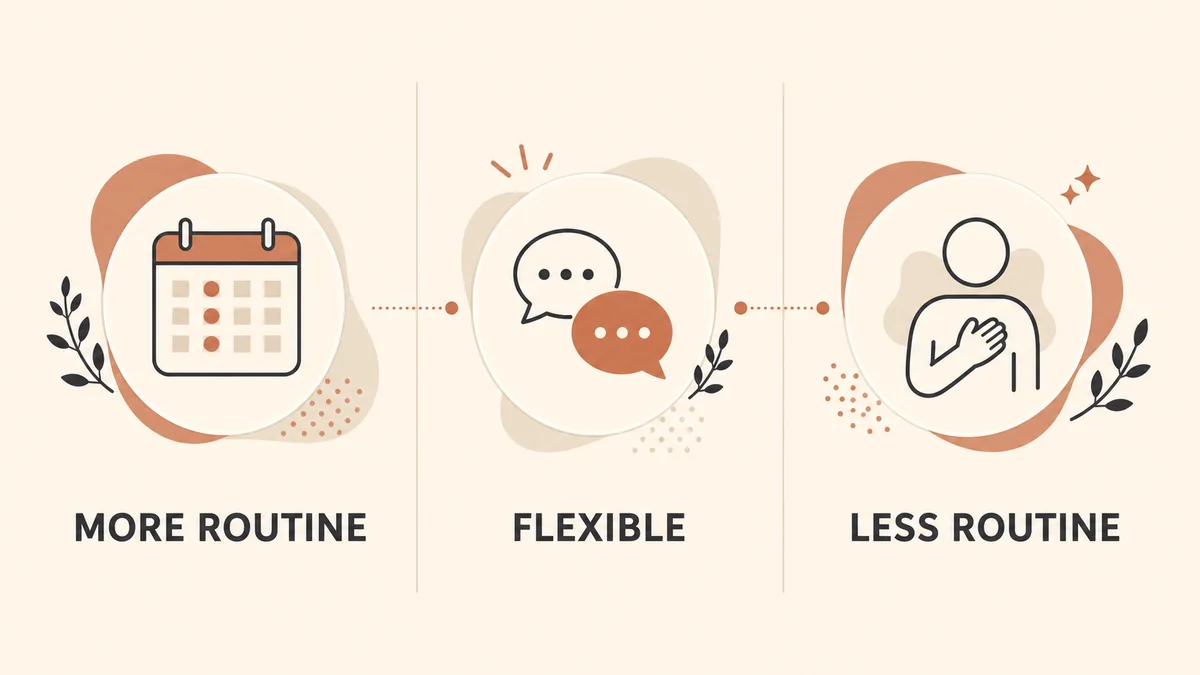
Cómo discutir diferentes preferencias de higiene en una relación
Tener la conversación en un momento neutral., no mientras cualquiera de las personas esté esperando que comience la intimidad. Reducir lo que está en juego inmediatamente hace que sea más fácil ser curioso y honesto. Guía de comunicación sexual de Planned Parenthood señala que los socios se benefician al hablar sobre los me gusta, no le gusta, y límites, y que las preferencias pueden cambiar con el tiempo.
1. Nombra tu necesidad sin calificar a tu pareja
Utilice una declaración en primera persona: “Me siento más relajado cuando tengo tiempo para lavarme primero,”o “Me siento desconectado cuando la preparación se convierte en una larga lista de verificación”. Esto explica tu experiencia sin presentar a la otra persona como el problema..
2. Pregunte qué significa la preferencia para ellos.
No asumas que una petición es crítica o que flexibilidad significa indiferencia. Preguntar, “¿Qué parte de esa rutina te ayuda a sentirte preparado??” y escucha la respuesta. La guía existente para comunicar preferencias de higiene ofrece un marco de conversación más general.
3. Separar las preferencias de los límites
Una preferencia puede ser flexible.: “Por lo general me gusta ducharme primero, pero estoy abierto a otro plan”. Una frontera es un límite: "No quiero esta actividad a menos que primero nos lavemos las manos". Nadie tiene que negociar para eliminar un límite. La pregunta útil es si otra opción funciona para ambas personas..
4. Compara opciones y elige juntos
Enumere los posibles ajustes sin tratar ninguna opción como obligatoria. Cada persona puede identificar “sí”," "tal vez,” y “no” opciones. Un acuerdo sólo cuenta cuando ambas personas pueden aceptarlo libremente, sin culpa ni miedo a perder el cariño.
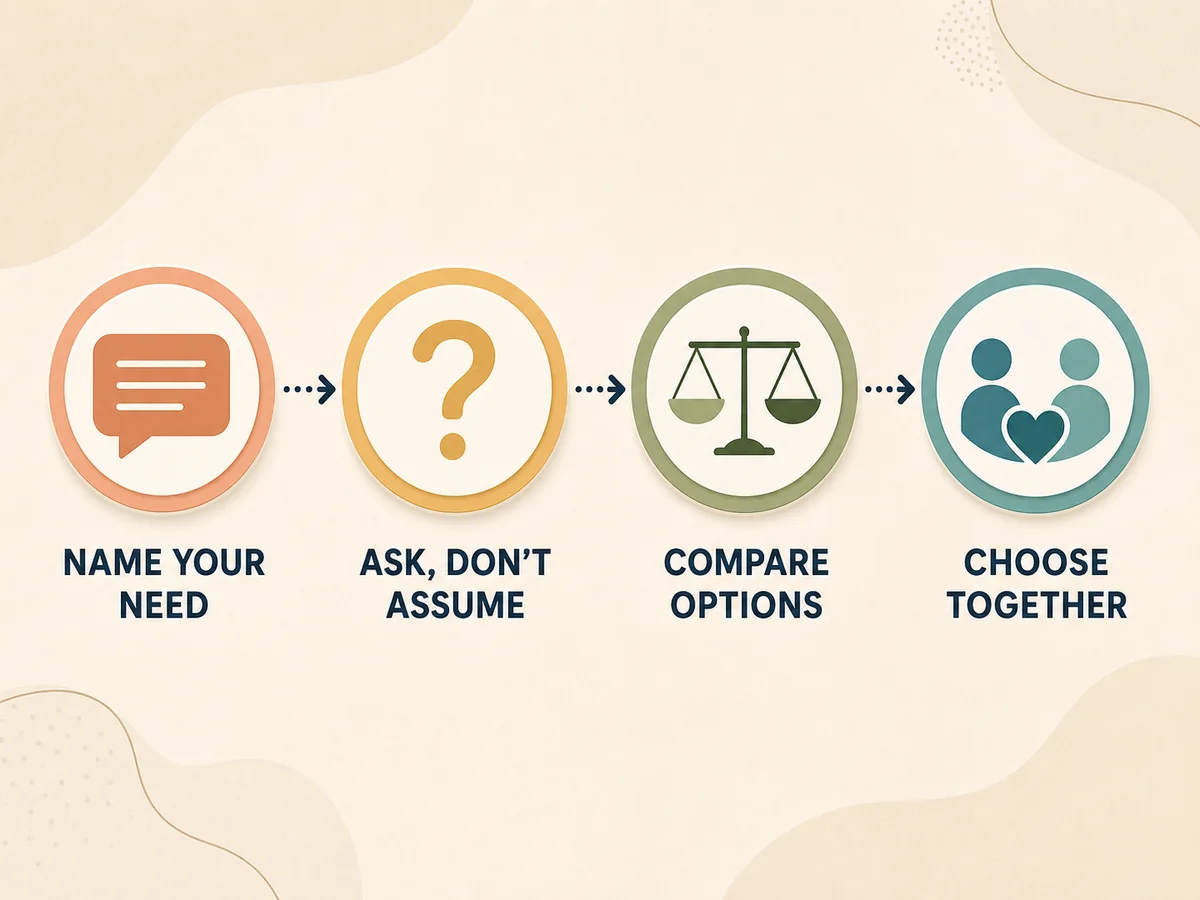
Cree un menú de opciones mutuamente aceptables
Un buen menú de soluciones es más amplio que “mi rutina o la tuya”. Dependiendo de la situación, los socios pueden elegir un horario diferente, acordar un simple paso de preparación, mantenga cerca los suministros seleccionados mutuamente, cambiar a otra actividad, o pausar hasta otro día. La descripción general del sitio de opciones prácticas de higiene de la intimidad puede proporcionar ideas iniciales, pero debería tratarse como un menú y no como un libro de reglas..
- Ajustar el tiempo: Elige un momento en el que cada persona haya completado la rutina que personalmente prefiera..
- Simplificar: acordar el paso de preparación más pequeño que realmente funcione para ambas personas.
- cambiar la actividad: elegir otra forma de intimidad o cercanía que se ajuste a ambos conjuntos de límites.
- Pausa: decidir que hoy no es el momento adecuado, sin castigo ni enfado.

El consentimiento sigue siendo aplicable a los compromisos de higiene
Cuando diferentes preferencias de higiene en una relación afectan la actividad sexual, El consentimiento sigue siendo el estándar decisivo.. Guía de consentimiento de RAINN explica que el consentimiento debe ser claro, voluntario, y en curso, sin presión, manipulación, o miedo. Acordar la semana pasada (o aceptar una actividad) no crea un acuerdo automático hoy.
Esté atento a la presión disfrazada de compromiso: Pregunta repetida después de un no., llamar irracional a un límite, reteniendo afecto, o presentar una opción como la única forma de demostrar amor. Una respuesta respetuosa puede ser sencilla.: “Entiendo que eso no te sirve. Detengámonos o elijamos otra cosa”.
Cuando no hacer concesiones se siente bien
A veces dos límites válidos no se superponen. Eso no crea una obligación para ninguna de las personas a ceder.. Guía de relaciones saludables de Cornell Health Describe el respeto por las necesidades de los demás., deseos, y los límites, y la participación en actividades mutuamente consensuadas, como características comunes de las relaciones saludables.
La respuesta inmediata puede ser saltarse esa actividad.. A más largo plazo, Los socios pueden decidir si el desajuste es ocasional., si otra rutina compartida funciona, o si necesitan el apoyo de un profesional calificado en relaciones o salud sexual.. Si la preocupación involucra síntomas o una posible condición de salud., buscar asesoramiento clínico en lugar de diagnosticar o culpar a la pareja.
Frases útiles para una conversación sin presión
- “Quiero que ambos nos sintamos cómodos. ¿Puedo explicar qué me ayuda a relajarme??"
- “¿Es esta una preferencia que puedes ajustar?, ¿O es un límite para ti??"
- “Esa opción no me sirve, pero estoy abierto a estas dos alternativas”.
- “No tenemos que resolver esto mientras nos sintamos presionados.. Hagamos una pausa”.
- “Gracias por decirme claramente. Lo respetaré”.
Preguntas frecuentes
¿Las parejas necesitan rutinas de higiene idénticas??
No. Los socios pueden tener diferentes rutinas personales y aun así encontrar un plan compartido. Las preguntas importantes son si ambas personas se sienten escuchadas., si la elección respeta los límites de cada persona, y si el acuerdo se da libremente.
¿Puede una preferencia de higiene ser también un límite??
Sí. Si alguien no quiere una actividad íntima específica a menos que se cumpla una condición, ese límite debe ser tratado como un límite. La otra persona puede rechazar la condición., pero de todos modos no podrán exigir la actividad.
¿Qué pasa si mi pareja entiende la solicitud como rechazo??
Tranquilízalos sin retirar tu necesidad.: "Me preocupo por ti, y esto se trata de lo que me ayuda a sentirme cómodo, no de juzgarte a ti”. Sus sentimientos merecen atención., pero no anulan tu límite.
Las diferentes preferencias de higiene en una relación se vuelven más fáciles de navegar cuando ambas personas reemplazan las suposiciones con preguntas claras., Tratar los límites como límites reales., y mantener más de una opción aceptable disponible. Una conversación exitosa no obliga a un acuerdo perfecto; protege el respeto mutuo, incluyendo la libertad de hacer una pausa.