
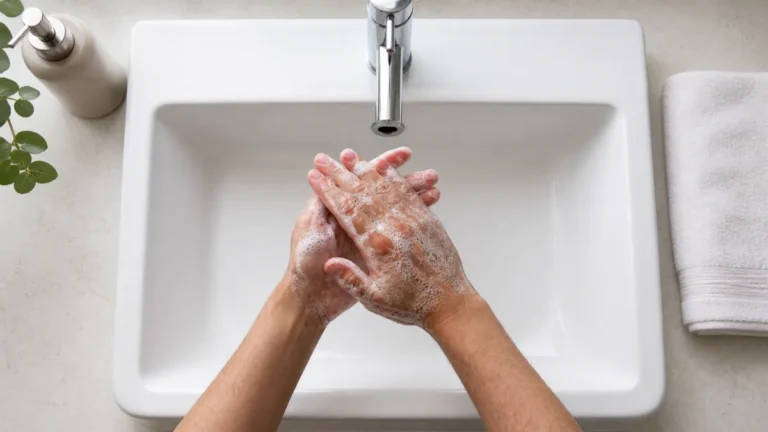
Lavado de manos antes de jugar con los dedos es un simple paso de preparación: use jabón y agua corriente limpia, enjabonar cada superficie de las manos, frotar durante al menos 20 artículos de segunda clase, enjuagar, y secar completamente. Esta rutina elimina gérmenes y residuos cotidianos de las manos., pero no los esteriliza, garantía contra la infección, o reemplazar el consentimiento y la comodidad.
Piense en ello como una higiene de manos comunitaria ordinaria aplicada en un momento sensato.. El Directrices comunitarias de higiene de manos de la OMS cubrir hogares y otros entornos no sanitarios; No son pruebas específicas sobre el juego con los dedos.. Para el sitio más amplio, discusión heredada del tema, ver esto antecedentes más amplios sobre higiene de los dedos, pero no confíe en sus recuentos de gérmenes no obtenidos como cálculo de riesgo personal.
Lo que esta rutina puede y no puede hacer
Jabón, agua, fricción, enjuague, y el secado le brindan una forma repetible de limpiarse las manos.. Esa es una preparación útil porque las manos recogen suciedad., aceites, quimicos, y microbios a través del contacto diario ordinario. No es necesario decidir que alguien está “sucio” para preferir una nueva rutina de lavado de manos antes que un contacto íntimo..
La limitación importa tanto. Unas manos que parecen limpias no son manos esterilizadas. El lavado no puede prometer que el juego con los dedos estará libre de irritación., infección, transmisión de ITS, u otros problemas de salud. Tampoco puede hacer que los bordes ásperos de las uñas sean cómodos ni convertir un “tal vez” reacio en consentimiento.. Tratar la higiene, comodidad fisica, y permiso como controles separados.
Antes de abrir el grifo
Una buena rutina es más fácil cuando lo básico está listo. Sólo necesitas agua corriente limpia, jabón simple, y una manera limpia de secar las manos. Luego, echa un vistazo rápido a lo que estás aportando al momento..
- Quítese los anillos o pulseras si le impiden limpiar la piel debajo o alrededor de ellos..
- Observe la suciedad visible, grasa, o residuos de producto en las manos y alrededor de las uñas..
- Compruebe si hay un borde áspero en la uña que pueda engancharse, y notar cualquier dolor, sangría, o área abierta en las manos.
- Coloca una toalla limpia, o planea usar un secador de aire, para que luego no busques con las manos mojadas.
Si algo parece o se siente incómodo, hacer una pausa es una opción práctica. Lavarse las manos no es motivo para ignorar una dolorosa división, cutícula rota, o borde afilado.
Una rutina de lavado de manos antes de jugar con los dedos
La rutina central sigue el Los cinco pasos de los CDC para lavarse las manos. El agua puede estar tibia o fría.; no necesita estar caliente. Dele a la espuma suficiente tiempo y atención para llegar a las partes por las que la gente suele pasar rápidamente..
- Húmedo: Moje ambas manos con agua limpia, agua corriente, cerrar el grifo, y aplicar jabón.
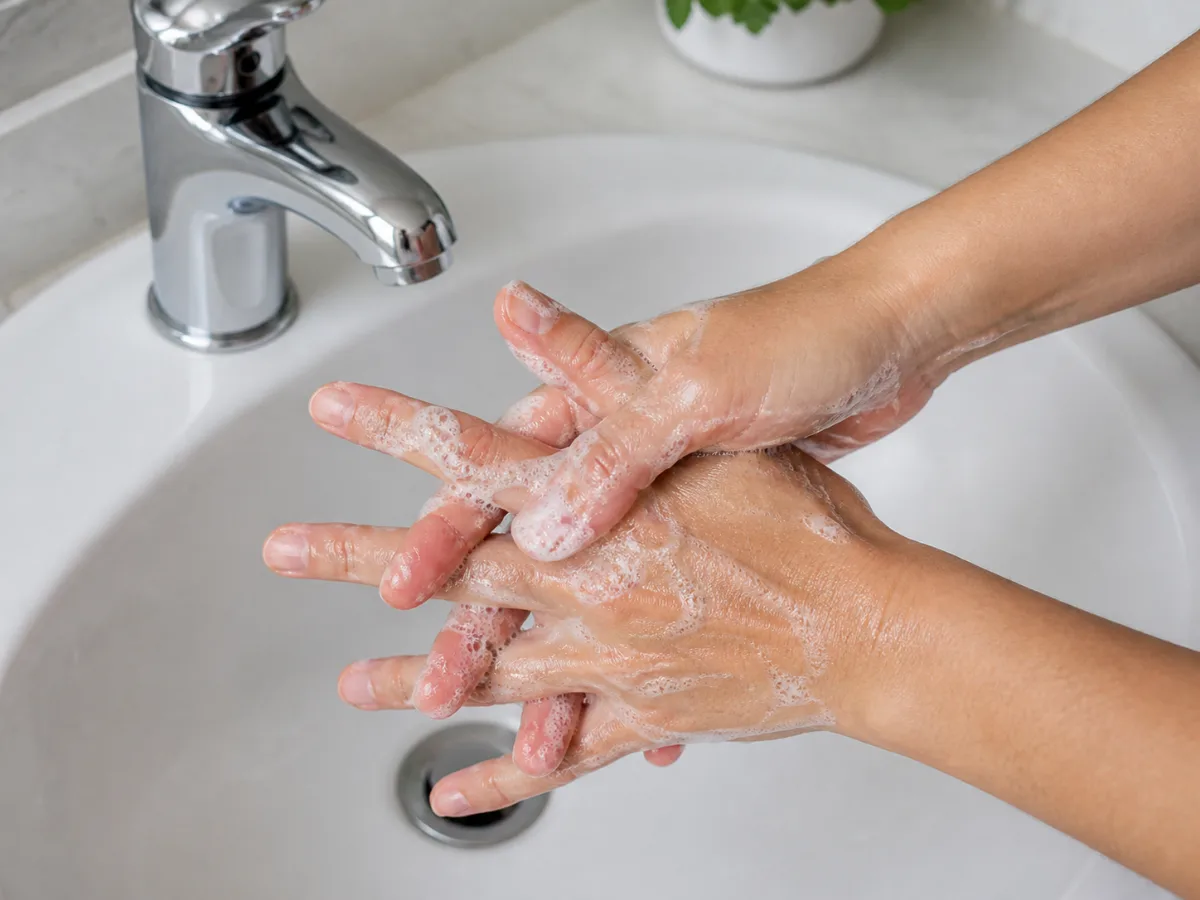
- Espuma: Frotar las manos juntas. Cubrir las palmas, dorso de las manos, espacios entre los dedos, pulgares, yemas de los dedos, y debajo de las uñas.
- Fregar: Siga frotando durante al menos 20 artículos de segunda clase. El objetivo es una cobertura total y fricción., Presión no agresiva que deja la piel dolorida..
- Enjuagar: Enjuague el jabón con agua limpia., agua corriente. Evite utilizar un recipiente compartido con agua estancada como sustituto..
- Seco: Secar completamente con una toalla limpia o un secador de aire..
No necesita un producto especial o con mucha fragancia para este proceso.. Una rutina completa con agua y jabón común es la parte útil.. Si un jabón te causa irritación, deja de usarlo y elige un producto que tu piel tolere.
Después del lavado: Seco, Entonces mantén las manos listas
El secado completo es parte de la rutina., no es un toque final opcional. Utilice una toalla limpia en lugar de una que esté visiblemente sucia o húmeda por el uso repetido.. Si te preocupa volver a tocar el grifo o la manija del baño, use una toalla de papel limpia, tu codo, u otro método manos libres cuando sea práctico.
No hay necesidad de preocuparse por cada superficie.. Utilice una regla de reinicio simple: lávate de nuevo si usas el baño, manejar basura, tener suciedad o grasa visible en las manos, o hacer algo más que claramente deshaga la preparación. El propósito es una rutina viable., No es una afirmación de que puedas mantener una zona perfectamente libre de gérmenes..
Cuando el desinfectante de manos es la alternativa
El agua y el jabón son la primera opción para esta rutina.. Cuando no están disponibles, un desinfectante para manos a base de alcohol puede ser una alternativa temporal. Sigue la etiqueta del producto, cubrir todas las superficies de las manos, y frotar hasta que las manos estén secas. El Consejos de seguridad de los desinfectantes para manos de la FDA dice que no se debe confiar en el desinfectante cuando las manos están visiblemente sucias o grasosas; lavar con agua y jabón en su lugar.
No trate el desinfectante como un atajo después de un lavado apresurado, y no asuma que más producto es automáticamente mejor. Úselo solo como está etiquetado, déjalo secar completamente, y lávese normalmente cuando recupere el acceso al jabón y al agua corriente limpia..
Agregue un control de comodidad para uñas y piel
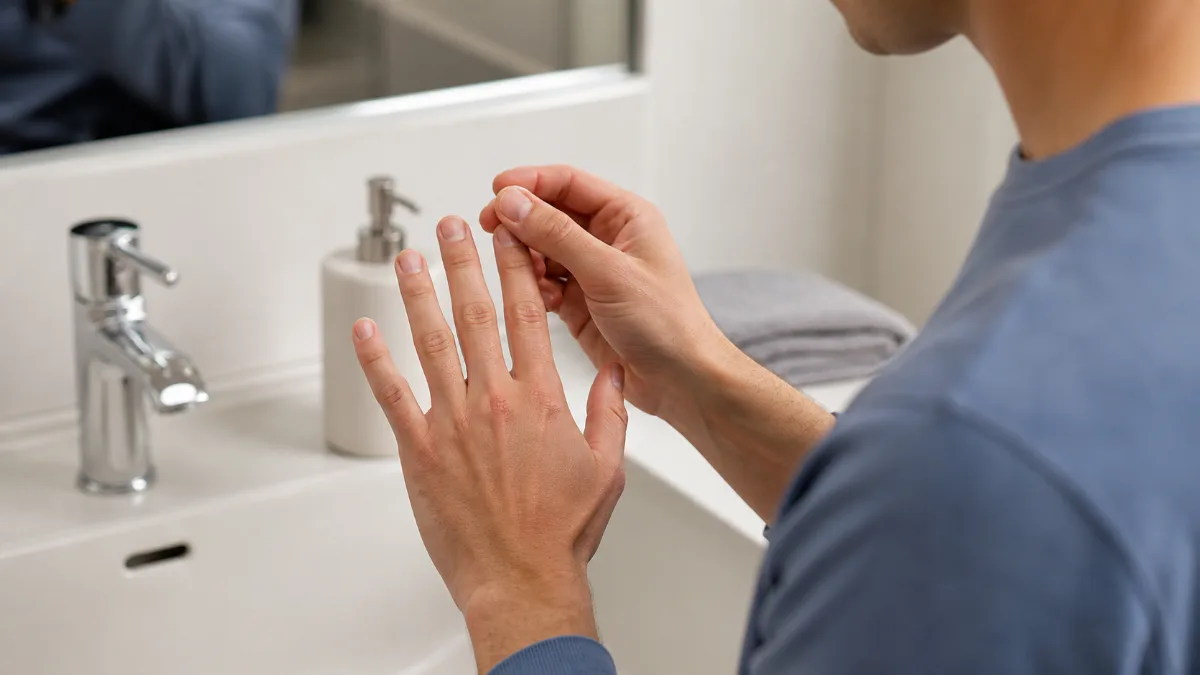
El lavado de manos limpia; no suaviza una uña enganchada. Pase la yema de un dedo suavemente a lo largo del borde de cada uña y haga una pausa si un borde se engancha o se siente afilado.. La Academia Americana de Dermatología Orientación del dermatólogo sobre cómo suavizar los bordes ásperos de las uñas. recomienda una lima de uñas o una lima de uñas para los bordes irregulares y aconseja dejar las cutículas en paz.
No es necesario imponer una longitud de uña universal.. Forma, mejoras, condición de la piel, y la comodidad personal varían. Si recientemente te hicieron un trabajo de uñas, el separado Juego con los dedos después de una lista de verificación de manicura. cubre polaco, decoraciones, aspereza, y razones para hacer una pausa con más detalle.
Hazlo mutuo, No es una inspección
Una rutina compartida generalmente se siente mejor que separar a una sola persona.. Intentar: “Me siento más relajado cuando ambos nos lavamos las manos primero.. ¿Quieres hacer eso juntos??“La otra persona puede estar de acuerdo, pregunta por una opción diferente, o rechazar la actividad. El acuerdo sobre el lavado de manos no es un consentimiento automático para lo que venga después.
Si usted y su pareja tienen diferentes preferencias de higiene de la intimidad, centrarse en lo que cada persona necesita para sentirse cómoda en lugar de demostrar quién es la rutina correcta. Un plan viable podría ser lavarse juntos, haciendo una pausa, elegir una actividad diferente, o parar por el día. La presión no es una solución higiénica.

Preguntas frecuentes
¿Necesito jabón antibacteriano??
No se requiere ningún jabón especial para los pasos comunitarios de lavado de manos de los CDC. jabón simple, agua corriente limpia, cobertura total de espuma, al menos 20 segundos de fregado, enjuague minucioso, y secado completo forman parte de la rutina práctica.
¿Debo lavarme nuevamente inmediatamente antes del tacto??
Utilice tiempos que mantengan la rutina realista. Lavarse poco antes del contacto íntimo tiene sentido; lávate de nuevo si usas el baño, manejar basura, o ensuciar visiblemente las manos entre el lavado y el contacto.
¿El lavado de manos hace que jugar con los dedos esté libre de riesgos??
No. El lavado de manos elimina gérmenes y residuos, pero no esteriliza las manos ni garantiza contra infecciones, irritación, transmisión de ITS, o lesión. Continuar comprobando el consentimiento, comodidad, clavos, piel, y cualquier otra precaución relevante para usted.
¿Qué pasa si el lavado o el desinfectante irritan mi piel??
Deje de usar el producto irritante y suspenda el contacto íntimo si le duele la piel., agrietado, sangría, o de alguna otra manera incómodo. Si la irritación es persistente, severo, o preocuparse, Solicite asesoramiento individualizado a un profesional de la salud cualificado..
La conclusión práctica
Lavado de manos antes de jugar con los dedos funciona mejor como un hábito tranquilo de cinco pasos: húmedo, espuma, frotar durante al menos 20 artículos de segunda clase, enjuagar, y seco. Agregue una revisión rápida de uñas y piel, repetir el lavado si las manos se vuelven a ensuciar, y hacer de la rutina una preferencia mutua en lugar de un juicio. Es una preparación útil, nunca una garantía ni un sustituto del consentimiento y la comodidad..