
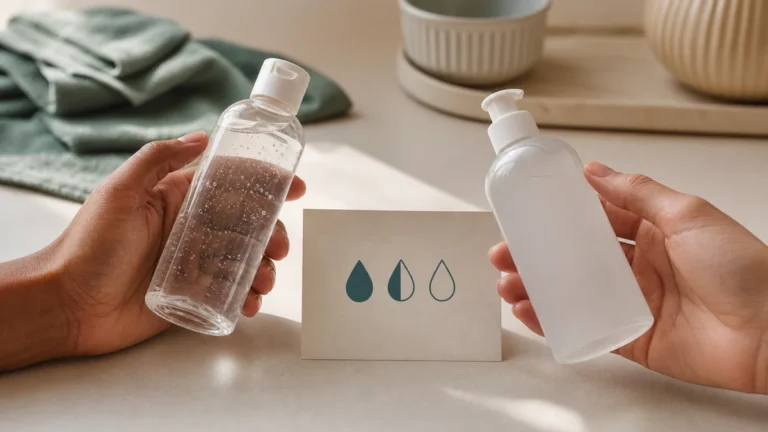
Sí, normalmente puedes usar lubricante con condones para los dedos, pero la elección correcta depende del material de barrera y de la fórmula del lubricante.. Los condones para los dedos Callimis están hechos de látex natural y ya están prelubricados con una base de agua., lubricante sin silicona. Si quieres un deslizamiento extra, el valor predeterminado cauteloso es un lubricante personal cuya etiqueta dice explícitamente que es compatible con el látex natural. Evite los productos a base de aceite, y consulte las instrucciones de ambos productos antes de combinarlos.
Cómo elegir lubricante con condones para los dedos hechos de látex natural
Comience con el material verificado., no con una amplia promesa en la botella de lubricante. El látex natural puede verse afectado por algunos ingredientes., entonces “lubricante personal," "natural,” o “suave” no establece por sí solo compatibilidad. Busque un lenguaje claro sobre el uso de condones o barreras de látex..
El producto Callimis está prelubricado., lo que significa que el lubricante adicional es opcional en lugar de un paso automático. Su lubricante verificado es a base de agua y sin silicona.. Para la configuración básica del producto, ver el Guía para usar un condón para los dedos prelubricado.. Trate las instrucciones o afirmaciones no verificadas en contenido anterior solo como antecedentes; la etiqueta actual del producto debe controlar.
Una guía rápida de compatibilidad de lubricantes
| tipo de lubricante | Orientación general sobre el látex | ¿Qué hacer con este producto? |
|---|---|---|
| A base de agua | El default cauteloso más claro para el látex natural | Elija un lubricante personal etiquetado como compatible con látex natural y siga ambas etiquetas |
| A base de silicona | CDC y Planned Parenthood lo permiten con condones de látex | No asuma la aprobación específica del producto; Confirmar las instrucciones exactas del lubricante y el condón para los dedos. |
| A base de aceite | Una guía autorizada advierte que los aceites pueden debilitar o dañar el látex | Evítelo con este producto de látex natural verificado. |
| Fórmula híbrida o poco clara | El nombre por sí solo no revela todos los ingredientes. | Lea la declaración de compatibilidad completa o pregunte al fabricante antes de usar |
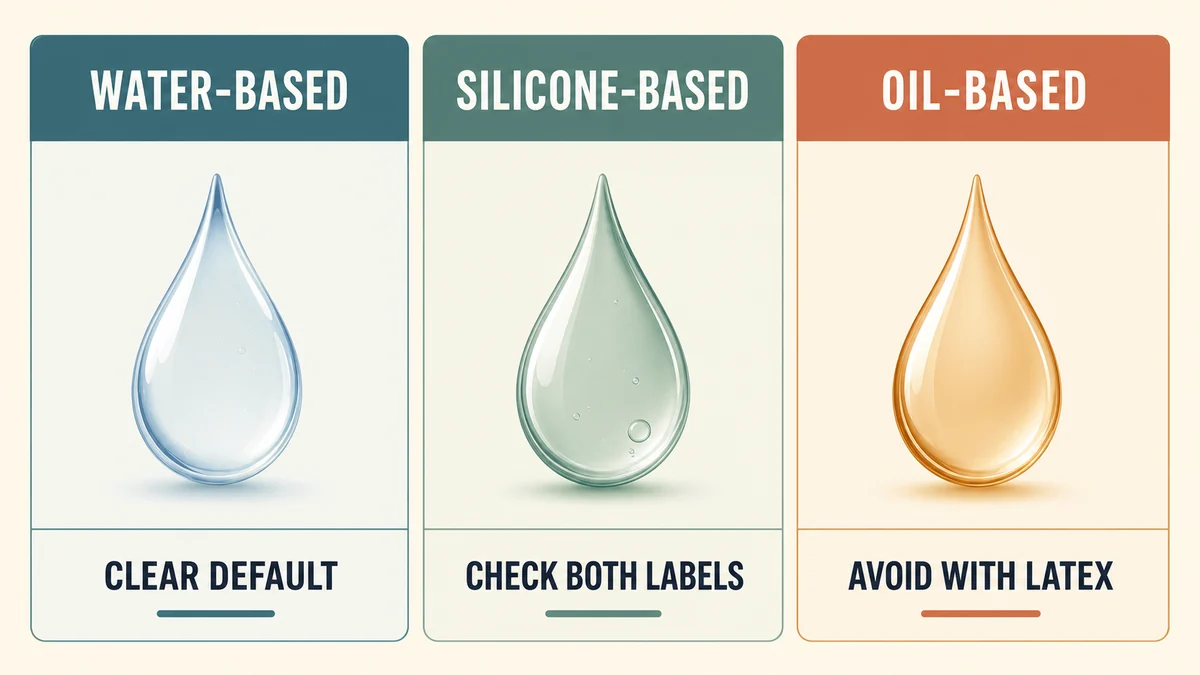
El Guía de etiquetado de condones de látex de caucho natural de la FDA recomienda lubricante a base de agua cuando se necesita lubricante adicional y advierte contra productos a base de aceite como la vaselina, aceite mineral, aceite vegetal, y crema fría. Ese documento cubre los condones masculinos de látex., no condones para los dedos, por lo tanto, aplicar aquí su advertencia sobre el material es una inferencia cautelosa basada en que Callimis está verificado como látex natural, no evidencia de revisión o aprobación de la FDA específica del producto..
El Guía de los CDC sobre condones y lubricantes dice que se puede usar lubricante a base de agua o de silicona con condones externos de látex y advierte que el lubricante a base de aceite puede debilitarlos. Instrucciones sobre condones de Planned Parenthood dar consejos similares y nombrar vaselina, loción, aceite de bebe, manteca, y aceites de cocina como ejemplos a evitar con látex. De nuevo, Estas son fuentes generales de condones de látex en lugar de pruebas de este condón de dedo exacto..
Por qué las etiquetas de los productos son más importantes que la base por sí sola
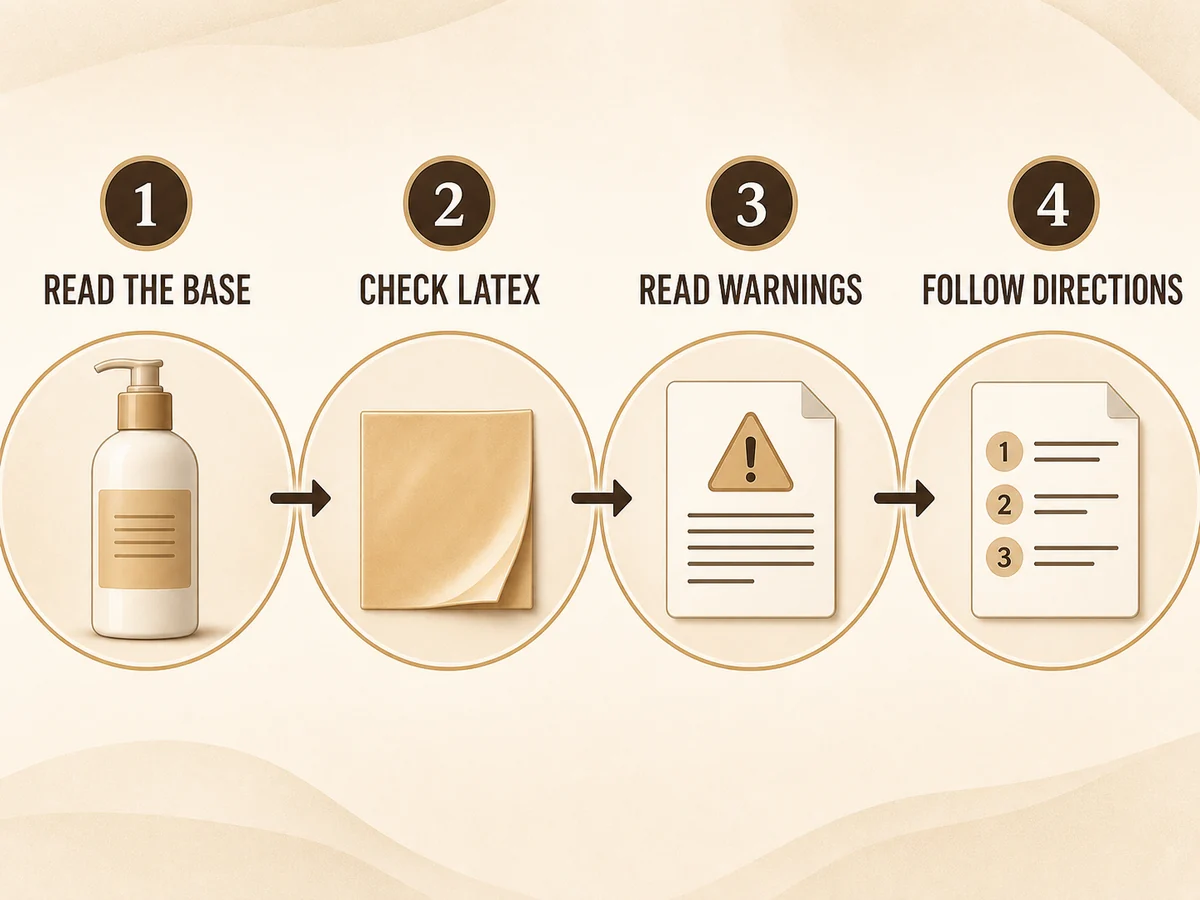
Al emparejar lubricante con condones para los dedos, Haga cuatro preguntas antes de usar.:
- ¿Cuál es la base lubricante?? Identificar a base de agua, a base de silicona, a base de aceite, o híbrido.
- ¿La etiqueta del lubricante menciona el látex natural?? Una declaración de compatibilidad directa es más útil que una afirmación general sobre el estilo de vida..
- ¿Alguna de las etiquetas contiene una advertencia?? Siga las instrucciones más estrictas cuando se utilicen dos productos juntos..
- ¿Están claras las instrucciones?? si la cantidad, colocación, o la compatibilidad del material no está clara, no adivines; pregunta al fabricante.
Este enfoque de dar prioridad a la etiqueta también evita dos errores comunes. Primero, Sin silicona describe el lubricante que ya se encuentra en el producto Callimis.; no prueba que todos los lubricantes a base de silicona sean incompatibles. Segundo, una fórmula a base de agua no es automáticamente compatible simplemente por su base. El lubricante terminado aún necesita instrucciones claras para su uso con látex natural..
Lo que una etiqueta de compatibilidad puede (y no puede) decirle
Una declaración de compatibilidad útil identifica un material, como el látex natural, en lugar de confiar únicamente en frases amplias como "para uso íntimo". Eso te da un detalle específico para comparar con la barrera.. La base lubricante sigue siendo útil., pero es sólo la primera pregunta de selección.
Una etiqueta no puede convertir una orientación general en una garantía. Tampoco puede confirmar cómo se almacenó un producto., si se ha mezclado otra fórmula, o si a un individuo le gustará la sensación. Mantenga la decisión limitada: confirmar la compatibilidad del material, sigue las instrucciones, y evite hacer suposiciones médicas o de rendimiento de la categoría de lubricantes.
Si un paquete actual difiere de un artículo anterior o de una guía web general, Utilice las instrucciones actuales del paquete y comuníquese con el fabricante para obtener aclaraciones.. No trate una marca conocida, una descripción “natural”, o un lugar en el pasillo de cuidado personal como evidencia de que la fórmula pertenece al látex.
Una comprobación práctica antes del uso
- Lea el paquete del condón para los dedos y la etiqueta del lubricante antes del momento íntimo..
- Confirme que la barrera sea látex natural y que el lubricante permita explícitamente su uso con látex..
- Recuerda que un producto prelubricado puede que ya te aporte la cantidad que prefieras; El lubricante adicional es una elección personal., no es un requisito.
- Si alguna de las etiquetas no está clara o los productos dan instrucciones contradictorias, no los combine hasta que el fabricante confirme la compatibilidad.
La preparación también incluye mantener los envoltorios protegidos y leerlos mientras aún son fáciles de inspeccionar.. La guía del sitio para almacenamiento adecuado de condones para los dedos cubre ese paso separado. Si su pregunta es principalmente sobre ajuste o sensación más que sobre fórmulas, revisar el Factores que afectan la comodidad del condón en el dedo. sin tratar el lubricante como garantía.
Errores de compatibilidad que se deben evitar
- Usar un sustituto doméstico. Aceites, lociones, y los productos a base de petróleo pueden parecer resbaladizos, pero una guía autorizada advierte contra su uso con condones de látex.
- Leyendo solo la etiqueta frontal. La base y la descripción de marketing pueden estar en el frente., mientras que las advertencias e instrucciones materiales aparecen en otros lugares.
- Asumir que “sin silicona” es una regla universal. Es una característica verificada del lubricante que ya se encuentra en Callimis., no hay pruebas de cada fórmula agregada.
- Tratar el lubricante adicional como una promesa de rendimiento. Preferencia, adaptar, instrucciones, y la compatibilidad siguen siendo cuestiones separadas.
Preguntas comunes
¿Los condones para los dedos prelubricados necesitan más lubricante??
No necesariamente. Los condones de dedo Callimis ya utilizan una base de agua., lubricante sin silicona. Si quieres más es una cuestión de preferencia.; Aún es necesario verificar la compatibilidad antes de agregar algo..
¿Puedo usar vaselina?, aceite de coco, o loción corporal?
No utilice productos domésticos o de cuidado personal a base de aceite con esta barrera de látex natural.. FDA, Centros para el Control y la Prevención de Enfermedades, y las directrices de Planned Parenthood advierten que el aceite puede dañar o debilitar los condones de látex..
¿Es compatible el lubricante a base de silicona??
Los CDC y Planned Parenthood dicen que el lubricante a base de silicona se puede usar con condones de látex, pero los datos del producto Callimis no documentan pruebas específicas del producto con lubricante de silicona agregado.. Revisa ambas etiquetas. Si alguno de los dos guarda silencio, un lubricante personal a base de agua claramente compatible con el látex es el valor predeterminado más cauteloso.
¿El lubricante adicional hace que el condón para los dedos sea más seguro??
Ningún lubricante puede garantizar la seguridad, comodidad, adaptar, o desempeño. Utilice únicamente productos compatibles según las indicaciones., comunicar sobre comodidad, y parar si algo no se siente bien.
La conclusión
Usando lubricante con condones para los dedos puede ser razonable cuando ambas etiquetas respaldan claramente la combinación. Porque Callimis está verificado como látex natural y ya utiliza un lubricante a base de agua., Un lubricante personal a base de agua compatible con el látex es la mejor opción para un mayor deslizamiento.. Evite los productos a base de aceite, no inferir compatibilidad del lenguaje de marketing, y pregunte al fabricante cuando las instrucciones estén incompletas.