

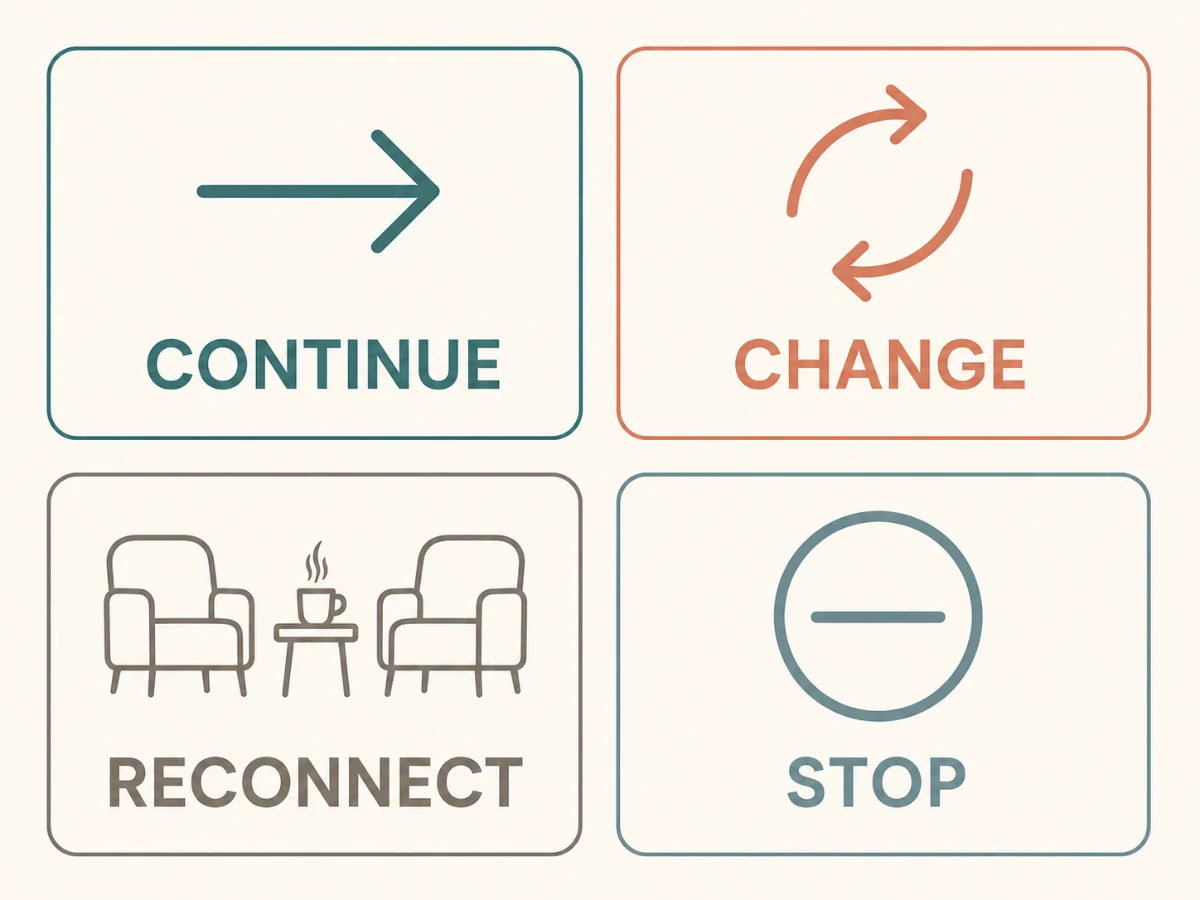
Zu Unterbrechen Sie die intime Berührung ohne die Verbindung zu verlieren, Sagen Sie kurz, was Sie brauchen, Klarer Satz und stoppen Sie zuerst die Bewegung. Sie können um Wasser bitten, ein Positionswechsel, Aufräumen, ein Komfort-Check, ruhig, oder ein völliger Stopp. Der nächste Schritt dürfte offen bleiben: weitermachen, Kurs ändern, Ohne sexuelle Aktivität wieder Kontakt aufnehmen, oder beenden Sie die Aktivität.
Eine Pause ist kein Versprechen für einen Neustart, und es bedarf keiner dramatischen Erklärung. Die Verbindung entsteht dadurch, wie beide Menschen mit den neuen Informationen umgehen – ohne Schuldgefühle, vermuten, verhandeln, oder Druck. Wenn Sie einen neutralen Hintergrund über die Aktivität selbst wünschen, dieser Leitfaden zu Grundlegender Kontext zum Fingerspiel ist hier vom Kommunikationsschwerpunkt getrennt.
So unterbrechen Sie intime Berührungen, ohne die Verbindung zu verlieren
Die einfachste Pause besteht aus drei Teilen:
- Sagen Sie die Pause: „Können wir kurz innehalten??”
- Stoppen Sie die Bewegung: Berühren Sie nicht weiter, während Sie auf eine Erklärung warten.
- Lassen Sie den nächsten Schritt offen: „Ich möchte etwas Wasser, dann melde ich mich bei mir selbst.“
Der dritte Schritt kann jedes Mal anders sein. Möglicherweise wissen Sie bereits, dass Sie aufhören möchten, Oder Sie brauchen vielleicht eine Minute, bevor Sie sich entscheiden. Beides sind vollständige Antworten. Ein fürsorglicher Partner braucht keine Gewissheit über eine Frist.

Eine Pause ist Information, keine Ablehnung
Menschen machen aus gewöhnlichen Gründen eine Pause. Jemand könnte durstig sein, brauche das Badezimmer, Ich möchte ein Kissen bewegen, bemerken Sie ein verkrampftes Handgelenk, sich abgelenkt fühlen, möchte aufräumen, oder merken, dass sich ihr Komfort verändert hat. Keiner dieser Gründe definiert automatisch, wie sie über ihren Partner oder die Beziehung denken.
Eine Bitte an Unterbrechen Sie die intime Berührung kann auch erfolgen, bevor die Person einen Grund nennen kann. Diese Unsicherheit ist wichtig. RAINNs Einwilligungsleitfaden beschreibt die Einwilligung als klar, freiwillig, und fortlaufend, und sagt, dass es während einer Aktivität abgehoben werden kann. Wenn Worte oder Verhalten unsicher werden, Die sinnvolle Reaktion besteht darin, innezuhalten und einzuchecken – und nicht weiterzumachen und zu versuchen, den Moment zu interpretieren.
Versuchen Sie, „Pause“ nicht mit „Du hast etwas falsch gemacht“ oder „Ich will dich nicht“ zu übersetzen. Fragen Sie stattdessen nach der aktuellen Wahl. Wenn ein Problem aufgetreten ist, Die Pause schafft Raum, es zu benennen, ohne gleichzeitig die Enttäuschung des anderen verarbeiten zu müssen.
Verwenden Sie einen dreiteiligen Reset
Sobald die Bewegung gestoppt ist, Ein kurzer Reset kann verhindern, dass aus der Pause ein Interview wird:
- Gegenwärtig: „Wie fühlst du dich gerade??”
- Präferenz: „Möchten Sie Platz?, bei etwas Praktischem helfen, oder Firma?”
- Auswahl: „Möchten Sie jetzt entscheiden, was als nächstes kommt?, oder später?”
Stellen Sie jeweils eine Frage und lassen Sie Ruhe zu. Stapeln Sie nicht so schnell mehrere Alternativen, dass Ihr Gegenüber sich für die am wenigsten unangenehme entscheiden muss. Wenn sie sagen: „Ich weiß es nicht,„Betrachten Sie das als einen Grund, weiter innezuhalten.
Worte, die ein Innehalten deutlich machen
Die Pause-Sprache funktioniert am besten, wenn sie direkt ist und die Bitte nicht in einer Entschuldigung verbirgt. Zu den nützlichen Optionen gehören::
- "Pause, Bitte. Ich brauche eine Minute.“
- „Können wir anhalten, während ich die Position ändere??”
- „Ich möchte etwas Wasser, bevor ich mich entscheide, was ich als nächstes möchte.“
- „Das fühlt sich jetzt nicht angenehm an, also möchte ich aufhören.“
- „Ich möchte immer noch in der Nähe sein, aber ich möchte im Moment keine weiteren Berührungen.“
Wenn Sie möchten, können Sie einen Grund angeben, Aber Sie müssen keine Argumente für die Pause vorbringen. Leitfaden zur sexuellen Kommunikation von Planned Parenthood legt Wert darauf, über Likes zu sprechen, mag nicht, und Grenzen, weil Vorlieben unterschiedlich sind und sich ändern können. Für ein umfassenderes Gespräch außerhalb des Augenblicks, Callimis hat auch einen Leitfaden dazu offen über Intimität sprechen.
Reagieren Sie gut, wenn Ihr Partner Sie um eine Pause bittet
Ihre erste Antwort gibt den Ton an. "Natürlich,„Wir können aufhören,“ oder „Danke, dass Sie es mir erzählt haben“ nimmt die Bitte zur Kenntnis, ohne dass die Person Sie trösten muss. Halten Sie inne, bevor Sie weitere Fragen stellen. Wenn die Berührung aus Gründen des körperlichen Wohlbefindens allmählich enden muss, Lassen Sie die Person, die die Pause angefordert hat, diese Bewegung leiten.
Vermeiden Sie Schmollen, wiederholte Frage, Scherz, der die Anfrage minimiert, oder „Aber ich dachte, dir gefällt das.“ Vergangenes Interesse entscheidet nicht über den gegenwärtigen Moment. ACOGs Leitfaden für gesunde Beziehungen erklärt, dass Menschen sexuelle Grenzen setzen können und nicht zu sexuellen Aktivitäten gedrängt werden sollten. Die Pause zu respektieren hat oberste Priorität; Das Besprechen von Gefühlen kann warten, bis beide Personen das Gespräch wollen.
Halten Sie jeden nächsten Schritt wirklich verfügbar
Ein Check-in ist nicht neutral, wenn „Weiter“ die einzige willkommene Antwort ist. Bieten Sie Auswahlmöglichkeiten mit gleichem Gewicht an:
- Weitermachen: erst nach einem Clear, aktuell, freie Entscheidung über den konkreten nächsten Schritt.
- Ändern: Passen Sie die Position an, Tempo, Einstellung, oder Aktivität, wenn jeder die Veränderung möchte.
- Wieder verbinden: sprechen, Wasser teilen, in der Nähe sitzen, oder wählen Sie eine andere Art der Nähe, ohne sie als einen Weg zurück zur sexuellen Aktivität zu betrachten.
- Stoppen: Beenden Sie die Aktivität ohne Strafe, verhandeln, oder eine Erklärungspflicht.
Partner können sich nach derselben Pause unterschiedliche Dinge wünschen. Das Ziel besteht nicht darin, einen Kompromiss zu finden, der den ursprünglichen Plan aufrechterhält. Es geht darum, nur eine Option zu wählen, die jeder freiwillig akzeptiert. Das gleiche Prinzip gilt, wenn Partner haben unterschiedliche Intimitätspräferenzen: Keine gemeinsame Antwort ist besser als eine Antwort, die eine Person auffordert, eine Grenze zu überschreiten.
Machen Sie einen praktischen Reset, ohne eine Verpflichtung zu schaffen
Praktische Hilfen können das Innehalten erleichtern: Wasser mitbringen, ein Kissen bewegen, das Licht anpassen, Biete ein Handtuch an, ein Telefon zum Schweigen bringen, oder geben Sie der Person Raum. Fragen Sie, bevor Sie helfen, anstatt anzunehmen, was sich unterstützend anfühlt. „Würde Wasser helfen??„ lässt mehr Auswahl, als jemandem mit einer Liste von Korrekturen gegenüberzustehen.
Halten Sie das Zurücksetzen getrennt von der Entscheidung zur Wiederaufnahme. Machen Sie es sich bequem, ein Getränk annehmen, Händchen haltend, oder der Aufenthalt im selben Raum schafft kein Einverständnis für weitere Berührungen. Man kann die Fürsorge zu schätzen wissen und sich dennoch dafür entscheiden, für einen Tag innezuhalten.

Wann nicht neu gestartet werden sollte
Starten Sie nicht neu, wenn jemand unsicher ist, still, gefroren, ängstlich, verzweifelt, deutlich beeinträchtigt, oder nicht in der Lage, eine klare Entscheidung zu treffen. Stoppen Sie, wenn eine Grenze überschritten wurde, wenn ein Antrag besprochen wird, oder wenn eine Person immer wieder fragt, nachdem die andere abgelehnt hat. Eine sofortige Fortsetzung ist niemals erforderlich, um die Attraktivität nachzuweisen, Vertrauen, Vergebung, oder Verbindung.
Auch Schmerzen verändern die Entscheidung. Drücken Sie nicht durch und testen Sie nicht mit einer anderen Aktivität, ob der Schmerz verschwindet. ACOGs Leitfaden zu schmerzhaftem Sex empfiehlt, bei häufigen oder starken Schmerzen einen Gynäkologen oder einen anderen Arzt aufzusuchen. Das ist auch hier eine konservative Grenze: Unterbrechen Sie die Aktivität und suchen Sie eine individuelle Betreuung auf, wenn häufig Schmerzen auftreten, schwer, oder sonstwie besorgniserregend.
Häufig gestellte Fragen
Muss ich erklären, warum ich pausieren möchte??
NEIN. Eine kurze Erklärung kann hilfreich sein, wenn Sie eine geben möchten, Aber die Pause hängt nicht davon ab, dass Sie eine andere Person davon überzeugen, dass Ihre Vernunft ausreichend ist. „Ich muss kurz innehalten“ ist klar genug.
Verdirbt das Innehalten die Stimmung??
Es verändert den Moment, Aber Veränderung ist nicht dasselbe wie Scheitern. Eine respektvolle Pause kann die Wahl schützen und eine ehrliche Kommunikation erleichtern. Die Aktivität kann fortgesetzt werden, ändern, oder Ende; Keines dieser Ergebnisse muss als ruinierter Abend betrachtet werden.
Was ist, wenn eine Person weitermachen möchte??
Setzen Sie die sexuelle Aktivität nicht fort, es sei denn, jeder möchte eindeutig den nächsten Schritt. Enttäuschung kann real sein, ohne dass die andere Person dafür verantwortlich ist, sie durch mehr Berührung zu lösen.
Können wir im Voraus ein Pausensignal einplanen??
Ja. Ein Wort, Handzeichen, oder tap kann nützlich sein, wenn die Bedeutung vorher besprochen wird. Ein Signal ersetzt nicht die Aufmerksamkeit: Halten Sie an, wenn Sie Unsicherheit bemerken, auch wenn das geplante Signal nicht verwendet wurde.
Das Endergebnis
Zu Unterbrechen Sie die intime Berührung mit intakter Verbindung, sei klar, Stoppen Sie die Bewegung, und halten Sie jeden nächsten Schritt verfügbar. Reagieren Sie ohne Druck auf eine Pause, Bieten Sie praktische Pflege nur dann an, wenn sie gewünscht wird, und machen Sie einen Neustart nicht zum Maßstab für ein gutes Ergebnis. Die Verbindung kann wie eine Fortsetzung aussehen, Kurs ändern, Ruhe teilen, später reden, oder respektvoll anhalten.