

You can use flavored lubricant with a dental dam only when the lubricant base is compatible with the dam material and both product directions allow the combination. “Flavored” describes a preference feature, not compatibility: check the dam package, read the lubricant label, avoid oil-based products with latex, and stop if either person notices irritation or discomfort.
The short answer is conditional because two products are involved. A flavor name does not tell you whether the lubricant is water-based, à base de silicone, à base d'huile, or made with ingredients that matter to someone’s sensitivities. The dental dam’s material and instructions decide what can touch the sheet; l'étiquette du lubrifiant explique ce que contient le liquide et comment il est destiné à être utilisé.
Comment vérifier le lubrifiant aromatisé avec une digue dentaire
Utilisez un chèque en trois parties avant d'ouvrir l'un ou l'autre produit:
- Identifier le matériau du barrage. Lisez le paquet individuel plutôt que de deviner la couleur, sentir, ou une photo du produit.
- Identifier la base lubrifiante. Recherchez des produits à base d'eau, à base de silicone, à base d'huile, ou une autre formulation clairement nommée.
- Comparez les deux ensembles de directions. Continuez uniquement lorsque l'étiquette du lubrifiant et l'emballage de la digue dentaire conviennent que la combinaison est compatible..
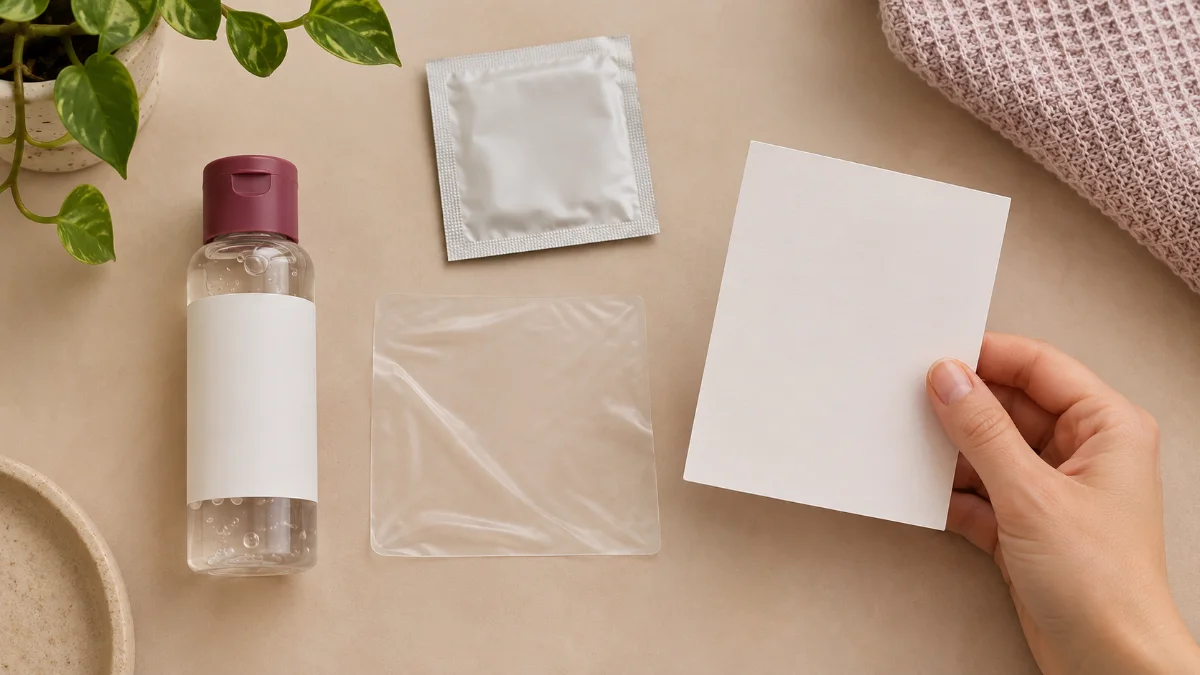
Le Instructions pour les digues dentaires du CDC recommander un lubrifiant à base d'eau ou de silicone et mettre en garde contre les produits à base d'huile. The same page says to read the package and check the sheet for defects. That general rule is a starting point, but it does not identify the material or approved lubricants for the unopened product in your hand.
If the material is missing, the lubricant base is unclear, or the directions conflict, do not improvise. Choose a combination with complete, readable instructions. Celui de Callimis package-first buying checklist explains why material and lubricant directions belong in the same review.
Read Both Labels, Not Just the Flavor Name
A fruit, menthe, or dessert name is not a lubricant-base category. Scan the full label for the base, utilisations prévues, avertissements, ingrédients, informations sur l'expiration, and storage directions. Then read the dental-dam packet for its material and compatible-product instructions. Do not treat “edible," "naturel,” “warming,” “cooling,” or “gentle” as a substitute for those details.
- Clear match: both labels identify the products and allow the combination.
- Incomplete match: one label names a base, but the dam material or compatibility directions are missing.
- Conflict: the lubricant contains oil while the dam package identifies latex or says to avoid oil.
- Sensitivity question: a scent, dye, preservative, flavor ingredient, or other listed component is a known concern for either person.
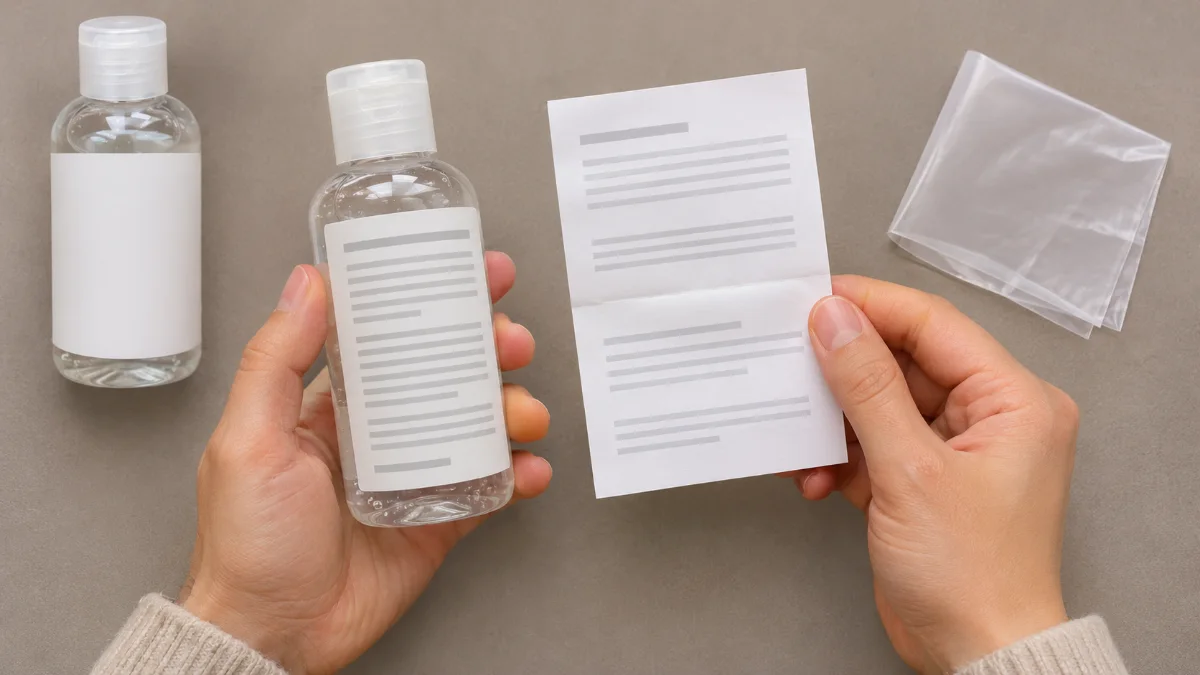
Label checking cannot guarantee that a product will feel comfortable for everyone. It simply prevents avoidable guessing. If a complete ingredient list or use direction is unavailable, another clearly labeled option is the more practical choice.
Which Side Should the Lubricant Go On?
Placement depends on the purpose and the product directions. Planned Parenthood’s general guidance says a small amount of compatible lubricant on the body-facing side can help a dam stay in place, while its article about keeping barriers comfortable notes that flavored lubricant can go on the mouth-facing side for taste. That is general educational guidance, not permission to use every flavored formula with every sheet.
Follow the exact package first. Use only the amount the directions support, garder le drap à plat, and do not flip it during use. For the full opening, placement, holding, and disposal sequence, voir le step-by-step dental-dam guide. If the package gives different placement instructions, les contrôles du paquet.
Consider Ingredients and Individual Sensitivities
Flavor formulas can include more than a flavoring. A current Guy’s and St Thomas’ NHS Foundation Trust allergy guide says lubricants may contain scents, dyes, or preservatives that cause allergic reactions and suggests fragrance-free products when appropriate. It does not say that every scented or flavored product will cause a reaction, and this article does not diagnose one.
Avant utilisation, compare the ingredient list with any known allergies or sensitivities. If either person has a history of reactions or the label is incomplete, ask a qualified clinician about the specific ingredients or choose a clearly labeled alternative. Do not rely on taste, smell, couleur, or a tiny trial as proof that later contact will be problem-free.
Stop and Switch When Something Is Unclear
Pause and remove the product from the plan if the base or material cannot be confirmed, the directions conflict, the dam changes appearance or condition, or anyone notices burning, itching, gonflement, douleur, engourdissement, or another unwanted sensation. Do not keep adding lubricant to “push through” discomfort. Follow the product directions and seek medical advice when symptoms are severe, persistant, or concerning.
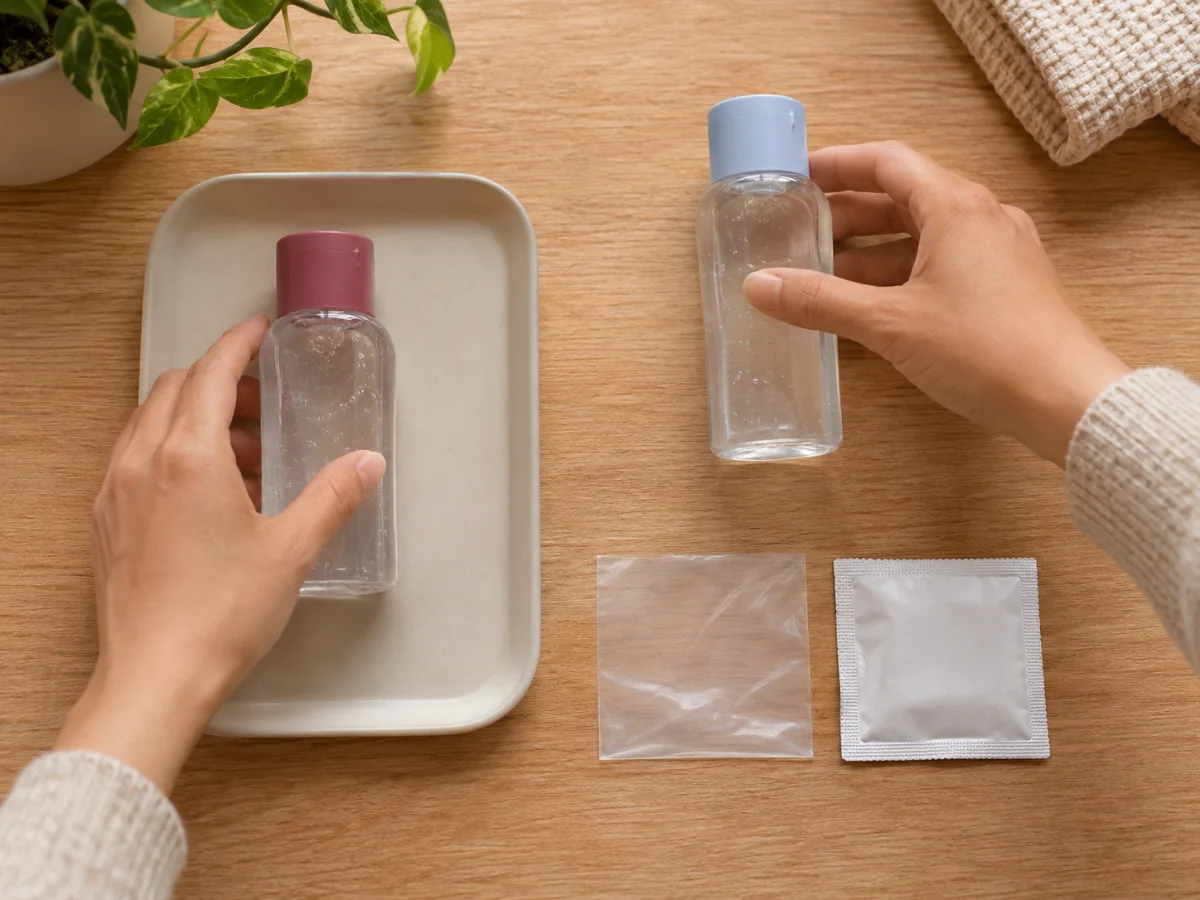
If the sheet slips, plis, stretches, larmes, or no longer covers the intended area, stop contact before adjusting anything. Le gentle holding guide explains how to support the edges without stretching. A fresh dam is the conservative choice whenever condition, orientation, or coverage is uncertain.
A Quick Compatibility Decision
| What you find | What to do |
|---|---|
| Dam material and lubricant base are clear, and both directions allow the combination | Use only as directed and keep monitoring comfort and sheet placement |
| Lubricant is flavored but its base is not stated | Ne devine pas; choose a product with a complete label |
| Product is oil-based and the dam is latex | Do not combine them; CDC warns oil-based products can damage dental dams |
| Ingredients include a known concern for either person | Choose another product or obtain individualized clinical advice |
| Directions conflict, the sheet changes condition, or discomfort begins | Stop and switch rather than trying to correct the combination mid-use |
Foire aux questions
Does flavored always mean water-based?
Non. Flavor and base are separate label details. Read the formulation rather than assuming that a flavored product is water-based or compatible with latex.
Can oil-based flavored lubricant be used with a non-latex dam?
Do not infer compatibility from “non-latex.” Materials differ, and the project evidence does not establish a universal oil rule for every non-latex dental dam. Use the exact dam and lubricant directions; if they do not clearly agree, choose another combination.
Is a flavored dental dam the same as adding flavored lubricant?
Non. One is a feature of the barrier as sold; the other adds a separate product with its own base, ingrédients, and instructions. UN introduction plus large de la digue dentaire can help with category context, but the current package must supply product-specific facts.
Does compatible lubricant make a dental dam risk-free?
Non. Compatibility is one handling question, pas une garantie de protection, confort, ajuster, ou l'efficacité. Use a new intact dam, keep it in place as directed, and remember that a barrier does not eliminate every possible risk.
L'essentiel
The responsible way to use flavored lubricant with a dental dam is to match the lubricant base to the verified dam material and follow both packages. Flavor can be a preference, but it is not evidence of compatibility. Read the full labels, avoid oil with latex, keep mouth-facing and body-facing placement clear, and stop when ingredients, instructions, sheet condition, or comfort are uncertain.