

Jeu de doigts avec mobilité limitée des mains peut être adapté en parlant de ce qui semble réalisable aujourd'hui, soutenir les bras et les mains, réduisant la portée ou l'adhérence inutile, et faciliter la pause, changer de rôle, ou arrêter. Il n’existe pas une seule position ou un seul mouvement correct. Le plan utile est celui sur lequel toutes les personnes impliquées acceptent librement et peuvent changer sans pression..
Ce guide s'adresse aux adultes et propose des idées générales sur l'accessibilité, pas un diagnostic ou un plan de traitement. Si vous souhaitez une définition avant de vous concentrer sur les adaptations, commence par ça aperçu plus large du jeu de doigts.
Comment aborder le jeu avec les doigts avec une mobilité limitée des mains
Commencez par la capacité plutôt que par les performances: Quels mouvements semblent faciles, qui devient fatiguant, et quel type d'aide, le cas échéant, serait la bienvenue? Une personne peut être à l'aise pour initier le contact, mais préférer qu'un partenaire gère la configuration.. Une autre personne voudra peut-être guider le rythme verbalement tout en gardant ses mains soutenues.. La capacité peut également sembler différente d’un jour ou d’un moment à l’autre, donc un plan antérieur ne constitue pas un consentement permanent.
Le but n’est pas d’obliger quelqu’un à exécuter une motion prescrite. Il s’agit de supprimer les efforts évitables et de préserver le choix. Cela peut signifier utiliser le support, raccourcir l'activité, changer qui fait quoi, ou choisir un tout autre type de proximité.
Commencez par une conversation de confort des mains
Ayez la conversation avant que quiconque essaie d'occuper un poste. Demandez spécifiquement, questions neutres: "Est-ce qu'un soutien sous votre avant-bras vous aiderait?" "Voulez-vous que je vous aide, ou préférez-vous le faire vous-même?" "Quel mot ou geste devrait signifier pause?» Cela maintient l’assistance facultative et évite de traiter la mobilité limitée comme une impuissance..
Le Discussion de la Fondation de l'arthrite sur le sexe et l'intimité avec l'arthrite décrit la communication, positionnement, prend en charge, appareils fonctionnels, et l'apport de professionnels comme domaines pratiques à explorer lorsque la douleur, rigidité, ou la fatigue affecte l'intimité. Ces idées doivent toujours être individualisées: un support qui fonctionne pour un corps peut être inutile pour un autre.
Si les partenaires abordent le confort différemment, ce guide pour discuter de différentes préférences en matière d'intimité offre un rappel utile: aucune des deux personnes n’a à prouver que sa routine est la « bonne ». L’accord compte plus que gagner la comparaison.

Adapter la configuration, Pas la personne
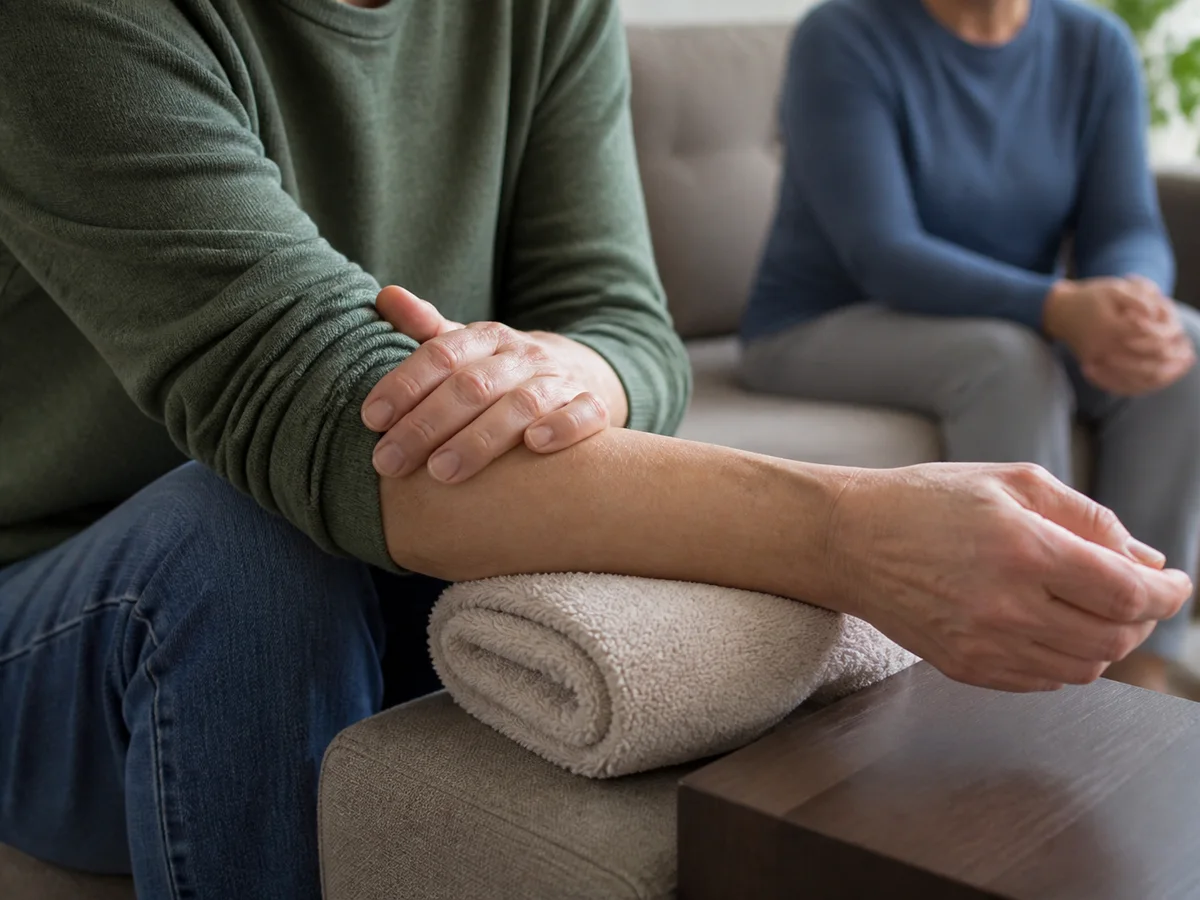
Au lieu de demander à une main ou à un poignet de maintenir un angle inconfortable, changer d'abord l'environnement. Un oreiller ferme ou une serviette pliée peut soutenir un avant-bras. Une position assise ou allongée sur le côté peut réduire la nécessité de maintenir le poids du corps entre les mains.. Les fournitures peuvent être placées suffisamment près pour que personne n'ait à s'étirer, passer la main à plusieurs reprises derrière eux, ou gérer une surface encombrée.
- Accompagnement avant de commencer: placer des coussins là où la personne dit qu'ils sont utiles, puis vérifiez à nouveau après vous être installé.
- Réduisez les tâches exigeantes: choisissez des fournitures convenues avec des commandes faciles à utiliser pour l'utilisateur prévu, et gardez-les ouverts uniquement lorsque cela ne compromet pas l'hygiène ou les instructions du produit..
- Raccourcir la portée: déplacer l'eau, tissus, commandes d'éclairage, et d'autres éléments convenus plus près au lieu de demander à la personne de s'étirer.
- Laisser un chemin de sortie: éviter une configuration qui donne l'impression à quiconque de se sentir piégé ou incapable de changer de position de manière indépendante.
Pour jouer avec les doigts avec une mobilité limitée de la main, « accessible » ne signifie pas visuellement parfait. Cela signifie que la configuration répond à la portée réelle de la personne, force, coordination, et préférences sans assumer ces besoins à l’avance.

Laissez les rôles et le rythme changer
Un plan peut inclure des périodes plus courtes de mouvements de la main, fait des pauses avant que la fatigue ne s'installe, ou un changement de rôle. Une personne peut contrôler le rythme des mots tandis qu'un partenaire assure le mouvement.. Quelqu’un préférera peut-être guider brièvement la main d’un partenaire, puis repose-toi. L’assistance ne doit jamais être présumée, et la personne qui reçoit de l'aide doit être capable de la diriger ou d'y mettre fin.
Il est également bien de choisir une forme d'intimité différente qui demande moins aux mains.. L'adaptation n'est pas un test de détermination. Si un mouvement semble tendu, douloureux, ou simplement indésirable, Changer le plan est une réponse réussie, et non un échec.
Mettez-vous d’accord sur les signaux qui nécessitent peu de mouvements de la main
Des mots clairs tels que « plus lent," "pause," et " stop " peuvent être les plus simples. Si la parole n’est pas l’option privilégiée, se mettre d'accord sur un signal que la personne peut utiliser de manière fiable et sans gêne - peut-être un son, mouvement des yeux, ou un autre petit geste. Confirmez la signification de chaque signal avant de commencer, et traitez « stop » comme une instruction, pas le début d'une négociation.
Conseils de consentement de RAINN met l'accent sur une communication claire, respect des limites, et la capacité de changer d’avis. Un système de signalisation prend en charge ce processus; cela ne remplace pas l'attention ou l'enregistrement.
Si une barrière anti-doigts fait partie du plan
Une barrière pour les doigts est facultative, et en utiliser un ne devrait pas créer un nouveau fardeau en matière d'accessibilité. Décidez qui gérera le dossier et la demande, garder l'article scellé à portée de main, et changer de plan si sa manipulation nécessite un pincement ou une torsion inconfortable. Les préservatifs pour doigts Callimis sont fabriqués à partir de latex naturel, sont pré-lubrifiés avec un lubrifiant à base d'eau et sans silicone, et sont destinés à un usage unique. Ces faits ne garantissent pas le confort, ajuster, protection, ou adéquation à chaque personne.
Si un lubrifiant supplémentaire est envisagé pour une barrière en latex, vérifiez l'étiquette du produit et le type de lubrifiant plutôt que de deviner; les Callimis guide pour lubrifier avec des préservatifs pour les doigts explique la question de compatibilité. Aucune barrière ne remplace la communication, et personne ne devrait poursuivre une activité car les approvisionnements ont déjà été ouverts.
Quand l’orientation professionnelle peut aider
L'activité sexuelle est un sujet légitime à aborder avec un ergothérapeute. Ressources de l'AOTA sur le sexe en tant qu'activité de la vie quotidienne reconnaître l’activité sexuelle et l’intimité dans la pratique de l’ergothérapie. Un ergothérapeute peut discuter des objectifs et de l’environnement spécifiques de la personne et aider à évaluer les façons individualisées de participer.; cet article ne peut pas évaluer un corps, condition, ou appareil.
La douleur n’est pas quelque chose que l’on peut ignorer pour terminer une activité.. Conseils de l'ACOG sur les relations sexuelles douloureuses conseille de consulter un gynécologue ou un autre professionnel de la santé en cas de douleur fréquente ou intense. Un clinicien peut également aider lorsqu'un nouveau symptôme ou un changement dans la fonction de la main affecte les activités quotidiennes ou l'intimité..
Foire aux questions
La mobilité limitée de la main exclut-elle le jeu des doigts?
Non. Cela peut changer les mouvements, postes, rôles, ou le timing semble réalisable, mais il n'y a aucune obligation d'effectuer une technique particulière. La décision appartient aux personnes impliquées, et choisir de ne pas continuer est toujours valable.
Si un partenaire prend automatiquement le relais?
Non. Demandez si de l’aide est souhaitée, quel genre, et comment ça devrait s'arrêter. Certaines personnes veulent une aide pratique; d'autres préfèrent l'indépendance ou une activité différente. La mobilité ne détermine pas le consentement ou la préférence.
Et si une configuration fonctionnait avant mais pas aujourd'hui?
Revérifiez plutôt que de supposer. Déplacer un support, raccourcir l'activité, changer de rôle, ou arrêter. Un plan adaptable exige du confort et une capacité de changement.
L'essentiel
Jeu de doigts avec mobilité limitée des mains fonctionne mieux comme conversation flexible, pas une norme de performance. Soutenir le corps, réduire les efforts évitables, se mettre d'accord sur des signaux nécessitant peu d'effort, laissez les rôles changer, et arrêtez-vous lorsque l'activité est douloureuse ou indésirable. Lorsque des symptômes individuels ou des questions sur l'équipement nécessitent plus que des idées générales, apporter l'objectif à un ergothérapeute ou à un autre professionnel de la santé approprié.