

Suivi après le jeu des doigts peut être aussi simple que de vérifier le confort, demander ce dont chaque personne a besoin, s'occuper du nettoyage pratique, et faire de la place pour toute préférence qui vient ensuite. Ce n'est pas un rituel obligatoire. Une minute tranquille, un verre d'eau, une conversation, plus de proximité, ou certains espaces peuvent tous être appropriés lorsqu'ils sont librement choisis.
À quoi peut ressembler le suivi après un jeu de doigts
Le suivi est la période juste après une activité intime pendant laquelle les gens peuvent remarquer ce qu'ils ressentent et communiquer ce qui serait utile.. Le but n’est pas de noter l’expérience ou de forcer une conversation sérieuse. Il s'agit de faire une ouverture facile pour plus de confort, information, et choix.
Cette ouverture peut être brève: "Comment te sens-tu?» suivi d'assez de silence pour une vraie réponse. Certaines personnes savent immédiatement ce qu'elles veulent. D'autres ont besoin de quelques minutes ou préfèrent parler plus tard. Un enregistrement respectueux permet l'une ou l'autre réponse.

Commencez par un enregistrement sans pression
Demander plutôt que supposer. Câlin, conversation, une douche, calme, nourriture, eau, ou l'espace personnel peut sembler bienvenu à une personne et indésirable à une autre. Même un geste gentil reste quelque chose que l’autre personne devrait pouvoir accepter, déclin, ou changer.
Conseils de consentement de RAINN décrit le consentement comme une conversation continue fondée sur des, communication volontaire et respect mutuel. Ce principe reste utile après une activité: ne forcez pas quelqu'un à gérer votre déception s'il veut moins de contact, moins de conversation, ou plus d'espace.
Utilisez trois questions simples
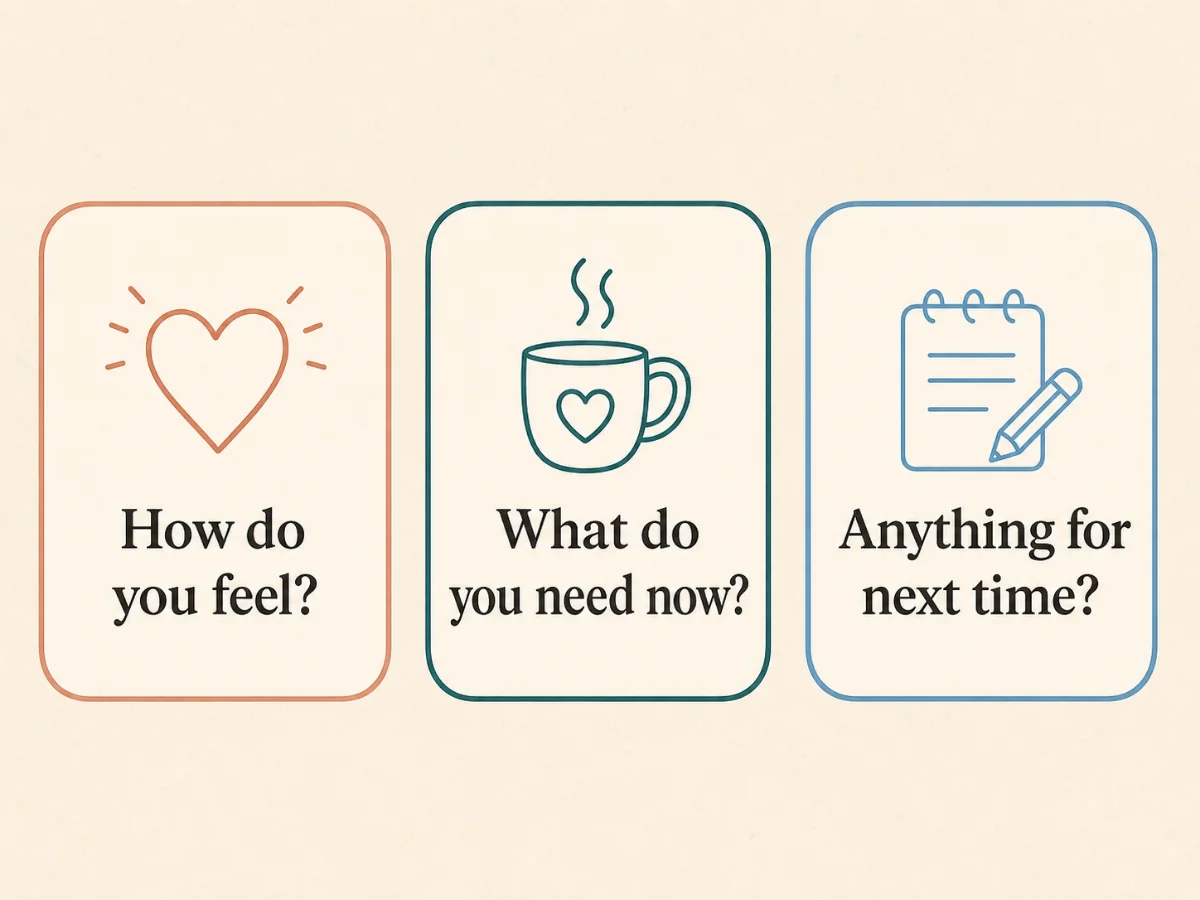
Un cadre court rend l'enregistrement utile sans donner l'impression d'être un entretien:
- Comment te sens-tu en ce moment? Cela donne à la personne la possibilité de nommer son confort physique, émotion, incertitude, ou simplement « bien ».
- De quoi as-tu besoin maintenant? Proposer des options sans les prescrire: eau, une serviette, proximité, calme, nettoyage, une pause aux toilettes, ou de l'espace.
- Y a-t-il quelque chose à retenir pour la prochaine fois? Renseignez-vous sur les préférences, pas de performances. «Plus lentement," " Enregistrez-vous plus tôt,» ou « Je ne sais pas encore » sont autant de réponses utiles.
N'exigez pas de détails immédiats. Quelqu'un peut répondre à une question maintenant et revenir sur le reste plus tard. Un enregistrement fonctionne mieux lorsque « Je ne suis pas prêt à parler » est traité comme une information., pas de rejet.
Différentes personnes veulent différents types de suivi
Il n’existe pas de personnalité universelle en matière de suivi. Une personne peut vouloir être rassurée et proche physiquement, tandis qu'un autre se sent plus à l'aise en réinitialisant la pièce ou en étant seul pendant quelques minutes. Les préférences peuvent également changer d'une expérience à l'autre.
- Connexion: parler, se tenir la main, assis à proximité, ou partager son appréciation.
- Soins pratiques: eau, une serviette propre, jeter les objets à usage unique, ou changer la literie.
- Calme ou espace: repos, utiliser la salle de bain, s'habiller, ou accepter de s'enregistrer plus tard.
Conseils de communication sexuelle de Planned Parenthood met l'accent sur la discussion des likes, n'aime pas, et des limites parce que les gens diffèrent et que les préférences peuvent changer. Pour une conversation plus large avant le moment, Callimis a également un guide pour parler ouvertement de l'hygiène intime.
Un nettoyage pratique sans transformer les soins en jugement
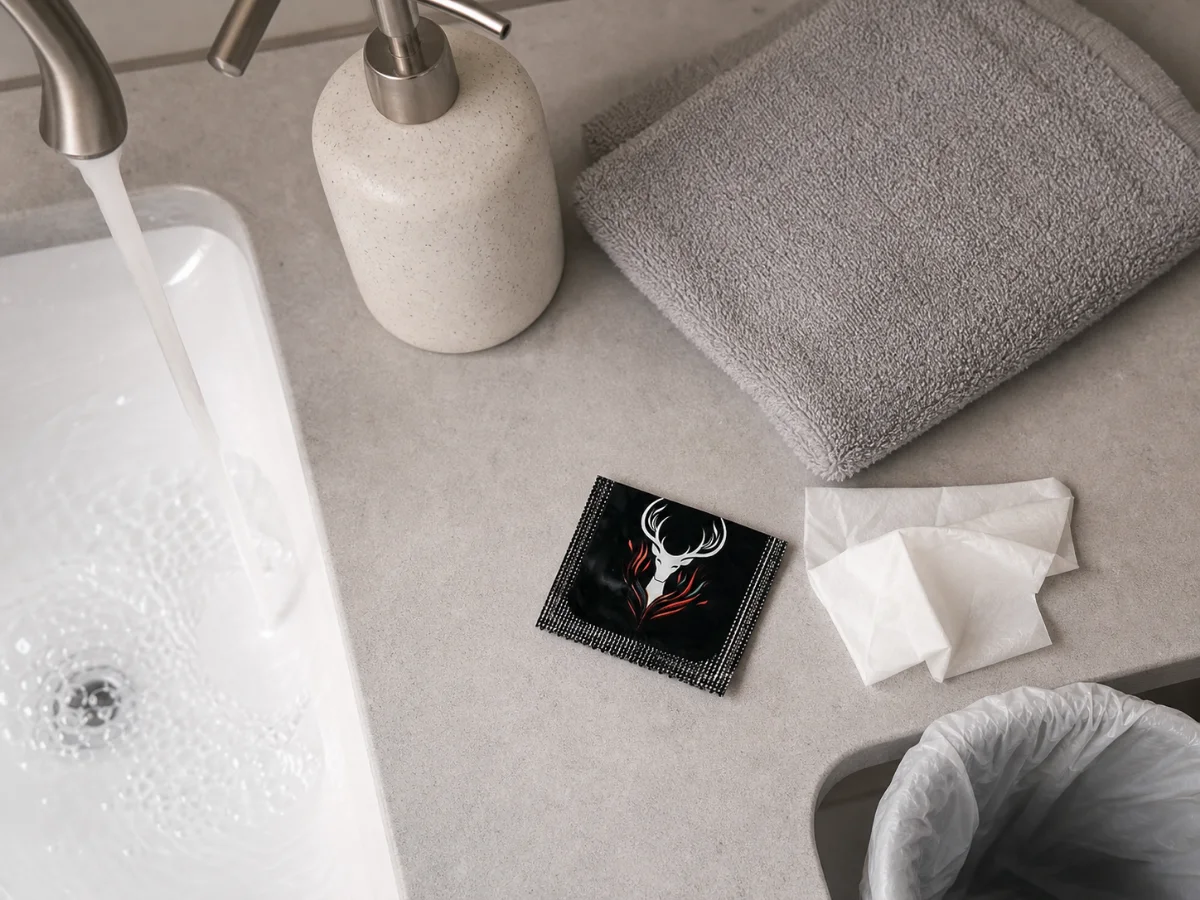
Le nettoyage peut faire partie du suivi, mais cela ne doit pas être présenté comme une preuve que quelqu'un est sale. Demandez ce qui pourrait aider, partager la tâche le cas échéant, et suivez les instructions pour tout produit utilisé. Si un préservatif Callimis a été utilisé, les instructions vérifiées sont simples: c'est à usage unique, il doit être jeté avec les ordures ménagères après utilisation, et il ne faut pas le rincer. Le guide publié pour utiliser un préservatif pré-lubrifié fournit un contexte supplémentaire d'utilisation du produit, mais les instructions actuelles du paquet devraient toujours contrôler.
Pour se laver les mains, suivre Étapes de lavage des mains du CDC: utiliser de l'eau courante propre et du savon, faire mousser les mains, frotter pendant au moins 20 secondes, rincer, et séchez avec une serviette propre ou un sèche-linge. Gardez cela pratique plutôt que basé sur la peur; une routine simple n'a pas besoin d'une explication dramatique.
Comment réagir lorsque quelque chose vous semble inconfortable
Si quelqu'un dit que quelque chose a été pincé, c'était trop intense, a duré trop longtemps, ou tout simplement je ne me sentais pas bien, commence par écouter. Ne contestez pas leur description, dépêchez-vous d'expliquer votre intention, ou demande-leur de te rassurer. Une réponse calme peut être courte: "Merci de m'avoir dit. Je m’en souviendrai.
Demandez-leur s'ils souhaitent discuter d'un changement maintenant ou plus tard. La réponse pourrait impliquer des pressions, rythme, bords des ongles, lubrification, une préférence barrière, ou arrêter plus tôt, mais évitez de diagnostiquer la cause. Si une barrière pour les doigts faisait partie de l'expérience, l'aperçu existant de facteurs de confort de la barrière pour les doigts peut aider à formuler des questions pour une autre fois; cela ne remplace pas les commentaires actuels de la personne.
Quand la douleur mérite un avis médical
Le suivi n'est pas un traitement médical, et les partenaires ne devraient pas essayer de diagnostiquer eux-mêmes un inconfort persistant. Conseils de l'ACOG sur les relations sexuelles douloureuses conseille de consulter un gynécologue ou un autre professionnel de la santé en cas de douleur fréquente ou intense. C'est également une limite conservatrice utile pour le jeu avec les doigts.: arrêter l'activité, éviter de faire pression sur quelqu'un pour qu'il continue, et rechercher des soins individualisés lorsque la douleur est fréquente, grave, ou autrement concernant.
Une liste de contrôle de suivi de 60 secondes
- Posez une question ouverte sur ce que ressent la personne.
- Demander avant d'ajouter une touche, conversation, ou une aide pratique.
- Proposer quelques options sans traiter aucune option comme requis.
- Manipuler les articles de nettoyage et à usage unique selon leurs instructions.
- Faites de la place aux commentaires maintenant ou à une heure convenue ultérieurement.
- Prenez au sérieux les douleurs fréquentes ou intenses et demandez conseil à un professionnel..
Cette liste de contrôle est un point de départ, pas un script. Bien suivi après le jeu des doigts répond aux personnes impliquées au lieu d'essayer de leur faire suivre une humeur particulière.
Questions fréquemment posées
Un suivi est-il requis après chaque expérience?
Il n'y a pas de rituel obligatoire. Un bref enregistrement est une manière respectueuse de savoir ce que chacun veut, et la réponse peut être qu'aucun soin ou conversation supplémentaire n'est nécessaire.
Et si mon partenaire veut de l'espace?
Respecter la demande sans en faire un conflit. Si utile, demandez-leur s'ils souhaitent que vous vous enregistriez plus tard et quand. L'espace peut être une préférence de suivi plutôt qu'un jugement sur la relation.
Le jeu avec les doigts en solo peut-il inclure un suivi?
Oui. Un enregistrement en solo peut signifier remarquer le confort, nettoyer, éliminer correctement tout article à usage unique, de l'eau potable si désiré, et me souvenir de toute préférence pour la prochaine fois. Aucun partenaire n’est requis pour les soins personnels pratiques.
Le suivi remplace-t-il le consentement pendant le jeu des doigts?
Non. Le suivi ne peut pas remplacer le consentement avant et pendant une activité ni rendre acceptable une expérience non consensuelle.. Il s'agit d'une occasion distincte de communiquer et de répondre avec soin par la suite..
L'essentiel
Suivi après le jeu des doigts fonctionne mieux lorsqu'il reste simple et réactif: demander comment la personne se sent, demandez ce qu'ils veulent maintenant, gérer le nettoyage pratique, et laissez de la place pour des commentaires sur la prochaine fois. Ne présumez pas que la proximité, conversation, ou l'espace est universellement juste. Le choix bienveillant est celui que les gens peuvent choisir et réviser librement.