
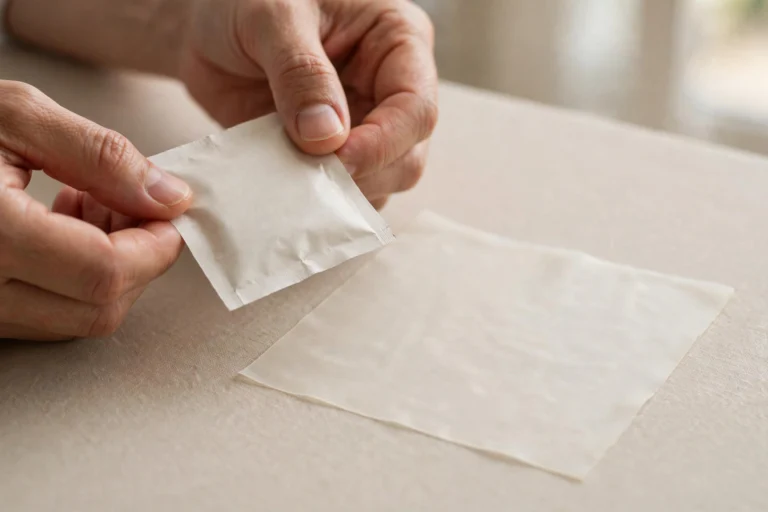
How to use a dental dam comes down to four moves: check the wrapper, ábrelo con cuidado, lay the flat sheet over the area, and hold it in place until you are done. Then throw it away. A dental dam is a thin, flat sheet used as a barrier during oral sex. It is single-use, and it only covers the area it is actually touching. The rest of this guide walks through each step in order.
Most mistakes with a dam are small ones: opening the packet with teeth, stretching the sheet too hard, or flipping it over halfway through. None is hard to avoid once you know the sequence. This guide follows the general barrier guidance published by the CDC, and it says where that guidance ends and your own packet’s directions take over.
What a Dental Dam Is — and What It Is Not
A dental dam is a square sheet, usually made of latex or polyurethane, that sits between the mouth and the genitals or anus during oral sex. The CDC describes it as a barrier that can reduce the risk of sexually transmitted infections during oral sex, with the same basic rules as for other barriers: use a new one each time, check it for damage, and keep it in place until you finish. The full guidance is on the CDC dental dam page.
A dental dam is not a condom, and it is not a finger condom. Condoms and condones para los dedos are sleeves for one body part or one finger. The dam is different: a sheet that covers a wider, flatter area. The comparison in dental dams vs. condones para los dedos explains that shape difference in more detail.
A dam also does not make a particular act safe on its own. Like any barrier, it is one part of a wider approach: pruebas, talking with a partner, and getting care when something feels off. This guide claims no tested result for any specific product. If you need advice about your own risk, pregúntale a un médico.
Before You Use a Dental Dam: The 60-Second Check
Do this check before the dam is anywhere near use. It takes about a minute, and it is about the unit in hand.
Wash your hands first, and take off rings, esposas, y relojes. Check your nails: a sharp edge can nick a dam, and you may not notice the tear until later.
Check the Wrapper First
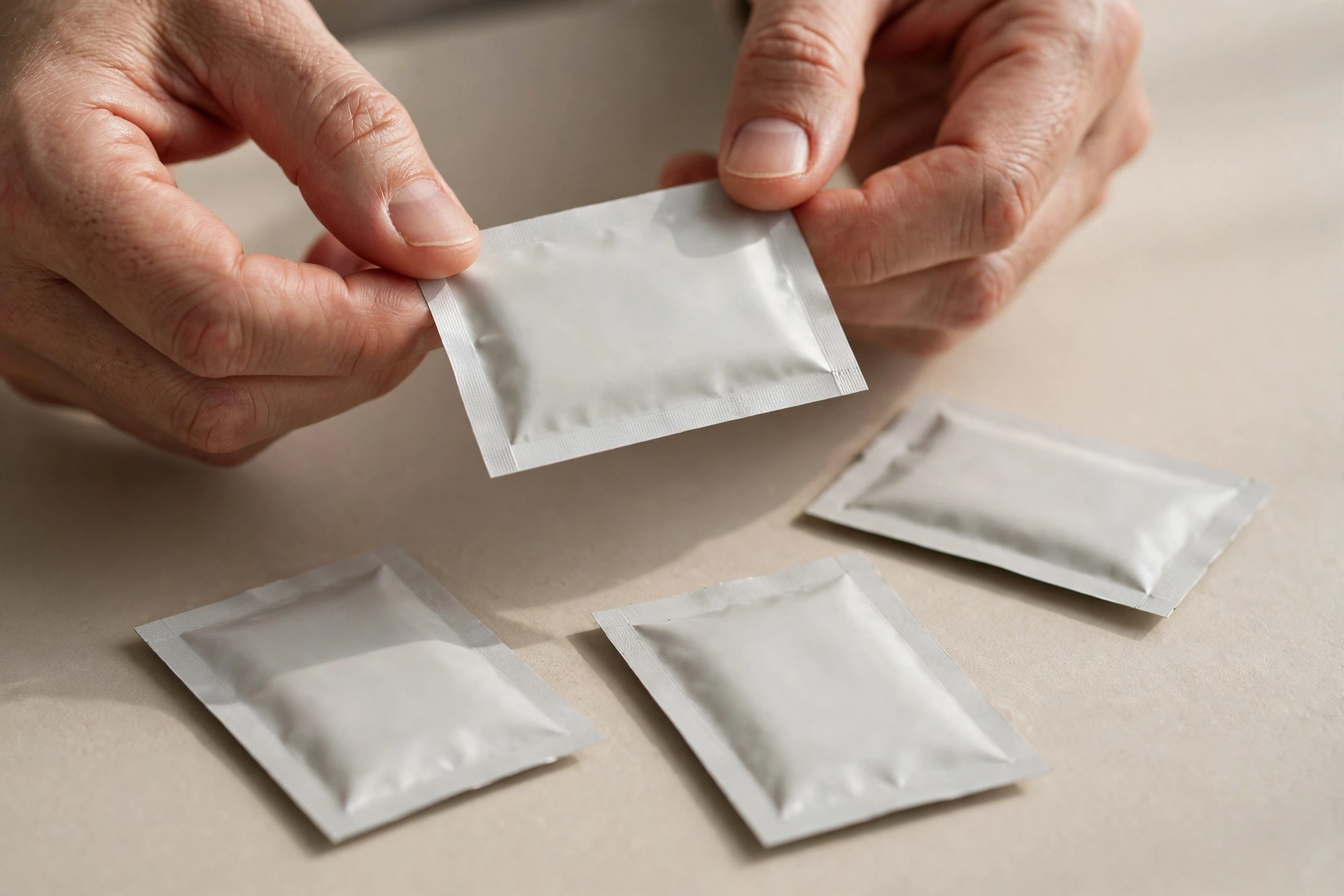
Check the wrapper before you open it, and look for the date printed on the packet. If the wrapper is torn, abierto, manchado, or past its date, do not use that unit. Keep spares sealed in a cool, dry place away from heat and sharp objects; the buying guide on what to look for when buying dental dams covers storage in more detail.
Open the packet with your fingers, not your teeth or scissors, tearing along the edge the packet gives you. Keep your nails away from the sheet inside. If the dam looks torn, frágil, or discolored once it is out, stop and take a fresh unit. Judge the unit in your hand, not a photo of one.
Agree on the plan with your partner before you start. A dam works best when both people know it is there, which side is which, and who is holding it.
How to Use a Dental Dam, Paso a paso
Read the sequence once all the way through, then follow it in order.
Open and Unfold the Sheet
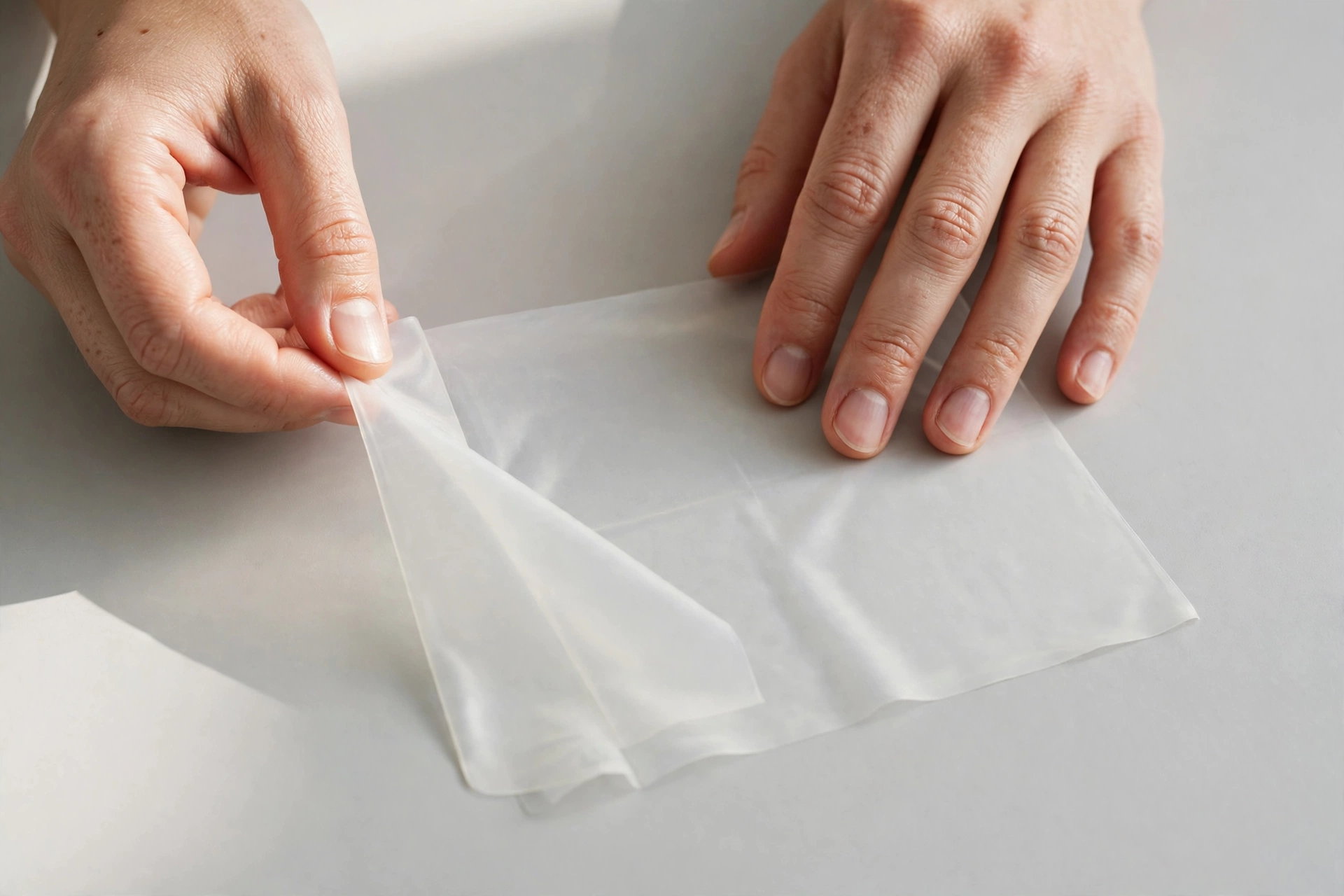
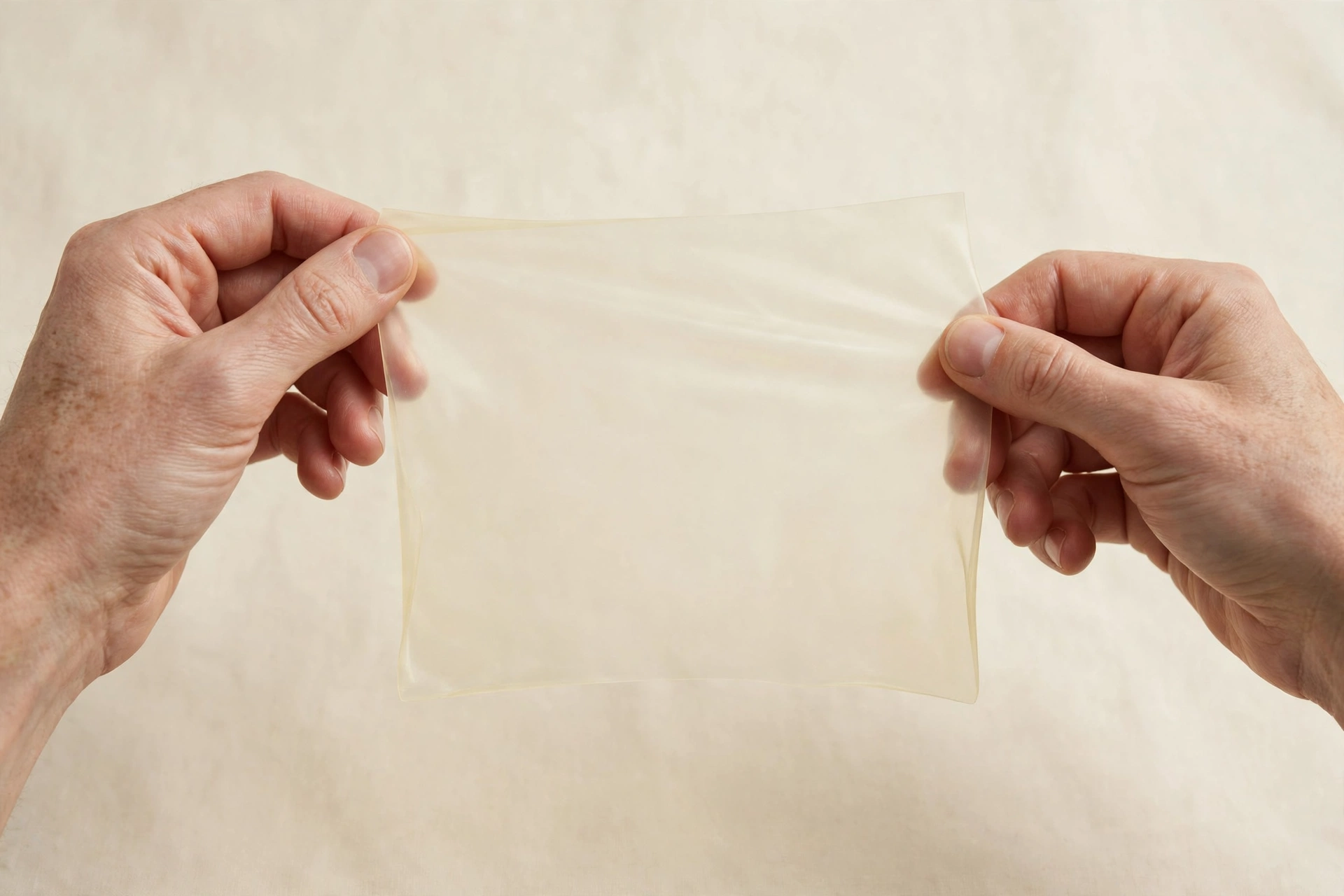
Open the packet carefully and take the dam out without stretching it. Some dams come folded; unfold it gently until it lies flat. Do not pull hard on the corners or try to stretch it larger. The sheet is meant to lie flat, not to be pulled taut like a drum.
If the dam has a lubricant or a flavored side, the packet will say so — follow it. Do not add anything unless the packet says it is fine, and keep oil-based products away from a latex dam. Oil can weaken latex, and that warning comes from the FDA labeling for natural rubber latex condoms. A water-based lubricant is the usual choice when extra glide is wanted.
Place It and Keep It in Place
Lay the sheet over the area, with the center of the dam over the center of the area you want covered. Keep the whole area under the sheet. Skin outside the sheet is not under it: coverage only counts where the sheet actually sits.
Hold the edges with your hands or let your partner hold them. Either way, someone should be holding the dam the whole time it is in use. It should stay in one place, on the same side, from start to finish — do not flip it over or move it to a different area partway through. A fresh dam is needed for a different area. If the dam slips, pausa, smooth it back into place, or take a fresh unit.
Cómo mantener un dique dental en su lugar
Holding the dam is the step people ask about most, and it is also the step with the least to learn. Hold two edges with your hands, keep a light grip, and keep the sheet flat against the skin. Your hands are the frame that keeps the sheet where it belongs.
Some people find it easier if one partner holds the dam while the other focuses on the contact; others take turns. There is no rule about whose hands do the holding, only that someone is doing it. If your hands get tired, pause and switch. Light pressure helps the sheet stay in contact with the skin. Heavy stretching does the opposite: it thins the sheet and pulls the edges inward. The separate guide on how to hold a dental dam in place during oral sex walks through hand positions in more detail.
What Not to Do With a Dental Dam
Most dam problems come from a short list of habits.
| Mistake | Why it matters |
|---|---|
| Reusing a dam | De un solo uso. Washing it does not restore it. |
| Flipping it over during use | One side should not touch both people. |
| Moving it to a different area | Use a fresh dam for a different area. |
| Stretching it hard | Stretching thins the sheet and pulls the edges inward. |
| Using teeth or scissors to open it | A nick may not be visible. |
| Using an expired or damaged unit | A dam past its date, or from a torn wrapper, is not reliable. |
| Adding oil-based products to latex | Oil can weaken latex. Use water-based lubricant if extra glide is wanted. |
If any of these happen, stop and take a fresh unit. Replacing a dam costs a few seconds.
Do not use a dam and a finger condom as substitutes for each other. Un condón para el dedo cubre un dedo durante el contacto manual.. A dam covers a flat area during oral contact. If manual touch is also part of the plan, the guide on whether to use one finger condom or more than one covers that choice.
After Use: Removal and Disposal
When you are done, lift the dam away from the skin and fold it inward, so the side that was in contact is folded inside. Put it in the trash right away. No lo enjuagues.
Wash your hands after handling a used dam. That is the whole cleanup, because the dam is single-use and the used one goes in the trash. The disposal guide on how to dispose of finger condoms discreetly follows the same idea for a different barrier: envuélvelo, bin it, y lávate las manos.
If the dam broke or slipped off during use and there was contact after that, consider speaking to a clinician promptly. This guide cannot assess that risk for you.
Choosing a Dental Dam: Qué buscar
Buying a dam is simpler than using one. comprobar el material, the count, and the date before you buy. Latex is the common material; polyurethane is the usual alternative for people with a latex allergy. Either way, the packet is the source for what you are holding, so read it.
Count matters because a dam is single-use. A 6-count pack covers a few occasions. An 8-count pack gives you spares for the moments when a dam needs replacing mid-use. Keep spares sealed somewhere cool and dry, not in a wallet or a hot car.
If you are choosing between a dam and a finger condom, the activity decides. Oral contact calls for the flat sheet. Manual touch calls for the finger-shaped sleeve. The two products sit side by side below for that reason: they are companions, not competitors.
Products Mentioned in This Guide
The products below are the ones this guide refers to. Check the product page for the current price, contar, and package directions before ordering.
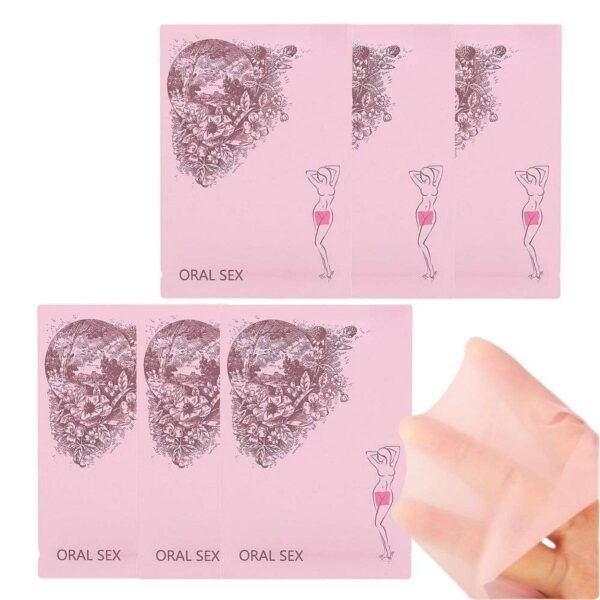
Dique dental ultrafino para uso oral, 6 contar
A flat sheet barrier for oral contact, the format this guide walks through. $9.99 as listed on the site.

Presa Dental Callimis, Boca Sexo Oral, 8 contar
The same flat sheet format in a larger count, useful for keeping spares sealed. $12.99 as listed on the site.

Callimis Preservativos para Dedos con Lubricación, 12 contar
látex natural, en forma de dedo, de un solo uso, prelubricado con una base de agua, lubricante sin silicona. The companion barrier for manual touch. $14.99 as listed on the site.
How to use a dental dam is a short sequence: check the wrapper, open it with your fingers, unfold the sheet and lay it flat, hold it in place, and throw it away when you are done — a fresh dam for each use, the same side throughout, and a pause whenever it slips.
A dam is a single-use, flat sheet barrier for oral contact that can reduce direct contact on the area it covers. It does not cover anything outside the sheet, and it does not guarantee protection on its own. Plan around that limit, and follow the packet when it says something different from this guide.
This article is general information, no consejo medico. It relies on general barrier guidance from public health sources and on the product facts in the site’s editorial record. It does not claim that any product prevents infections.