

Si un protector dental se pliega durante su uso, detener el contacto oral inmediatamente. Lleve un registro de qué lado mira hacia el cuerpo., inspeccionar la hoja completa, y continuar solo si la cobertura nunca se volvió incierta, la presa está intacta, and its package directions support returning it to a flat position. Use a fresh dam if it slipped, flipped, estirado, tore, touched a different area, or leaves you unsure about coverage, orientation, or condition.
No authoritative source reviewed for this guide specifically tests a temporary fold or proves that smoothing a folded sheet restores its performance. The practical response below combines published instructions to keep a dam flat and in place, avoid stretching, inspect for defects, keep one side oriented, and replace it after a slip or break. When those checks do not give a clear answer, replacement is the conservative choice.
If a Dental Dam Folds During Use, Stop First
Do not keep oral contact going while one person tries to pull out the fold. A moving sheet is harder to assess, and tugging can turn a small positioning problem into stretching or lost coverage. Use a simple pause phrase, keep the barrier still, and move through these steps in order:
- detener contacto. Separate before touching or repositioning the sheet.
- Hold the orientation. Remember which side faced the body; do not flip the dam over.
- Check coverage. Decide whether the intended area stayed covered while the fold formed.
- Inspect the sheet. In good light, look for tears, holes, stretched spots, or other visible changes.
- Choose flat reset or replacement. Follow the package. If any answer is unclear, use a fresh dam.
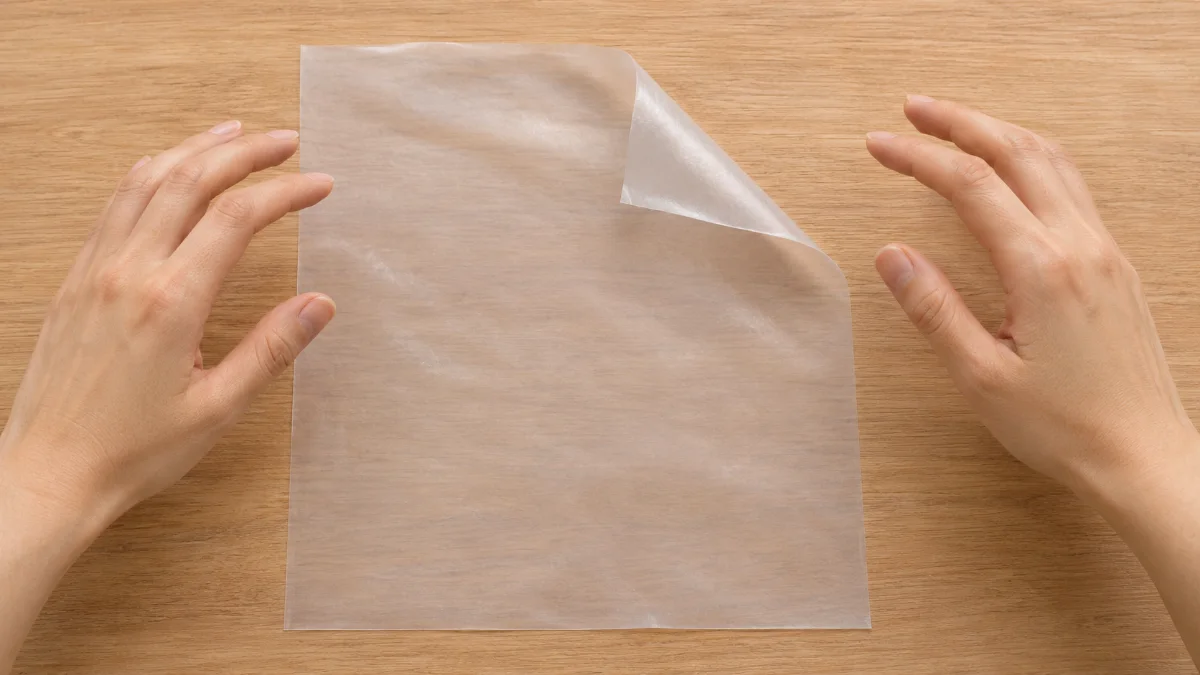
El Instrucciones de los CDC sobre protectores dentales say to place the sheet flat, mantenlo encendido hasta terminar, comprobar si hay roturas o defectos, and avoid stretching it. Callimis step-by-step dental-dam guide puts those basics into a simple preparation sequence. Neither source establishes a universal fold-repair method, so the first job is assessment, not improvisation.
Check Coverage, Orientation, y condición
A fold is not automatically the same event as a slip, flip, or tear. It can be a small ridge within a sheet that otherwise stayed in place, or it can pull an edge inward and expose skin. Those situations require different decisions, so ask three narrow questions.
- Did coverage change? If an edge moved or the intended area was exposed, treat the event as a slip and replace the dam.
- Is the same side still facing the same area? If the sheet flipped, twisted, or its orientation is unknown, do not turn it back and continue.
- Is the whole sheet visibly intact? A hole, lágrima, engancharse, stretched patch, or damaged-looking area means a fresh dam is needed.
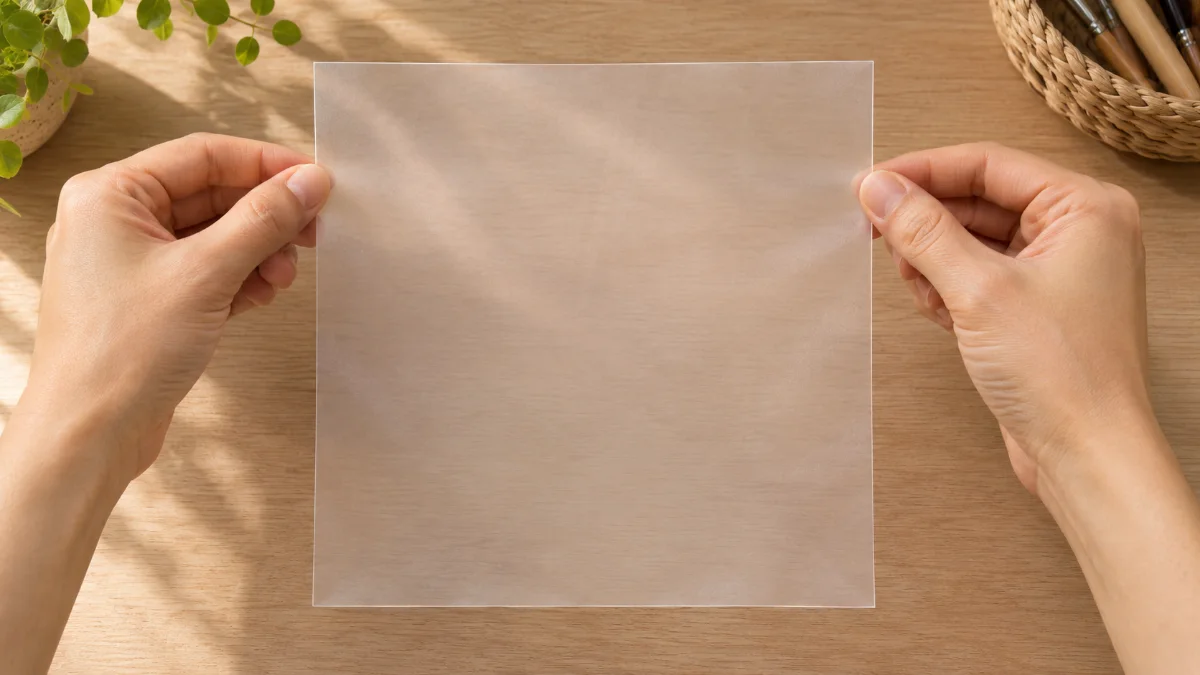
Sexual Health Sheffield’s dental-dam guidance says to inspect for holes or tears, make sure the dam stays in place, keep one side oriented, and use a new dam for a different activity. Those rules support a conservative boundary: if the fold makes any of those facts uncertain, no adivines.
When a Gentle Flat Reset May Be Considered
If the sheet remained over the intended area, its body-facing side is still known, no damage is visible, and the package does not direct replacement, you may be able to use clean fingertips at the edges to return it gently to a flat position before contact resumes. Do not pull opposite corners, press it tight, or stretch the material larger. Recheck the full outline after the sheet lies flat.
This is a handling inference, not a tested performance claim. A visual check cannot guarantee that material is unchanged, and no reviewed source defines an acceptable fold depth or duration. If you would need to tug, flip, patch, lavar, or repeatedly readjust the sheet, stop and use a new one instead.
Use a Fresh Dam When Anything Is Unclear
El Guía de protectores dentales de Cleveland Clinic dice detenerse si una presa se resbala o se rompe y colocar una nueva antes de continuar. Apply that direct instruction whenever a fold pulls the sheet out of position or reveals damage. Use a fresh dam when:
- any part of the intended area was no longer covered;
- the dam flipped or you cannot identify the body-facing side;
- the sheet tore, snagged, estirado, or looks different after inspection;
- the dam touched a different body area or another person;
- the fold keeps returning and stable flat placement cannot be maintained;
- the package says to replace it after the event; o
- either person is uncertain or uncomfortable continuing with the same sheet.
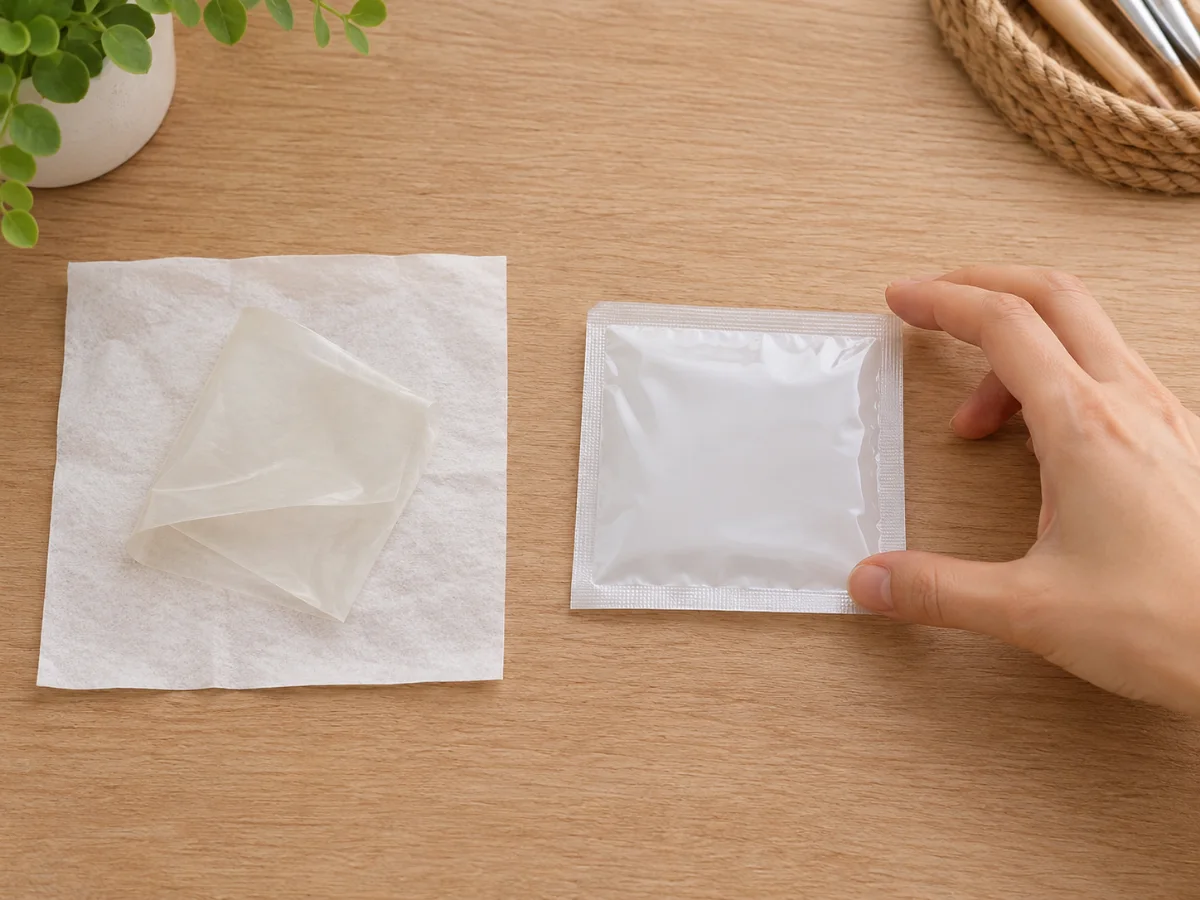
Do not patch a folded or damaged dam, double it with another sheet, or flip it to get a smoother side. Check the wrapper and directions on the replacement before opening it. Los Callimis Lista de verificación del protector dental del primer paquete explains the date, envoltura, material, and instruction fields to review without treating marketing language as evidence.
Reduce Folding Without Pulling the Sheet Tight
Prevention is mainly about placement and relaxed support. Lay the dam flat before contact begins, keep its edges visible, and let one person support two corners or side edges. If a hand gets tired, pause before changing grip. Los Callimis Guía de sujeción suave del dique dental. covers hand positions in more detail.
Guía de Planned Parenthood sobre protectores dentales says the sheet does not need to be stretched or pressed tight and can be held gently in place. It also advises compatible lubricant on the body-facing side, careful opening, discarding damaged dams, and never flipping or reusing one. Follow the exact package for material compatibility rather than assuming every lubricant belongs with every sheet.
A Quick Fold-Response Checklist
- Stop oral contact before touching the fold.
- Keep the body-facing and mouth-facing sides clear.
- Check whether the intended area stayed covered.
- Inspect the entire sheet in good light.
- Do not stretch, flip, patch, lavar, or double it.
- Siga las instrucciones del paquete.
- Use a new dam after a slip, flip, lágrima, contact-area change, or uncertain result.
- Resume only when both people are comfortable with the decision.
Preguntas frecuentes
Does every small fold mean the dam is torn?
No reviewed source says that every fold creates a tear. A fold still requires a pause because it may change coverage, orientation, or tension. Inspect the sheet and replace it whenever damage or continued suitability is uncertain.
Can I pull the corners to remove the fold?
Do not pull the dam taut. Official guidance warns against stretching. If a light edge adjustment cannot restore a flat position without tension, use a fresh dam.
What if the fold exposed skin for only a moment?
Treat that as lost coverage, not as a fold-only event. Stop and use a new dam. A general Introducción al dique dental puede proporcionar contexto de categoría, but current authoritative guidance and the package should control the response.
La conclusión
cuando un dental dam folds during use, stop first and assess coverage, orientation, and condition. Gently return it to a flat position only when those facts remain clear and the package supports continued use. Replace the dam after any slip, flip, daño, contact-area change, repeated folding, o incertidumbre. A new sheet is a better choice than an improvised fix or an unsupported promise that the material is still reliable.