
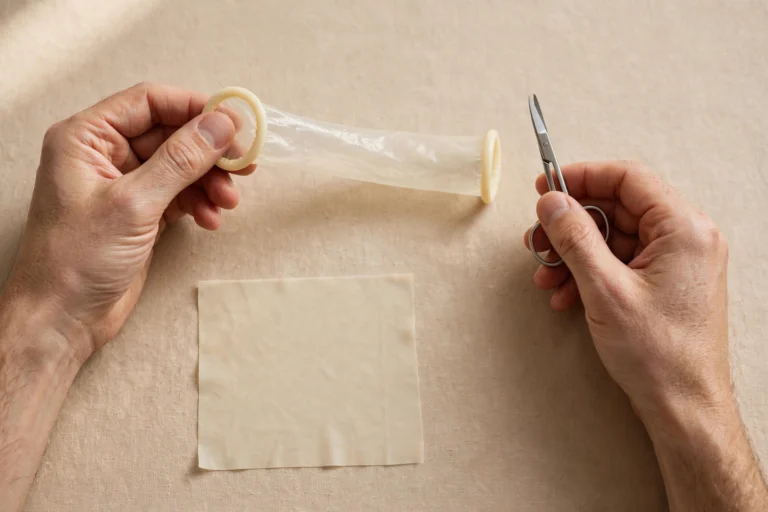
Yes — and the method is simple enough that the CDC describes it step by step. To make a dental dam from a condom, cut off the tip and the ring at the base, then slice the tube open lengthwise and unfold it into a flat sheet. You get a thin latex rectangle that works like a purpose-made dental dam: it sits between mouth and skin during oral sex and blocks direct contact and fluid exchange.
That does not make the two equal. A cut sheet is narrower and less even than a ready-made dam, and every cut can nick the latex. So yes, it is a real backup when no dam is at hand — but if you use dams often, buy the ready-made sheet. This guide shows the method, the mistakes that ruin it, and when to buy the real thing.
What You Need to Make a Dental Dam from a Condom
A condom, a pair of scissors, clean hands, and a flat surface are all it takes.
- A plain latex or polyurethane condom, in date, wrapper intact. Plain means no ribs, no texture, no warming or numbing coating, and no spermicide — extras irritate sensitive skin, and ribs make an uneven sheet.
- Small scissors with clean, sharp blades. Scissors cut straight; teeth and nails do not, and a jagged edge is where a tear starts.
- Clean hands and a clean, dry, flat surface to work on.
- Water-based lubricant, if you want extra glide. Oil-based products can weaken latex, so keep them away from the sheet.
Skip the internal condom, sometimes called a female condom: its shape and stiff rings do not open into a flat sheet. This method is for a standard external condom only. The guide on what to look for when buying dental dams covers the ready-made alternative.
How to Make a Dental Dam from a Condom: Step by Step
Work slowly and keep the latex flat. A rushed cut is the most common way a homemade dam fails — and a nick you cannot see is still a hole.
- Check the condom first. Read the date and check the wrapper for tears or dents. The guide on do dental dams expire explains how to read both, and the same checks apply here.
- Wash and dry your hands, so grit and sharp nails stay away from the latex.
- Open the wrapper with your fingers, along the edge. Never use teeth or scissors on it.
- Unroll the condom fully on the flat surface. Cutting a rolled one folds the latex, and the blade catches the layers.
The Three Cuts That Make a Dental Dam from a Condom
- Cut off the tip, snipping straight across just below the reservoir tip.
- Snip off the ring at the base, just above the rolled rim, so the tube has two open ends.
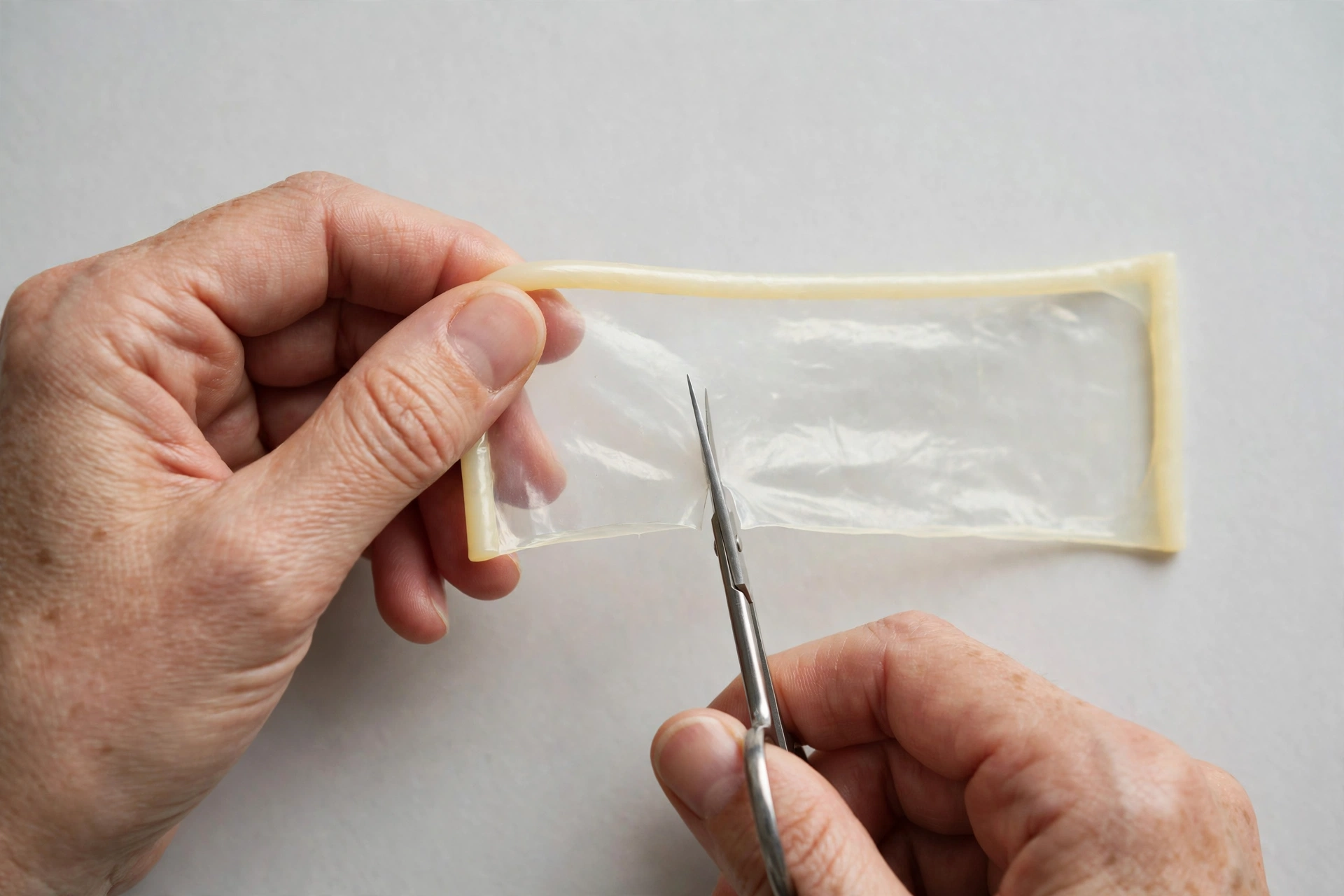
- Slice down one side in a single straight line, from one open end to the other. One smooth cut leaves one clean edge. Short sawing cuts leave a ragged edge that tears.
- Open the sheet flat and hold it up to soft light. Look for holes, thin spots, or nicks along the cut edges. Any damage means starting over with a fresh condom.
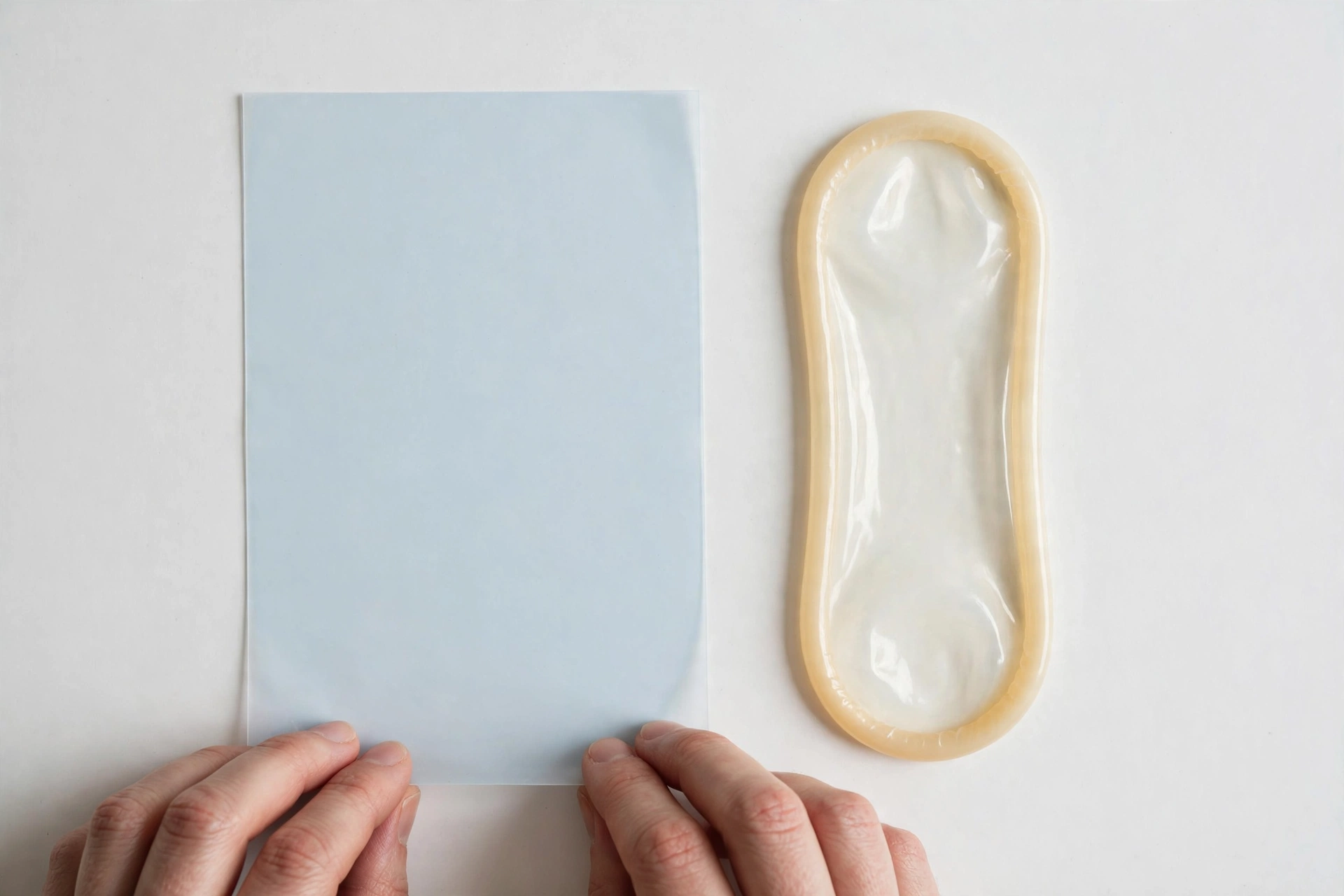
The result is a latex rectangle, narrower than a ready-made dam. Use it right away — never fold it up and save it, because a cut sheet picks up creases and damage. Use it like a ready-made dam: same side against the skin, held flat without stretching, water-based lubricant only, once, then bin it. The guide on how to use a dental dam covers placement, and the guide on what to do if a dental dam tears during use covers the fix if it tears.
Does a Cut Condom Work as Well as a Ready-Made Dental Dam?
In principle, both are the same thing: a single-use latex sheet between mouth and skin, blocking fluids and direct contact. In practice, coverage and consistency differ.
| Sheet cut from a condom | Ready-made dental dam | |
|---|---|---|
| Coverage | Narrow rectangle, shorter than a dam | Wide square, covers more skin |
| Edges | Cut edges, slightly uneven | Factory-cut straight edges |
| Thickness | Even, but only as even as your cut | Even across the whole sheet |
| Reliability | Depends on your cutting | Same every time |
| Preparation | Needs scissors and a flat surface | Open the packet and unfold |
| Best for | A one-off backup when no dam is at hand | Regular use |
Where the Cut Sheet Falls Short
Coverage matters most. A dam only protects the skin it covers, and the guide on do dental dams prevent STIs explains why: infections spread through skin contact as well as fluids, so a sore just outside the edge is still exposed. A narrower sheet leaves more skin outside the edge.
The CDC dental dam page recommends dams for oral-vaginal and oral-anal sex, and describes cutting a condom as the way to make one when no dam is available. The cut condom is the backup the guidance describes, not the equal of the product. No tested STI-prevention result exists for a homemade sheet.
Mistakes That Ruin a Homemade Dental Dam
Most homemade dams fail before they are used. A cut condom has no second chance: once nicked, the sheet is done.
| Mistake | Why it matters |
|---|---|
| Cutting with teeth or nails | Leaves a jagged edge that runs into a tear |
| Cutting while the condom is still rolled | The blade catches folded layers and nicks the sheet |
| Using a textured, ribbed, or spermicide condom | Uneven latex and extra chemicals that irritate skin |
| Using an expired or damaged condom | Aged latex loses stretch and tears easily |
| Reusing the sheet | A used sheet is a used barrier, and washing does not restore it |
| Making the sheet in advance | A cut sheet stored loose picks up creases and damage |
Check the date twice — a condom past its date is the easiest mistake. Latex ages even sealed, and heat and sunlight age it faster. If the date has passed, or the wrapper looks puffed or torn, use a different condom. The guide on how to store dental dams covers the storage rules.
When to Buy a Ready-Made Dental Dam Instead
A cut condom is a backup, not a habit. Buy the real thing when any of these apply.
- Dams are part of your routine. Cutting one every time is slow, and each cut can damage the sheet.
- Full coverage matters. A ready-made dam is wider and longer, so more skin sits under the sheet.
- You would rather not carry scissors. A dam needs only its packet, so it works anywhere a condom does.
- Latex is a problem for anyone involved. That sheet is still latex, so it does not solve an allergy — look for a non-latex dam instead.
- You want the same result every time. Factory-made sheets are flat, even, and the same size on every use.
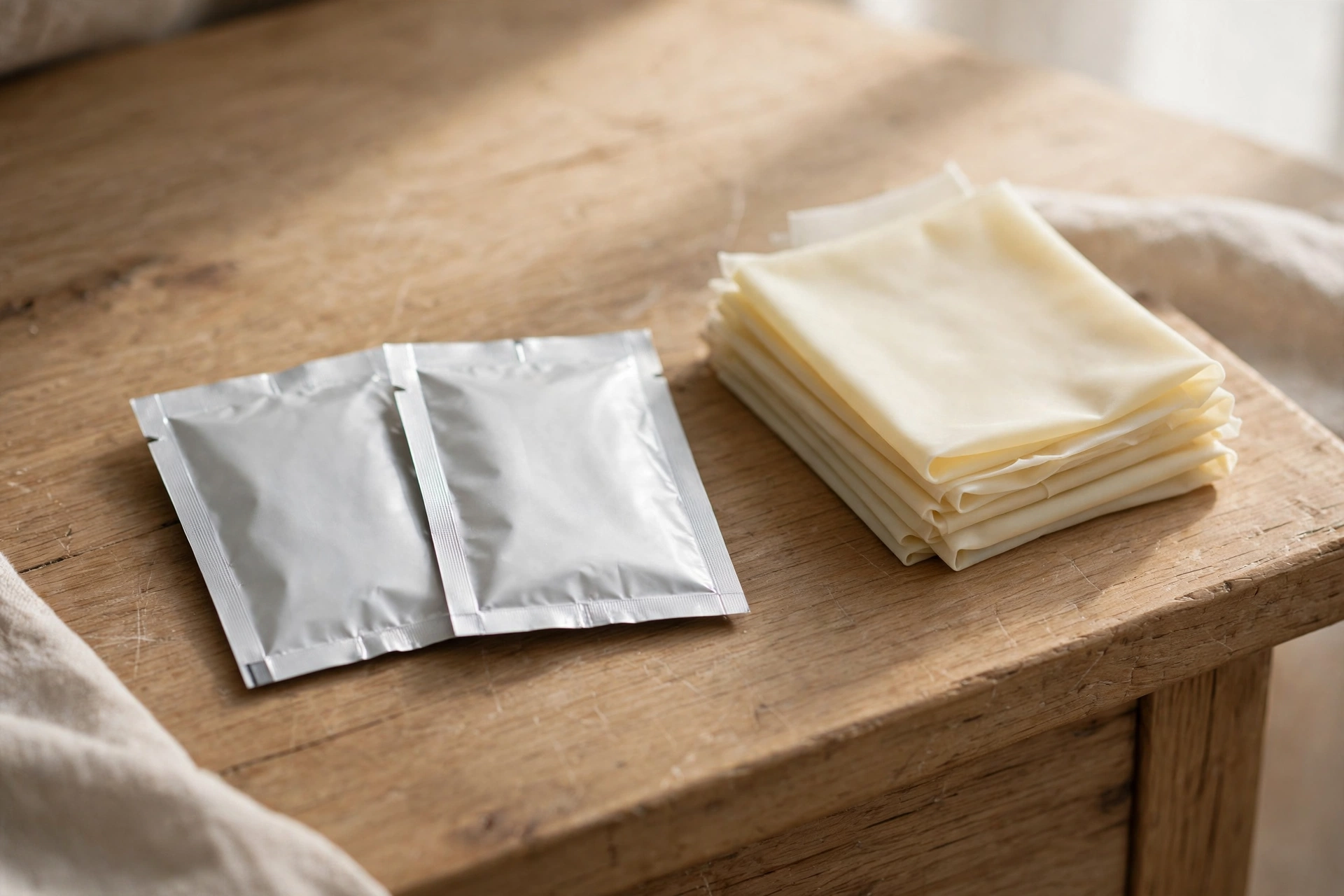
For a first purchase, the guide on what to look for when buying dental dams covers size, material, and packaging. A few dollars buys a pack, so a spare is always within reach.
Common Questions About Making a Dental Dam from a Condom
Can I use any condom to make a dental dam from a condom?
Almost any plain latex or polyurethane condom works. Avoid textured or ribbed condoms, and avoid spermicide, warming, and numbing coatings — they irritate sensitive skin and make an uneven sheet. Never use an internal condom: its rings do not open flat.
Can I use plastic wrap instead?
No. Household plastic wrap is not a tested barrier, and health agencies do not recommend it as a substitute. It tears easily and has no sealed edge. If you have a condom, cut the condom — if you have neither, wait for a real barrier.
Does a homemade dam protect against STIs as well as a real dam?
It works by the same principle — a latex sheet blocking contact and fluids — but it covers less skin, and its quality depends on your cut. No tested result proves the two equal. The CDC’s STI prevention guidance pairs barrier use with regular testing and talking with partners — advice that holds for a homemade sheet too.
Can I use a finger condom instead?
No. A finger condom is far too small — it is shaped for one finger, not for the area a dam must cover. Finger condoms are for manual contact. The guide on do finger condoms prevent STIs covers what they do, and the guide on dental dams vs. finger condoms explains which barrier fits which activity.
Products Mentioned in This Guide
The products below are the ones this guide refers to — check the product page for the current price before ordering.
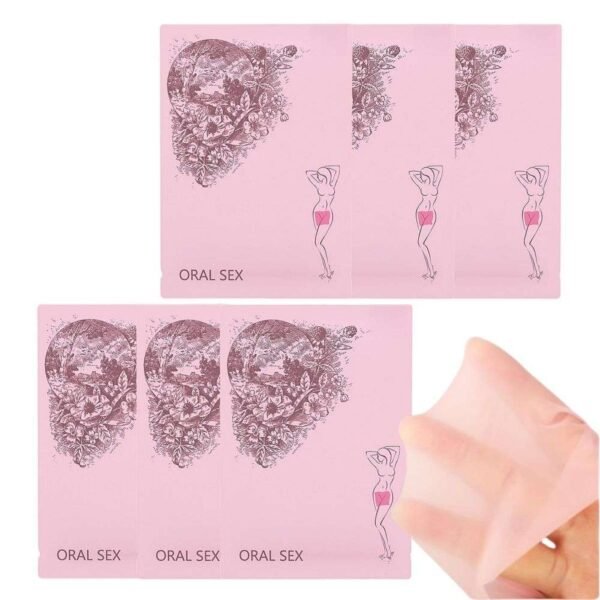
Ultra-Thin Dental Dam for Oral, 6 count
A flat latex sheet barrier for oral contact, the ready-made version of the sheet this guide shows you how to cut. $9.99 as listed on the site.

Callimis Dental Dam, Mouth Oral Sex, 8 count
The same barrier in a larger count, so a spare is always on hand. $12.99 as listed on the site.
Can you make a dental dam from a condom? Yes — cut off the tip and the ring, slice the tube open, and unfold it into a flat sheet. It is a real backup, and knowing the method means a missing dam never has to mean going without one.
But a backup is what it is. If dams are part of your routine, keep ready-made ones on hand. The habit is the same either way: check the date, check the sheet, keep it flat, use it once, and keep a spare.
This article is general information, not medical advice. It relies on general barrier guidance from public health sources and on the product facts in the site’s editorial record. It does not claim that any product prevents infections. If you are worried about exposure, speak to a clinician or a local sexual health service.