

Do dental dams expire? Yes. Every sealed packet carries a date, and that date is the only shelf-life figure that matters for the unit in your hand. A dam past its date may look fine from the outside. That is exactly the problem. You cannot judge the sheet inside from the wrapper.
A dental dam is a thin, flat sheet used as a barrier during oral sex. It is single-use. Like any latex barrier, the material ages. Heat, sunlight, and time wear it down, and a sheet that has gone brittle or weak is more likely to tear. The date on the packet is the manufacturer’s line: use the unit before then, and bin it after.
Why Do Dental Dams Expire?
A dam is a thin sheet, usually latex or polyurethane, with no frame or shell to protect it. The sealed wrapper is its only protection, and it only works while it stays sealed. Once the material starts to age, it loses stretch. A sheet that has lost its stretch tears more easily, and a small tear can be hard to spot in the moment.
The date on the packet is not a guess. For latex condoms, the U.S. Food and Drug Administration requires an expiration date that is backed by testing. The FDA latex condom labeling guidance allows a manufacturer to label a date of up to five years from packaging when the product passes the required tests. That rule covers latex condoms, not dams, but the principle is the same: latex is the material in both cases, and the packet date is the figure the manufacturer stands behind for that unit.
Where to Find the Date on a Dental Dam Packet
The date is printed on the individual foil packet, usually along a sealed edge, and also on the box the packets came in. Check the packet itself, not just the box. Packets from different boxes can get mixed up in a drawer, and the box date tells you nothing about the packet in your hand.
You may see EXP followed by a month and year, such as EXP 2027-11, or a “use by” date written out in full. Some packets also print a manufacturing date or a lot code next to the expiry date. The manufacturing date is not the expiry date. Look for EXP, “expiry”, or “use by”, and go by that one.
If the print is smudged, faded, or missing, treat the date as unknown. An unknown date is a failed check. Do not guess, and do not use that unit. Take a fresh packet with a date you can read.

What Happens When a Dental Dam Passes Its Date
Past its date, a latex sheet keeps aging. It dries out, stiffens, and loses elasticity. The risk is not that it falls apart in your hand. The risk is that it tears or develops a small hole during use, and you do not notice.
NHS advice on condoms puts it plainly: check the use-by date has not expired, because an expired condom may not be effective. The same caution applies to a dam. An expired unit may look and feel normal. That does not make it reliable. The date is the line the manufacturer tested to. Past that line, nobody has tested what happens next, and you cannot test it yourself by looking.
Do not stretch-test an expired dam. Stretching can damage a sheet, and a sheet that survives a pull in your hands tells you nothing about how it behaves in use. The CDC dental dam page describes the routine plainly: use a new dam, read the package, check the date and condition, and discard it afterward.
Signs a Dental Dam Is Past Its Best Before the Date
The printed date is a maximum under good storage, not a promise. A packet stored badly can go bad before its date, and heat, sunlight, friction, and moisture work quietly over months. A car glove box in summer, a windowsill, a wallet that bends every time you sit down, or a bag shared with keys can all shorten a sheet’s life. Oil-based products stored next to latex packets are another risk, since oil can weaken latex if it reaches the sheet.
The guide on how to store dental dams covers the full list of places to avoid and the spots that work. After you open a packet, look at the sheet before you use it. A sheet that is torn, brittle, sticky, or discolored is a failed check, whatever the date says. Take a fresh unit.

The 30-Second Check Before You Use a Dental Dam
Do this check every time, even for a packet that has been sitting in a good spot. It takes half a minute, and it is the whole habit.
| Step | What to check | If it fails |
|---|---|---|
| 1. Read the date | EXP or use-by date on the packet | Date has passed — take a fresh unit |
| 2. Look at the wrapper | Torn, open, stained, or crushed | Do not use that unit |
| 3. Open with your fingers | No teeth, no scissors | A nicked sheet is a damaged sheet |
| 4. Look at the sheet | Torn, brittle, sticky, or discolored | Take a fresh unit |
| 5. Still unsure | Anything about the packet feels off | Take a fresh unit |
Two rules sit behind the table. First, do not open a packet to inspect the sheet and then put it back for later. Once the seal breaks, the sheet sits exposed. Second, never use the same dam twice. The CDC dental dam page says to use a new dam each time and discard it afterward. Reuse is not a way around an expired packet. A fresh unit is the only answer.
The guide on how to use a dental dam picks up from here. It covers opening, unfolding, and holding the sheet in place. The date check is the handoff between storage and use.
What to Do With Expired Dental Dams
Bin them. Put expired packets in household waste, not down the toilet and not in a recycling bin. The sheet is a single-use barrier, and once it is past its date it has no second job. Do not keep expired packets “just in case”. A drawer full of expired units is worse than an empty drawer, because it makes reaching for the wrong packet easy.
Rotate your stock the way a shop does. Put new packs behind older ones and use the oldest packets first. A quick look at the dates once every few months catches anything about to expire. If you buy in bulk, buy a count you will actually use before the dates run out. The buying guide on what to look for when buying dental dams covers material, count, and date before you buy.
Check the date at the till, not just at home, and keep a few fresh spares in the same pouch so a failed check never leaves you without a replacement.

Common Questions About Dental Dam Expiry
Can I use a dam on its expiry date?
If the printed date has passed, do not use it. If today is the printed date, follow the packet’s own wording. A “use by” date means what it says. If you are unsure what the wording means on your packet, take a fresh unit with a date well ahead of it.
Do non-latex dams expire too?
Yes. Every barrier carries a date, whatever it is made of. Polyurethane also ages, and the packet date is the authority for that unit either way. The same check applies: read the date, look at the wrapper, look at the sheet.
I found an old packet with no readable date. Can I use it?
No. A date you cannot read is a date you cannot trust. Bin it and take a packet with a clear date. The same rule covers a packet whose wrapper is damaged, even if the date looks fine.
Is this the same for finger condoms?
The habit is the same. The guide on do finger condoms expire covers the date and wrapper check on a finger-shaped barrier. Both are single-use, both carry a date, and both get binned once it passes. Storage matches too: sealed, flat, cool, dry, and out of sunlight, as covered in the guide on how to store finger condoms.
Products Mentioned in This Guide
The products below are the ones this guide refers to. Check the product page for the current price, count, and package directions before ordering.
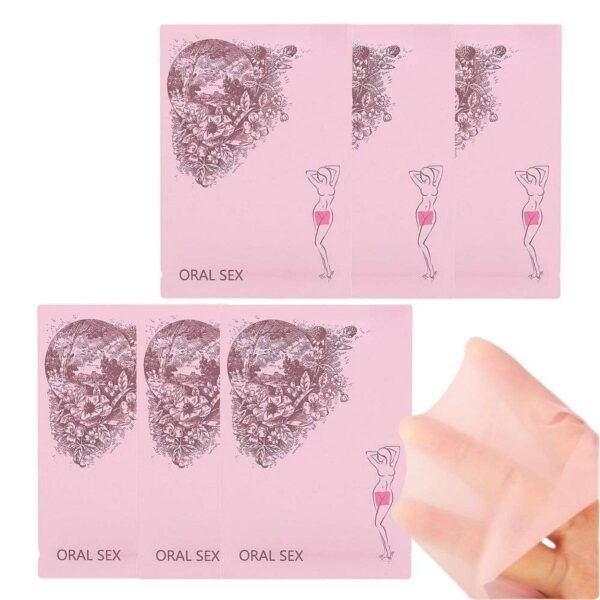
Ultra-Thin Dental Dam for Oral, 6 count
A flat sheet barrier for oral contact, the format this guide is about. $9.99 as listed on the site.

Callimis Dental Dam, Mouth Oral Sex, 8 count
The same flat sheet format in a larger count, useful for keeping sealed spares on hand. $12.99 as listed on the site.

Callimis Finger Condoms with Lubrication, 12 count
Natural latex, finger-shaped, single-use, pre-lubricated with a water-based, silicone-free lubricant. The companion barrier for manual touch, and the same date-check habit applies. $14.99 as listed on the site.
Do dental dams expire? Yes, and the answer is printed on every packet. Read the date on the individual packet before every use. Look at the wrapper. Look at the sheet once it is out. Bin anything past its date, anything with a damaged wrapper, and anything that looks wrong. Keep fresh spares in the same pouch so a failed check costs a packet, not the moment.
A dental dam is a single-use, flat sheet barrier for oral contact. No storage trick and no inspection can bring an expired unit back. Follow the packet when it says something different from this guide.
This article is general information, not medical advice. It relies on general barrier guidance from public health sources and on the product facts in the site’s editorial record. It does not claim that any product prevents infections.