
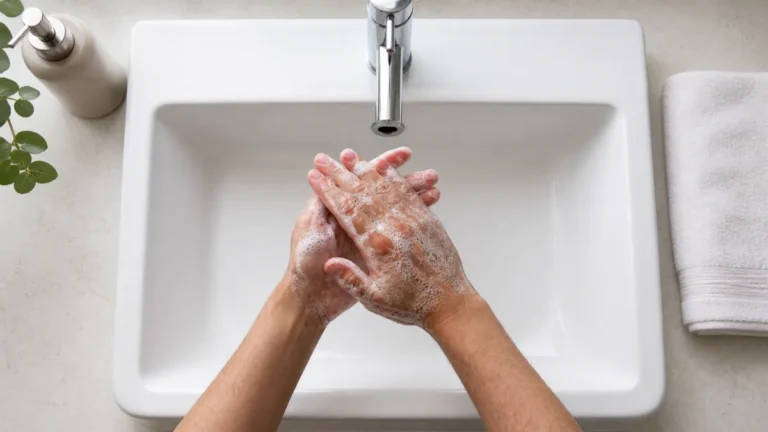
Lavarsi le mani prima di suonare con le dita è un semplice passaggio di preparazione: utilizzare sapone e acqua corrente pulita, insaponare ogni superficie delle mani, strofina almeno per 20 secondi, risciacquo, e asciugare completamente. Questa routine rimuove i germi e i residui quotidiani dalle mani, ma non li sterilizza, garanzia contro l’infezione, o sostituire il consenso e il conforto.
Consideratelo come una normale igiene delle mani comunitaria applicata in un momento sensato. IL Le linee guida comunitarie sull’igiene delle mani dell’OMS coprire le case e altri ambienti non sanitari; non sono prove specifiche del gioco con le dita. Per il sito più ampio, discussione ereditaria sull’argomento, guarda questo uno sfondo più ampio sull’igiene delle dita, ma non fare affidamento sul conteggio dei germi non originati come calcolo del rischio personale.
Cosa può e non può fare questa routine
Sapone, acqua, attrito, risciacquo, e l'asciugatura ti offrono un modo ripetibile per pulire le mani. Questa è una preparazione utile perché le mani raccolgono lo sporco, oli, prodotti chimici, e microbi attraverso il normale contatto quotidiano. Non è necessario decidere che qualcuno è “sporco” per preferire una nuova routine di lavaggio delle mani al contatto intimo.
La limitazione conta altrettanto. Le mani dall’aspetto pulito non sono mani sterili. Il lavaggio non può garantire che il gioco con le dita sarà esente da irritazioni, infezione, Trasmissione STI, o altri problemi di salute. Inoltre, non può rendere confortevoli i bordi ruvidi delle unghie o trasformare un riluttante “forse” in consenso. Trattare l'igiene, conforto fisico, e l'autorizzazione come controlli separati.
Prima di aprire il rubinetto
Una buona routine è più semplice quando le basi sono pronte. Hai solo bisogno di acqua corrente pulita, sapone semplice, e un modo pulito per asciugare le mani. Quindi dai una rapida occhiata a ciò che stai portando in questo momento.
- Togli anelli o braccialetti se ti impediscono di pulire la pelle sottostante o attorno ad essi.
- Nota lo sporco visibile, grasso, o residui di prodotto sulle mani e attorno alle unghie.
- Verificare la presenza di un bordo ruvido dell'unghia che potrebbe impigliarsi, e notare qualsiasi dolore, sanguinamento, o un'area aperta sulle mani.
- Prepara un asciugamano pulito, o prevedi di utilizzare un essiccatore d'aria, quindi non dovrai cercare con le mani bagnate in seguito.
Se qualcosa sembra o ti sembra scomodo, fare una pausa è una scelta pratica. Lavarsi le mani non è un motivo per ignorare una separazione dolorosa, cuticola strappata, o bordo tagliente.
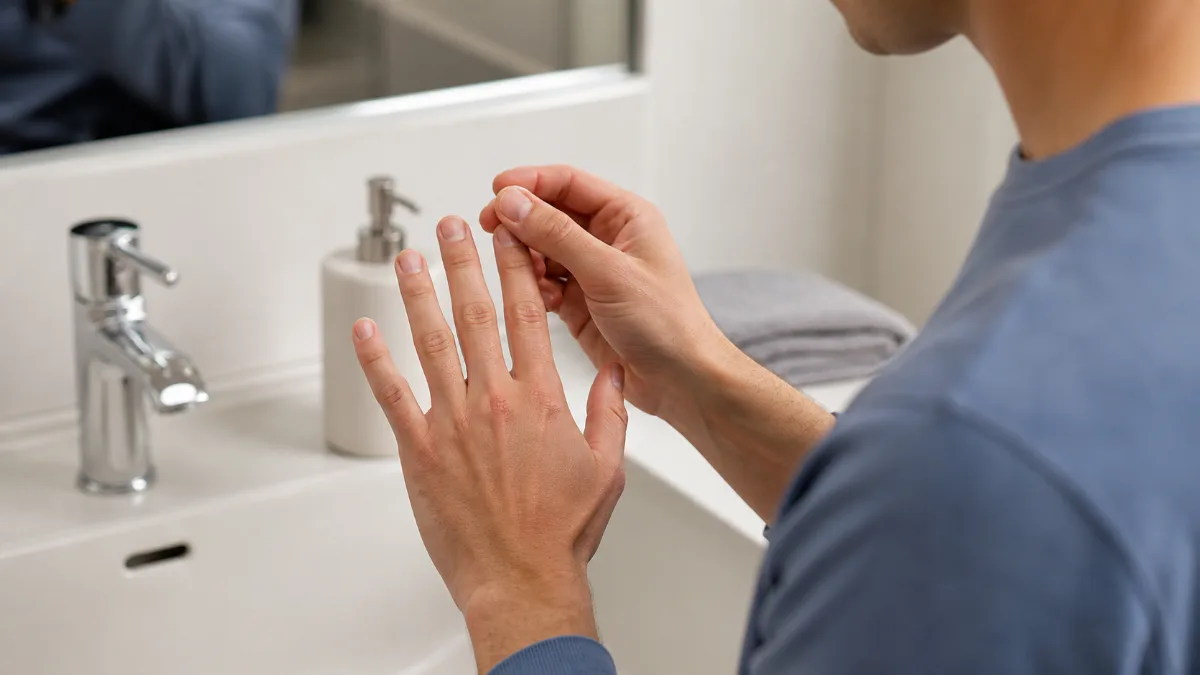
Un lavaggio delle mani prima della routine di gioco con le dita
La routine principale segue il Le cinque fasi del lavaggio delle mani secondo i CDC. L'acqua può essere calda o fredda; non è necessario che sia caldo. Concedi alla schiuma tempo e attenzione sufficienti per raggiungere le parti in cui le persone spesso passano di corsa.
- Bagnato: Bagnare entrambe le mani con pulito, acqua corrente, chiudi il rubinetto, e applicare il sapone.
- Schiuma: Strofinare le mani insieme. Coprire i palmi, dorso delle mani, spazi tra le dita, pollici, polpastrelli, e sotto le unghie.
- Macchia: Continua a strofinare almeno per un po' 20 secondi. L'obiettivo è la copertura completa e l'attrito, pressione non aggressiva che lascia la pelle irritata.
- Risciacquo: Risciacquare il sapone con acqua pulita, acqua corrente. Evitare di utilizzare come sostituto un bacino condiviso di acqua stagnante.
- Asciutto: Asciugare completamente con un asciugamano pulito o un essiccatore ad aria.
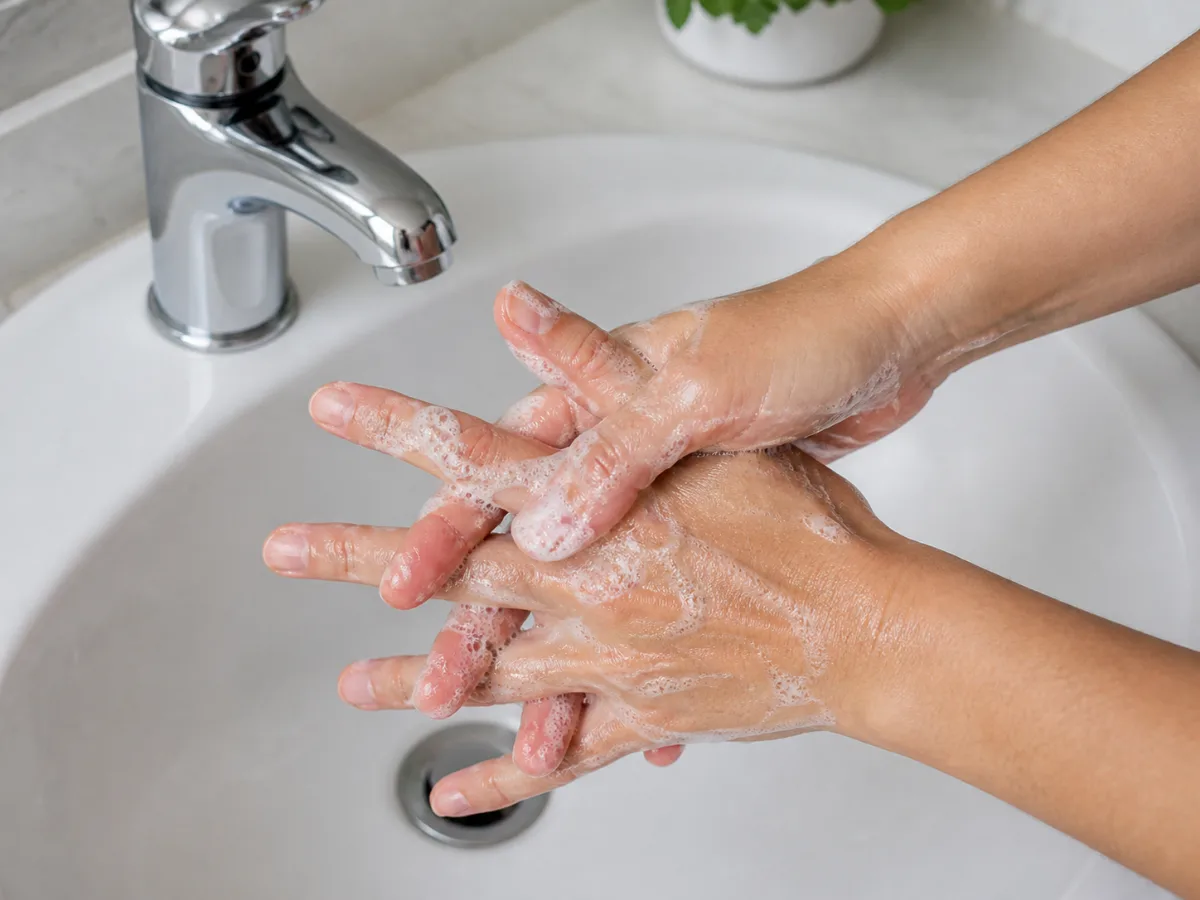
Non è necessario un prodotto speciale o fortemente profumato per questo processo. Una routine approfondita con acqua e sapone normale è la parte utile. Se un sapone ti provoca irritazione, smetti di usarlo e scegli un prodotto tollerato dalla tua pelle.
Dopo il lavaggio: Asciutto, Quindi tieni le mani pronte
L'asciugatura completa fa parte della routine, non un tocco finale opzionale. Utilizzare un asciugamano pulito anziché uno visibilmente sporco o umido a causa dell'uso ripetuto. Se sei preoccupato di toccare di nuovo il rubinetto o la maniglia del bagno, utilizzare un tovagliolo di carta pulito, il tuo gomito, o un altro metodo a mani libere, ove possibile.
Non è necessario diventare ansiosi per ogni superficie. Utilizza una semplice regola di ripristino: lavati di nuovo se usi il bagno, gestire la spazzatura, sporcarsi o ungere le mani in modo visibile, o fare qualcos'altro che annulli chiaramente la preparazione. Lo scopo è una routine praticabile, non si afferma che sia possibile mantenere una zona perfettamente priva di germi.
Quando il disinfettante per le mani è la soluzione alternativa
Acqua e sapone sono la prima scelta per questa routine. Quando non sono disponibili, un disinfettante per le mani a base alcolica può essere un'alternativa temporanea. Seguire l'etichetta del prodotto, coprire tutte le superfici delle mani, e strofinare finché le mani non saranno asciutte. IL Consigli sulla sicurezza dei disinfettanti per le mani della FDA dice di non fare affidamento sul disinfettante quando le mani sono visibilmente sporche o unte; lavare invece con acqua e sapone.
Non considerare il disinfettante come una scorciatoia dopo un lavaggio affrettato, e non dare per scontato che più prodotti siano automaticamente migliori. Usalo solo come etichettato, lasciarlo asciugare completamente, e lavati normalmente quando riacquisti l'accesso al sapone e all'acqua corrente pulita.
Aggiungi un controllo del comfort delle unghie e della pelle
Il lavaggio delle mani pulisce; non leviga un'unghia impigliata. Fai scorrere delicatamente il polpastrello di un dito lungo ciascun bordo dell'unghia e fai una pausa se un bordo si incastra o risulta tagliente. L’Accademia Americana di Dermatologia guida del dermatologo su come levigare i bordi ruvidi delle unghie consiglia una lima per unghie o una limetta per bordi irregolari e consiglia di lasciare sole le cuticole.
Non è necessario imporre una lunghezza universale dell'unghia. Forma, miglioramenti, condizione della pelle, e il comfort personale variano. Se di recente hai avuto un lavoro alle unghie, il separato giocare con le dita dopo una lista di controllo per la manicure copre lo smalto, decorazioni, rugosità, e motivi per soffermarsi più in dettaglio.
Rendilo reciproco, Non un'ispezione
Una routine condivisa di solito fa sentire meglio che individuare una persona. Tentativo: “Mi sento più rilassato quando entrambi ci laviamo prima le mani. Voglio farlo insieme?"L'altra persona può essere d'accordo, chiedere un'opzione diversa, o rifiutare l'attività. L’accordo sul lavaggio delle mani non è un consenso automatico a ciò che verrà dopo.
Se tu e un partner avete diverse preferenze igieniche legate all'intimità, concentrarsi su ciò di cui ogni persona ha bisogno per sentirsi a proprio agio piuttosto che dimostrare quale routine è corretta. Un piano realizzabile potrebbe essere lavare insieme, facendo una pausa, scegliendo un'attività diversa, o fermarsi per la giornata. La pressione non è una soluzione igienica.

Domande frequenti
Ho bisogno di sapone antibatterico?
Non è richiesto alcun sapone speciale per le fasi di lavaggio delle mani della comunità del CDC. Sapone semplice, acqua corrente pulita, copertura completa della schiuma, almeno 20 secondi di strofinamento, risciacquo accurato, e l'asciugatura completa costituiscono la routine pratica.
Dovrei lavarmi di nuovo immediatamente prima del tocco?
Usa un tempismo che mantenga la routine realistica. Lavarsi poco prima del tocco intimo ha senso; lavati di nuovo se usi il bagno, gestire la spazzatura, o sporcare visibilmente le mani tra il lavaggio e il contatto.
Il lavaggio delle mani rende il gioco con le dita privo di rischi??
NO. Il lavaggio delle mani rimuove germi e residui, ma non sterilizza le mani né garantisce contro le infezioni, irritazione, Trasmissione STI, o lesioni. Continua a verificare il consenso, comfort, unghia, pelle, e qualsiasi altra precauzione rilevante per te.
Cosa succede se il lavaggio o il disinfettante irritano la pelle?
Smettere di usare il prodotto irritante e sospendere il contatto intimo se la pelle è dolorante, incrinato, sanguinamento, o comunque scomodo. Se l'irritazione è persistente, acuto, o preoccupante, chiedere ad un operatore sanitario qualificato una consulenza personalizzata.
Il takeaway pratico
Lavarsi le mani prima di suonare con le dita funziona meglio come una calma abitudine in cinque passaggi: Bagnato, schiuma, strofina almeno per 20 secondi, risciacquo, e asciutto. Aggiungi un rapido controllo delle unghie e della pelle, ripetere il lavaggio se le mani si sporcano nuovamente, e rendere la routine una preferenza reciproca piuttosto che un giudizio. È una preparazione utile, mai una garanzia o un sostituto del consenso e del conforto.