
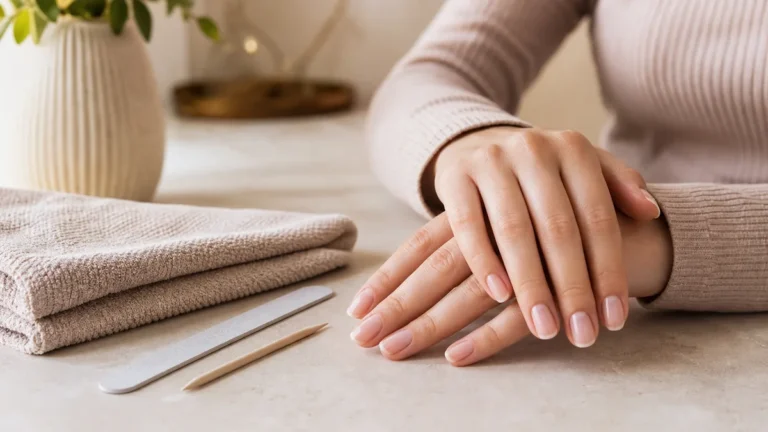
Gioco delle dita dopo una manicure può essere una scelta comoda quando controlli per la prima volta le unghie e la pelle circostante, lavati e asciugati le mani, e assicurati che tutti vogliano continuare. Una manicure fresca non è automaticamente sicura o pericolosa. Ciò che conta in questo momento è se un bordo sembra ruvido o tagliente, un'unghia è effettivamente danneggiata, e il tocco è confortevole.
Gioco con le dita dopo una manicure: Inizia con un controllo rapido
Usa una sequenza semplice: Aspetto, Tatto, lavare, decidere. Guarda ogni unghia e la pelle attorno ad essa in buona luce. Senti i bordi che si impigliano o graffiano. Lavati e asciugati le mani. Poi decideremo insieme se proseguire come previsto, modificare l'attività, o mettere in pausa.
Questo controllo riguarda la condizione delle tue mani adesso, non se la manicure è in gel, acrilico, immersione, o smalto normale. La lunghezza o la forma decorativa possono influenzare ciò che noti, ma nessuno stile produce un sì o un no automatico. Anche la persona che riceve il tocco fa parte del controllo: chiedi cosa ti fa sentire a tuo agio, e continua a controllare.
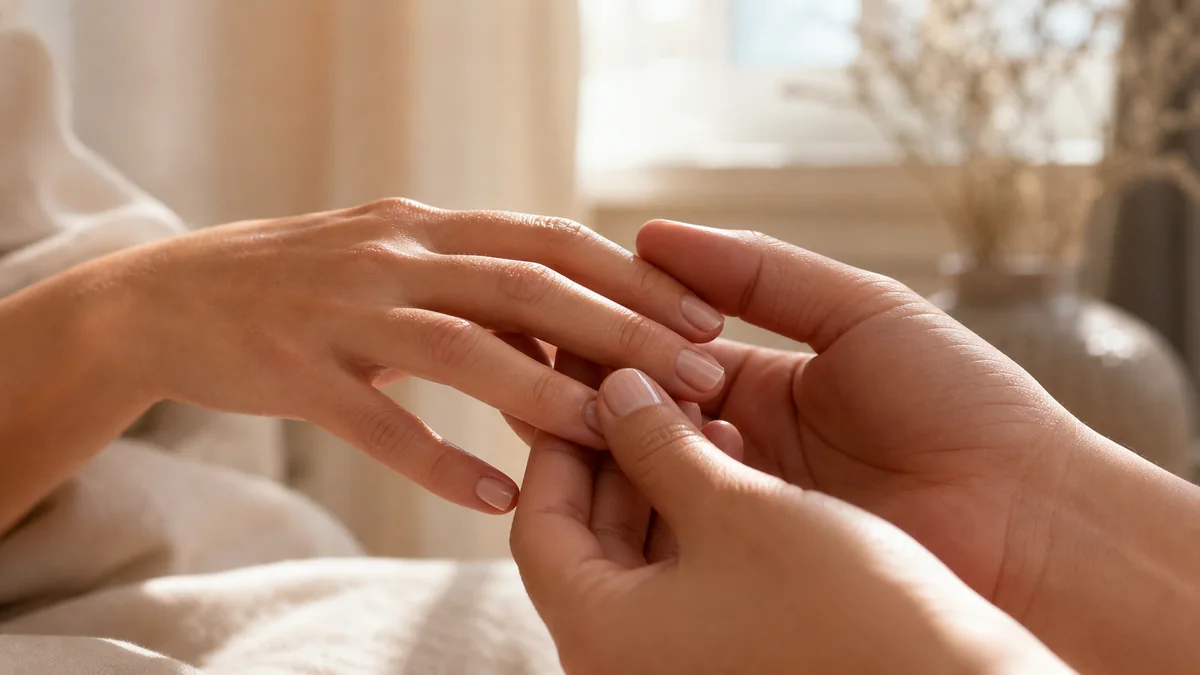
Controlla la lunghezza delle unghie, Forma, e spigoli vivi
Esamina la punta ed entrambi i lati di ogni unghia che intendi utilizzare. Fai attenzione ad un angolo frastagliato, una punta appuntita, un momento difficile, una decorazione sciolta, o un bordo che si impiglia nel tessuto. Passa leggermente l'unghia su un panno morbido o sul polpastrello del dito opposto; non premere con forza né testarlo su pelle sensibile.
Se un'unghia naturale ha un bordo irregolare o ruvido, considera di lisciarlo delicatamente con una lima per unghie pulita. L’Accademia Americana di Dermatologia consigli del dermatologo per tagliare e limare le unghie consiglia di smussare i bordi ruvidi e limare in una direzione. Questo può risolvere un problema, ma non garantisce che un chiodo non possa graffiarsi. Se la forma, lunghezza, o la decorazione rende ancora difficile il controllo del tocco, scegli un altro tipo di tocco o pausa.
Per uno sfondo più ampio, Callimis ha una guida separata per considerazioni sull'intimità con le unghie lunghe. Questa lista di controllo si concentra sulla decisione immediata post-manicure piuttosto che su tecniche o soluzioni alternative.
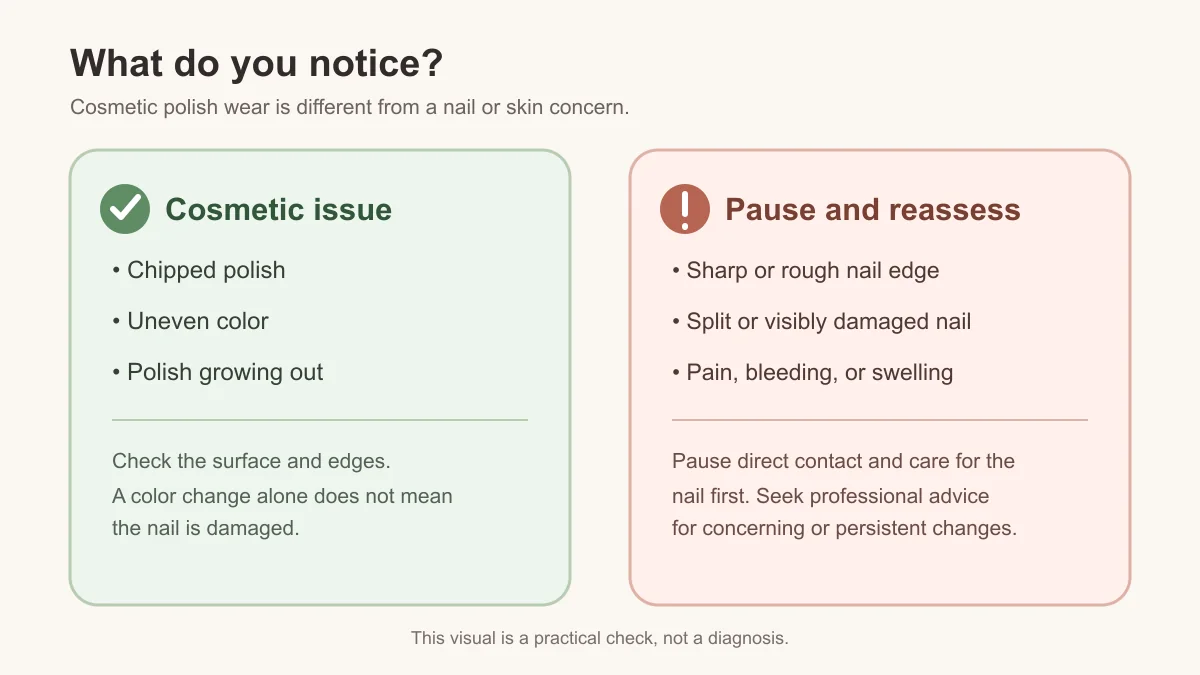
Lo smalto scheggiato non è la stessa cosa di un'unghia danneggiata
Una piccola scheggiatura estetica nello strato di colore non è la stessa cosa di un'unghia spaccata o di una pelle ferita, e lo smalto scheggiato da solo non costituisce un rischio di infezione. Ancora, controlla se lo smalto o il miglioramento si sono staccati, pezzo tagliente. Un difetto estetico può diventare un motivo pratico per modificare il piano se crea uno spigolo che cattura l'attenzione.
Metti in pausa il contatto diretto quando un'unghia viene divisa, sanguinamento, visibilmente danneggiato, insolitamente doloroso, o parzialmente staccato, o quando la pelle vicina è aperta, gonfio, o presenta segni visibili che ti preoccupano. Non coprire il dolore o il danno attivo con una barriera solo per andare avanti. Prenditi cura prima della ferita. Gli AAD guida per un'unghia ferita distingue l'assistenza domiciliare lieve dalle situazioni che richiedono cure mediche, inclusa una lesione particolarmente dolorosa o che non migliora.
Non è necessario diagnosticare ciò che vedi. Se un'unghia o la pelle circostante appaiono infette, o dolore, rigonfiamento, scolorimento, o un altro riguardante il cambiamento persiste, evitare il contatto diretto e chiedere ad un operatore sanitario qualificato cosa fare. Questo articolo è una lista di controllo pratica per la preparazione, non un consiglio medico.
Lavare e asciugare accuratamente le mani
Dopo aver controllato e levigato l'eventuale bordo ruvido appropriato, lavarsi le mani con sapone e acqua corrente pulita. Segui il Le cinque fasi del lavaggio delle mani secondo i CDC: Bagnato, schiuma, strofina almeno per 20 secondi, risciacquo, e asciugare con un asciugamano pulito o un essiccatore ad aria. Insapona il dorso delle mani, tra le dita, e sotto le unghie.
L'asciugatura è importante perché le mani umide possono rendere più difficile notare la sensazione della pelle e dei bordi delle unghie. Controllare ancora una volta dopo l'asciugatura, soprattutto sotto le unghie più lunghe e attorno a qualsiasi decorazione in rilievo. Lavarsi le mani aiuta a rimuovere i germi, ma non sterilizza le tue mani né promette che ogni rischio per la salute sia eliminato. I lettori che desiderano un contesto più ampio possono rivedere l’articolo di Callimis su igiene più ampia delle mani e delle unghie; le fasi di lavaggio specifiche qui provengono dal CDC.
Decidi se continuare, Modificare, o Pausa
- Continuare quando non sono presenti danni visibili o bordi fastidiosi, le tue mani sono pulite e asciutte, e tutti i soggetti coinvolti sono a proprio agio e sono d'accordo.
- Modificare quando una forma o una lunghezza rendono difficile un movimento pianificato, anche se non ci sono infortuni. Usa un dito diverso, ridurre la pressione, scegli un diverso tipo di tocco, o prendere in considerazione una barriera adeguata.
- Pausa per il dolore, sanguinamento, danno visibile, una decorazione tagliente e sciolta, un cambiamento relativo alle unghie o alla pelle, o l’incertezza o il desiderio di fermarsi di qualsiasi persona.
Di' ciò che noti senza renderlo imbarazzante: “Quel bordo sembra un po’ ruvido, quindi voglio cambiare quello che sto facendo," o "Questa pressione ti fa sentire a tuo agio?” Il partner ricevente può chiedere meno pressione, un movimento diverso, o un punto. Guida di Planned Parenthood su comfort, confini, e cambiare idea conferma che chiunque può interrompere l'attività sessuale in qualsiasi momento. Fermarsi è una decisione normale, non un fallimento.
Se scegli una barriera per le dita
Una barriera per le dita è opzionale; non sostituisce il controllo dei bordi delle unghie, lavarsi le mani, o fare una pausa quando un'unghia fa male, sanguinamento, o visibilmente danneggiato. Prima dell'uso, verificare che la barriera appaia integra, confermare che sia adatto alla lunghezza e alla forma attuali dell’unghia, e seguire le istruzioni fornite con il prodotto. Fermati se si strappa, scivola, o si sente a disagio.
Se scegli i preservativi da dito pre-lubrificati Callimis, i dati verificati del prodotto li descrivono come lattice naturale, barriere a forma di dito con base acqua pre-applicata, lubrificante senza silicone. Le persone con un'allergia al lattice nota o sospetta non dovrebbero presumere che un prodotto in lattice naturale sia adatto a loro. Per la procedura separata, leggi la guida Callimis su come utilizzare una barriera per le dita pre-lubrificata e le istruzioni allegate al prodotto.
Nessuna barriera per le dita garantisce il comfort, si adatta ad ogni manicure, o elimina infezioni o altri rischi per la salute sessuale. Se la barriera non riesce a posizionarsi come previsto sull'unghia, non improvvisarlo né forzarlo. Scegliere un’altra attività o aspettare che l’unghia sia in condizioni migliori è un’opzione ragionevole.
Una lista di controllo finale di 30 secondi
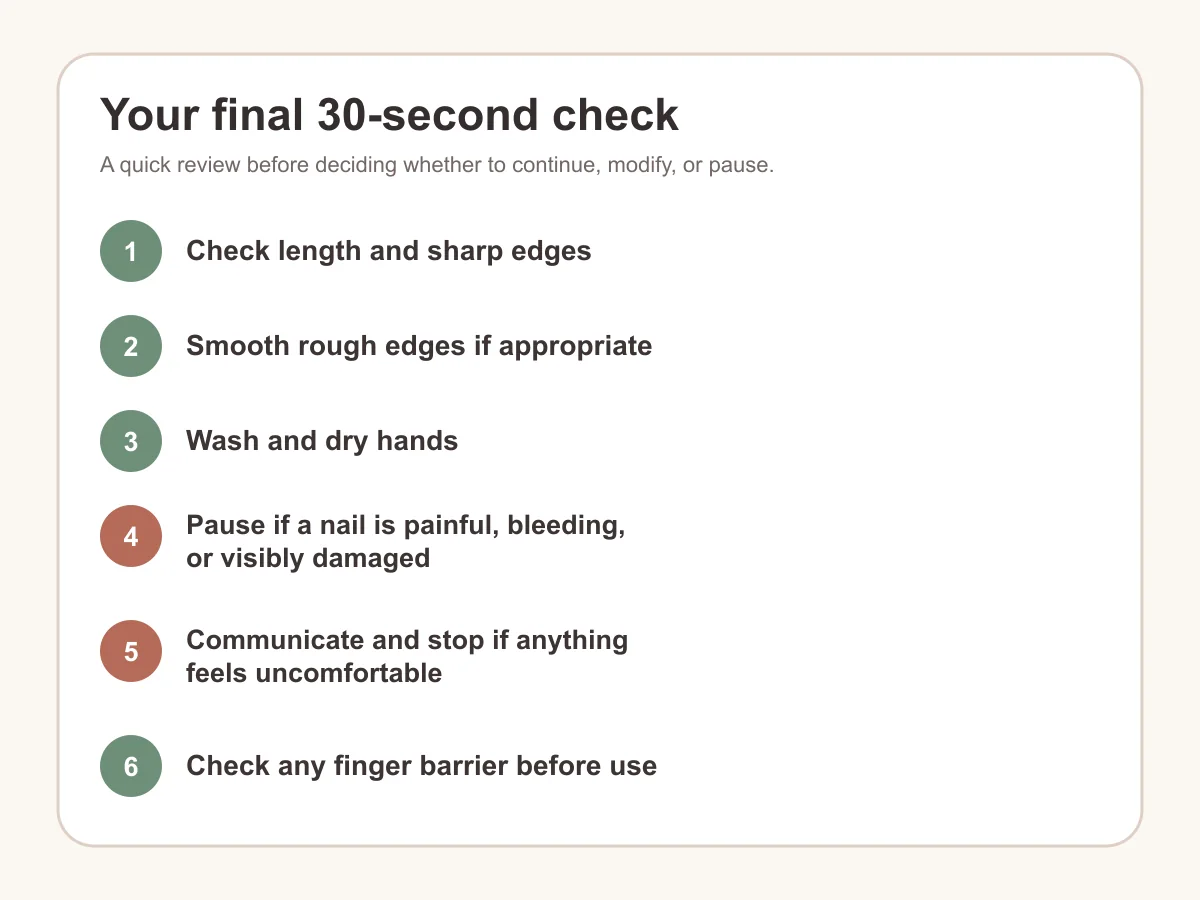
- Bordi: Non agitato, affilato, impigliarsi, o parti sciolte?
- Danno: Nessuna divisione, sanguinamento, doloroso, visibilmente danneggiato, o unghie o pelle dall'aspetto preoccupante?
- Mani: Lavato con acqua e sapone, poi asciugato?
- Comfort: Tutti vogliono continuare, e la pressione è confortevole?
- Barriera, se utilizzato: Intatto, adatto per l'unghia attuale, e utilizzato secondo le sue istruzioni?
- Segnale di arresto: È chiaro che chiunque può mettere in pausa o modificare le attività senza imbarazzo?
L'approccio pratico a gioco delle dita dopo una manicure è breve: ispezionare l'unghia, distinguere l'usura estetica dal danno reale, lavati e asciugati le mani, e fai il check-in. Continuare solo quando il controllo fisico e il comfort di tutti lo supportano.