
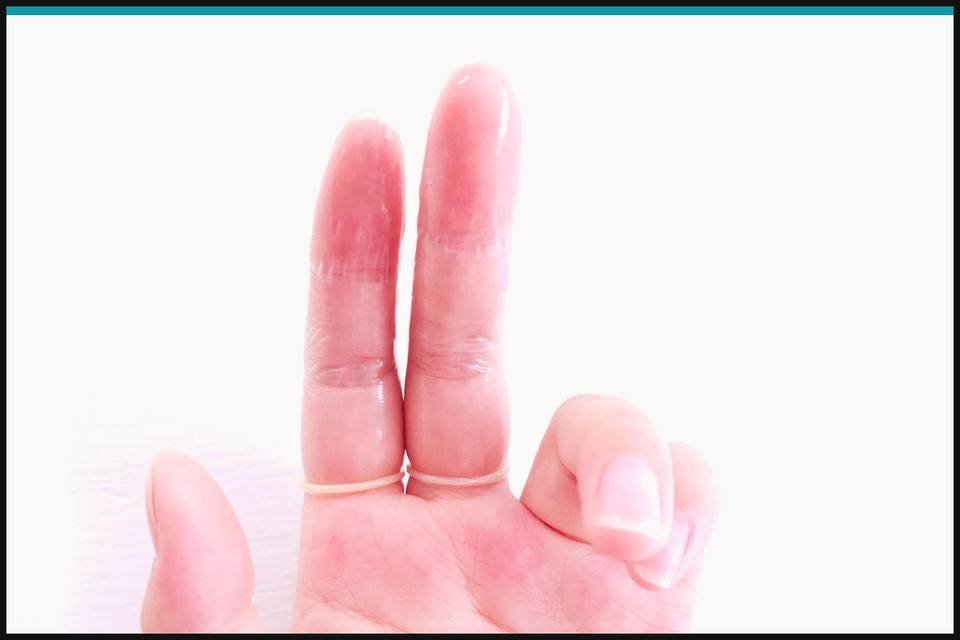
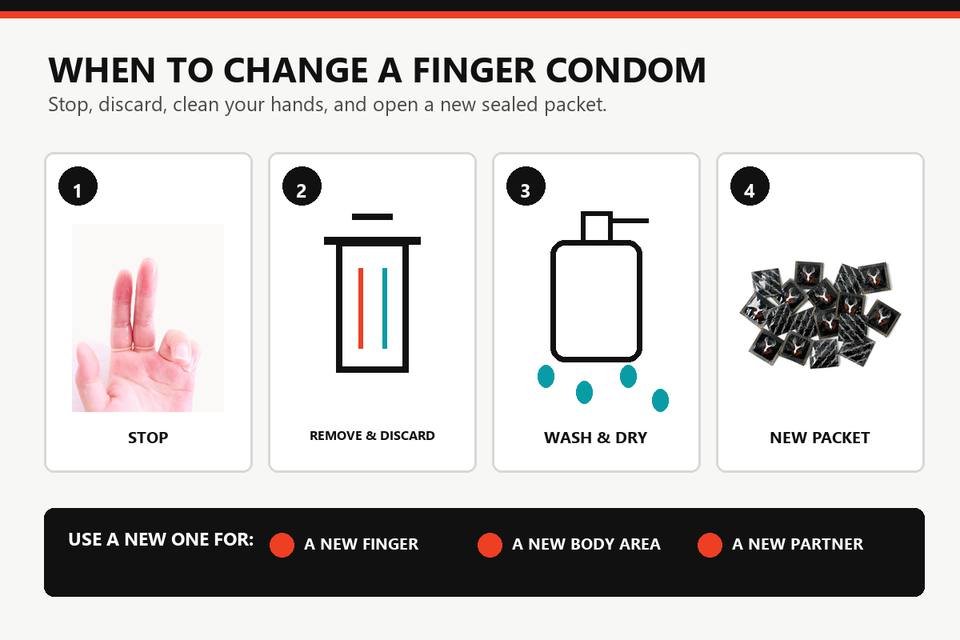
La diteggiatura double dip non dovrebbe comportare il riutilizzo dello stesso preservativo su un altro dito, una diversa zona del corpo, o un altro partner. Fermare, rimuovere ed eliminare la barriera usata, lavati e asciugati le mani, quindi aprire una nuova confezione sigillata prima di continuare.
Questa regola riguarda la riduzione del trasferimento di fluidi corporei e microbi da un punto di contatto all'altro. Un preservativo per le dita è una barriera monouso; pulendolo, capovolgendolo, o spostarlo su un altro dito non lo rende nuovo.
Cosa significa diteggiatura Double Dip?
In questa guida, diteggiatura double dip significa continuare il tocco intimo dopo aver mosso lo stesso dito, preservativo per le dita, o una mano non lavata tra le dita, aree del corpo, o partner. La frase è informale e può essere usata diversamente altrove, quindi la questione pratica è se una barriera usata viene trasportata in un nuovo contatto.
La regola semplice più sicura è: nuovo dito, nuova zona del corpo, o nuovo partner significa un nuovo preservativo per le dita. Ciò rende la decisione facile prima che il momento diventi confuso.
Quando dovresti cambiare un preservativo per le dita?
Sostituirlo ogni volta che cambia il contatto o la barriera non può più essere trattata come pulita e integra.
- Cambiare le dita: utilizzare una barriera separata su ciascun dito anziché trasferirne una usata.
- Cambiare le aree del corpo: utilizzare una nuova barriera prima di spostarsi tra i vaginali, vulvare, anale, orale, o altre aree di contatto.
- Cambiare partner: scartare il prodotto usato, pulisciti le mani, e aprire un nuovo pacchetto.
- Dopo uno strappo o uno scivolamento: fermarsi immediatamente e sostituire la barriera guasta.
- Dopo la rimozione: non rimettere lo stesso prodotto, anche se il contatto è stato breve.
- Quando la superficie è visibilmente sporca: fermare, scartatelo, e pulisciti le mani prima di continuare.
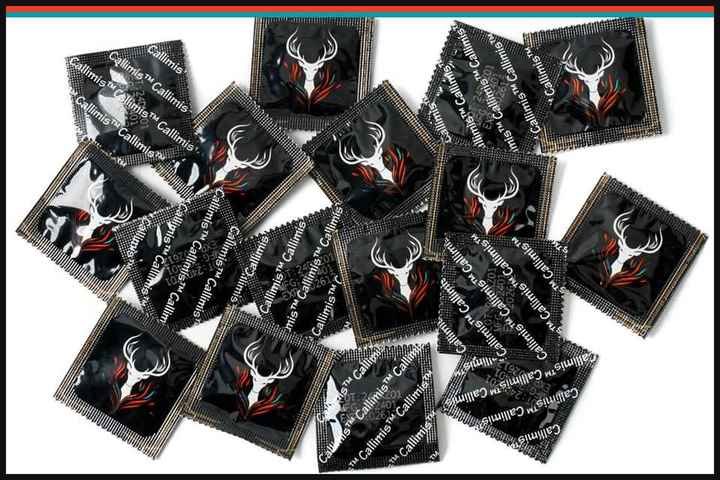
Il formato corrente del pacchetto Callimis è mostrato sul file Pagina del prodotto del preservativo da dito Callimis. Mantenere ogni unità sigillata fino al momento del suo utilizzo.
Perché spostare la stessa barriera è un problema di igiene?
Una barriera usata può trasportare fluidi o materiali fin dal primo contatto. Spostarlo può trasportare quel materiale su un dito diverso, zona del corpo, o persona. L’esatto rischio per la salute varia in base all’attività, le sedi corporee coinvolte, se la pelle è rotta, e se è presente un'infezione; una barriera non rende ogni tipo di contatto con la pelle esente da rischi.
Il servizio sanitario nazionale spiega che il diteggiamento non è un modo comune per diffondere le infezioni a trasmissione sessuale, ma i rischi rimangono, soprattutto quando ci sono tagli o piaghe. Suo attività sessuali e guida al rischio rileva inoltre che la diteggiatura può trasferire piccole quantità di materia fecale e raccomanda di lavarsi le mani dopo.
Cambiare la barriera è particolarmente importante prima di passare dal contatto anale a quello vaginale, vulvare, orale, o contatto visivo. La stessa regola della nuova barriera è facile da applicare anche nella direzione opposta, evitando la necessità di giudicare se una superficie usata è sufficientemente pulita.
Puoi pulire un preservativo da dito e continuare a usarlo?
NO. Pulitura, risciacquo, o l'aggiunta di altro lubrificante non ripristina il preservativo da dito usato alla sua condizione originale sigillata. La pulizia potrebbe anche rendere più difficile verificare che il materiale sottile rimanga intatto.
Non capovolgere il prodotto e proseguire con l'altra superficie. La rimozione può trasferire materiale alla mano, e l'inversione di una barriera arrotolata sottile potrebbe danneggiarla o applicarla in modo errato. Considera la rimozione come la fine dell'utilizzo del prodotto.
Come effettuare il passaggio in sicurezza in quattro passaggi
- Interrompi il contatto. Non toccare un'altra zona del corpo mentre si indossa la barriera utilizzata.
- Rimuovilo e scartalo. Staccatelo con attenzione e gettatelo nei rifiuti domestici.
- Lavati e asciugati le mani. Pulisci la zona attorno alla punta delle dita e alle unghie prima di aprire un altro pacchetto.
- Applicare un nuovo preservativo per le dita. Controlla l'involucro, apritelo con attenzione, e seguire le istruzioni del prodotto.
Per i dettagli dell'applicazione, utilizzare la guida illustrata su come usare i preservativi per le dita. Non aprire più pacchetti in anticipo; lasciare i prodotti non utilizzati sigillati.
Quanti pacchetti dovresti preparare?
Pianifica un nuovo preservativo per ogni dito che prevedi di utilizzare, quindi aggiungine un altro per ogni cambio di area del corpo o partner. Tieni qualche extra a disposizione nel caso in cui un involucro sia danneggiato, l'adattamento è sbagliato, o una barriera si strappa o scivola.
Per esempio, l'uso di due dita contemporaneamente richiede due preservativi per dita separati. Se in seguito passi ad un'altra area del corpo, andrebbero sostituiti entrambi. Questo è un esempio di pianificazione, non una quantità fissa per ogni persona; preparare in base al numero di dita, transizioni, e i partner coinvolti.
Riporre i prodotti e gli involucri usati in un piccolo sacchetto per i rifiuti o in un cestino domestico. La guida a smaltimento discreto del preservativo da dito spiega come contenerli ed eliminarli senza sciacquare.
Punti decisionali comuni
È possibile utilizzare lo stesso preservativo con lo stesso partner??
Solo per un uso continuo sullo stesso dito e sulla stessa area di contatto, mentre rimane correttamente montato ed integro. Cambialo quando il dito, zona del corpo, o utilizzare le modifiche.
Posso passare dal contatto vaginale al contatto anale con lo stesso?
Utilizzare una nuova barriera quando si cambiano le aree del corpo in entrambe le direzioni. Questa regola coerente riduce l’incertezza ed evita di trasportare materiale da un sito all’altro.
Posso spostarlo da un dito all'altro?
NO. Utilizzare un preservativo per dito. Rimuovere il prodotto usato, pulire e asciugare le mani, e apri un nuovo pacchetto per l'altro dito.
L'aggiunta di lubrificante rende la barriera riutilizzabile?
NO. Il lubrificante compatibile può supportare il comfort durante un utilizzo, ma non pulisce, reset, o riparare una barriera usata.
Chiave da asporto
Per la diteggiatura double dip, utilizzare una semplice regola di sostituzione: preservativo con un dito per un dito, una zona del corpo, un partner, e un uso continuo. Quando qualcuno di questi cambia, fermare, scartare la barriera, lavati e asciugati le mani, e aprire una nuova confezione sigillata.
Questo articolo fornisce informazioni educative generali e non sostituisce le istruzioni sul prodotto o i consigli di un operatore sanitario qualificato.