

Finger barriers during period sex are an optional way to cover one finger during intimate touch and may make cleanup feel more manageable for some people. Start with clear consent, clean and dry hands, the exact product directions, and a plan to stop if anything feels uncomfortable. A finger barrier does not eliminate STI, infection, or pregnancy risk.
This guide focuses on practical preparation, limited-coverage use, and cleanup. If you want broader background first, review the Callimis guides to basic finger-condom use and finger play in general. Health and safety statements here rely on the authoritative sources linked nearby, not on unverified claims in older posts.
Finger Barriers During Period Sex: The Short Version
- Talk about whether period sex and a finger barrier feel comfortable to everyone involved.
- Wash and completely dry your hands; check nails and surrounding skin for anything that could make touch uncomfortable.
- Read the exact package directions and use only a product intended for adult intimate use.
- Put a fresh barrier on the finger you plan to use, following the package sequence.
- Check in during touch and stop for pain, irritation, numbness, slipping, tearing, or a change of mind.
- Use a fresh barrier if you change fingers or body areas rather than moving the same barrier between them.
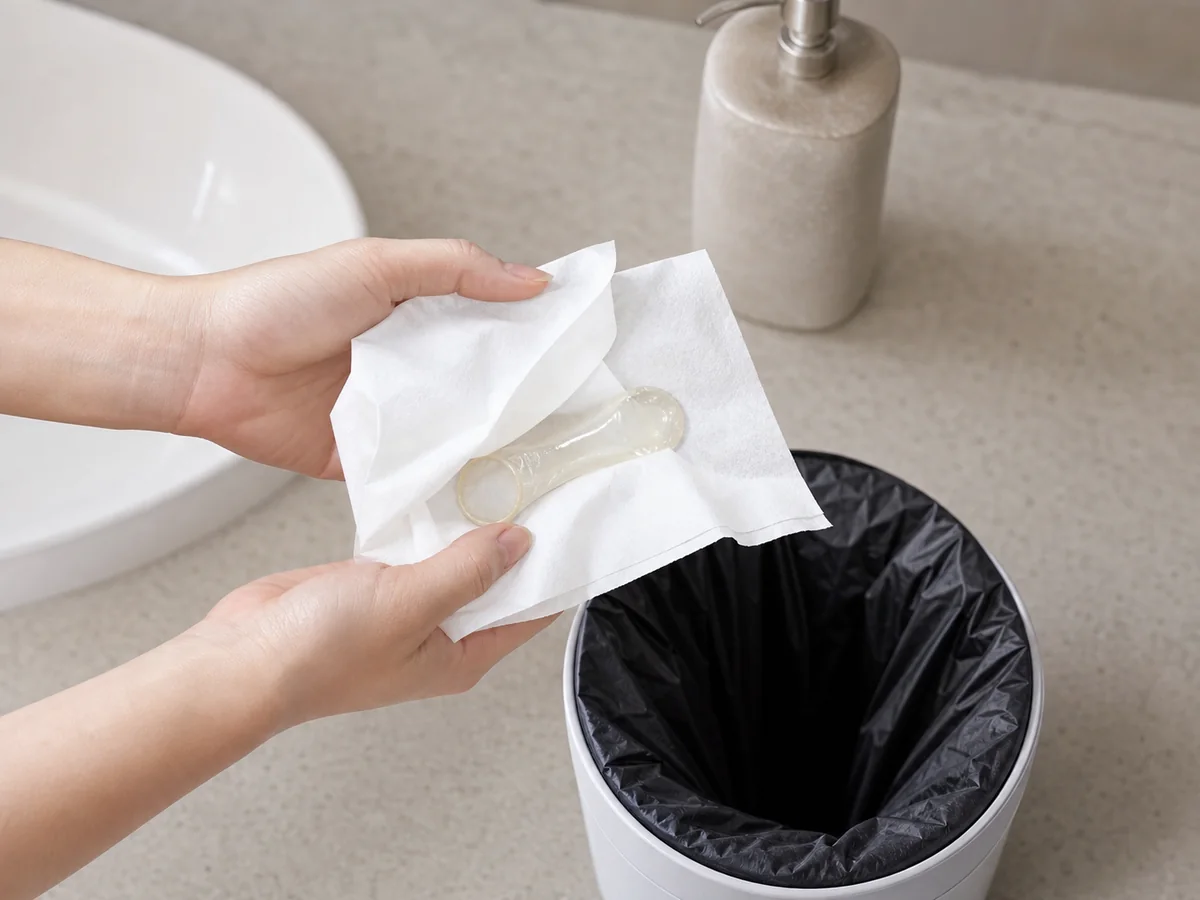
- Afterward, remove it carefully, wrap it, put it in household trash, and wash your hands. Do not flush it.
Using finger barriers during period sex is a preference, not a requirement or a substitute for communication. Planned Parenthood’s menstruation overview explains that a period is blood and tissue leaving the uterus. Menstruation does not make every kind of sexual activity risk-free, and it does not change the need for contraception when vaginal sex involving sperm is possible.
Start With Consent and Comfort
Ask about the activity, the barrier, the amount of touch, and cleanup before beginning. A person can be comfortable with period sex but not penetration, comfortable with touch but not a latex product, or interested at first and ready to stop later. Those are separate decisions.
RAINN’s consent guidance describes consent as clear, voluntary, ongoing, and withdrawable at any time. Use short check-ins such as “Is this still comfortable?” or “Would you like to pause?” If someone freezes, pulls away, goes quiet, or says stop, stop immediately. For a broader communication framework, see Callimis’s article on talking about intimacy hygiene.
Prepare the Space and Your Hands
A small amount of preparation keeps practical decisions from interrupting a check-in. Put supplies within reach before intimate touch begins:
- A fresh, sealed finger barrier intended for adult intimate use.
- A folded dark towel or washable surface cover, if desired.
- Plain tissues and a nearby lined trash bin.
- Clean running water, plain soap, and a clean way to dry hands.
- Any menstrual product the menstruating person normally uses after intimacy.
- Any lubricant that the exact barrier label permits, if extra lubricant is wanted.
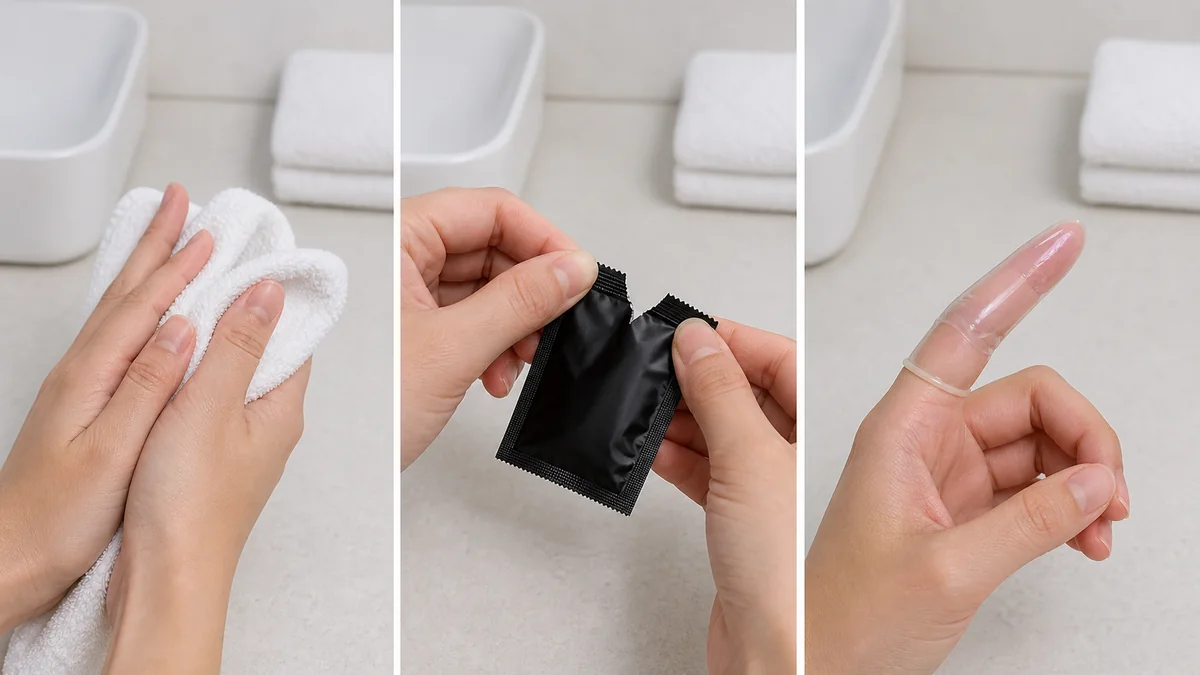
Wash before touching the barrier or another person. CDC handwashing guidance recommends plain soap, clean running water, scrubbing all hand surfaces for about 20 seconds, rinsing, and drying completely. Check for a rough nail edge, hangnail, cut, or sore area. A barrier should not be used to push through a hand or skin concern that already makes touch uncomfortable.

Check the Product Before You Begin
Read the actual package rather than relying on a marketplace title or another brand’s instructions. Confirm that the intended use matches adult intimate use, identify the material, and follow every warning and direction that appears on the current package. Do not use a wrapper that is open or visibly damaged, and do not use a barrier that looks torn, dried out, or otherwise changed.
The verified project facts say Callimis Pre-Lubricated Finger Condoms are finger-shaped, made from natural latex, approximately 0.03 mm thin, and pre-lubricated with a water-based, silicone-free lubricant. They are intended for adult intimate and personal hygiene use and are single-use. These facts do not establish sterility, medical-grade status, FDA approval, compatibility for someone with a latex allergy, or protection from a particular health outcome.
A General Step-by-Step Sequence
The exact package directions control. The sequence below is general preparation guidance, not a replacement for the product label:
- Choose the finger first. Use the finger that both people agreed on, with a smooth nail and no painful skin issue.
- Open carefully. Keep sharp objects, teeth, and jewelry away from the barrier while opening the wrapper.
- Orient the barrier. Follow the package illustration or directions so the barrier can move onto the finger without forced stretching.
- Apply gently. Roll or smooth it over the chosen finger as directed. Do not continue if it bunches, twists, pinches, or will not sit as intended.
- Recheck before touch. Make sure everyone still wants to continue and that the barrier has not visibly torn or slipped.
If extra lubricant is wanted, check the barrier instructions first. Callimis is already pre-lubricated with a verified water-based, silicone-free lubricant, but the project does not have a complete ingredient list or universal compatibility claim for every added product. Do not assume that an oil, lotion, massage product, or another lubricant is compatible with natural latex.
During Use, Keep Checking In
Begin with the agreed touch and pressure rather than treating the barrier as permission for more. Menstrual flow, cramps, sensitivity, energy, and preferences can vary from one moment to the next. A towel, dimmer lighting, or a different position may help someone feel less focused on cleanup, but no setup should override discomfort.
Pause if the barrier slips, tears, bunches, feels tight, or becomes uncomfortable. If you change fingers or move between body areas, remove it, wash and dry your hands, and use a fresh barrier if everyone chooses to continue. This is a practical cross-contact precaution, not a guarantee against infection.
Do not use a finger barrier to cover unexplained pain or irritation. ACOG’s guidance on pain during sex says frequent or severe pain should be evaluated by an ob-gyn or another health professional. Stop in the moment rather than trying to diagnose the cause during intimacy.
Remove, Dispose, and Wash
- Move away from intimate contact before removal.
- Take the barrier off slowly, keeping the outer surface from touching other skin or reusable items when practical.
- Wrap it in tissue.
- Place it in regular household waste. Callimis is a single-use disposable product; do not reuse it and do not flush it.
- Wash and completely dry your hands.
- Place towels or washable covers with the regular laundry, following the fabric-care directions.
- Check in once more about comfort and whether any follow-up is needed.
Understand the Limits
A finger barrier covers only one finger and only the area the material actually covers. It does not cover surrounding hands, skin, another person’s skin, sex toys, or other body parts. It is not contraception and should not be presented as a complete STI or infection-prevention method.
CDC’s overview of condoms and other barriers says correct condom use reduces but does not eliminate disease risk. That evidence concerns external and internal condoms and dental dams; it is not proof of Callimis-specific effectiveness. The careful conclusion is narrower: a finger barrier is a limited-coverage personal-hygiene choice whose exact claims must come from verified product evidence.
Know When to Stop and Get Advice
Stop for sharp, severe, worsening, or persistent pain; burning; notable irritation; numbness; a latex reaction concern; or bleeding that seems different from the expected period. If pain is frequent or severe, follow ACOG’s advice to contact a health professional. NHS guidance on unusual bleeding says bleeding between periods or after sex should be checked by a doctor or sexual-health clinic.
Seek urgent local medical advice for severe symptoms, fainting, or intense pelvic or abdominal pain, especially when pregnancy could be possible. A blog and a finger barrier cannot determine the source of pain or bleeding.
Frequently Asked Questions
Do finger barriers during period sex prevent STIs or infection?
No guarantee is supported. The Callimis project does not have verified clinical evidence establishing that the product prevents an STI or infection. Treat it as a limited-coverage adult personal-hygiene option, not a replacement for consent, testing, vaccination, contraception, or health-professional advice.
Can I use the same barrier on more than one finger?
Use the product only as its exact directions allow. A practical approach is one fresh barrier for the selected finger, replacing it if you change fingers, change body areas, or notice slipping or damage. Do not reuse a Callimis finger condom.
Does period blood replace lubricant?
Do not assume it does. Comfort and moisture vary. Callimis is verified as pre-lubricated, and any added product should be chosen only after checking the exact natural-latex compatibility instructions.
Is a finger barrier necessary for period sex?
No. It is one optional preparation and cleanup preference. The right choice depends on informed consent, comfort, material suitability, the exact activity, and the product directions. Stopping or choosing another kind of intimacy is always valid.
A Practical Final Check
Before starting, confirm consent, wash and dry your hands, read the package, and place cleanup supplies nearby. During touch, check in and replace the barrier if the finger, body area, or product condition changes. Afterward, wrap it, use household waste, do not flush, and wash your hands. Most importantly, treat pain, hesitation, and changing preferences as reasons to pause—not problems to work around.