
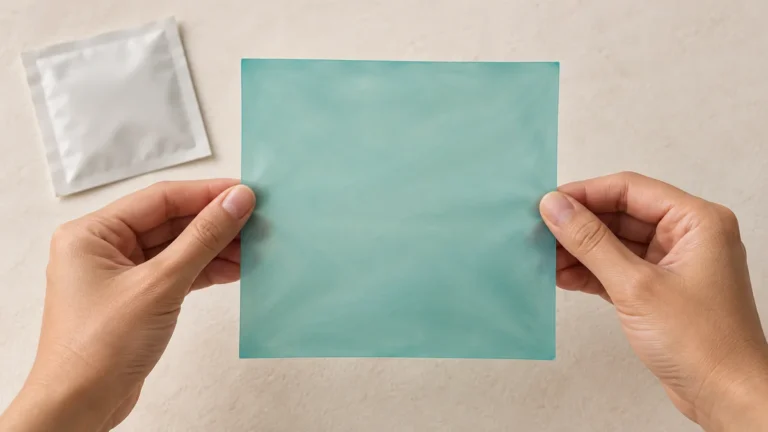
Lernen wie man einen Kofferdam an Ort und Stelle hält, Legen Sie es vor dem Mundkontakt flach hin und stützen Sie zwei Ecken oder Seitenkanten mit entspannten Fingerspitzen ab. Dehnen Sie es nicht zu stark; Jeder Partner kann es halten, und beide sollten pausieren, wenn es verrutscht, Falten, hebt sich vom vorgesehenen Bereich weg, oder beschädigt erscheint.
So halten Sie einen Kofferdam an Ort und Stelle
Die grundlegende Methode ist einfach: Halten Sie das Blatt flach, Halten Sie den vorgesehenen Bereich abgedeckt, und üben Sie nur so viel Handdruck aus, dass die Kanten nicht wandern. Die Safer-Sex-Anleitung von Planned Parenthood besagt, dass ein Kofferdam nicht straff gespannt oder fest auf die Haut gedrückt werden muss; es kann sanft an Ort und Stelle gehalten werden.
- Legen Sie es zuerst flach hin. Zentrieren Sie das entfaltete Blatt über dem Bereich, den es abdecken soll, bevor der Mundkontakt beginnt.
- Wählen Sie zwei stabile Punkte. Drücken Sie zwei Ecken leicht zusammen oder halten Sie sie an zwei Seitenkanten fest. Ein entspannter Griff ist einfacher aufrechtzuerhalten als in entgegengesetzte Richtungen zu ziehen.
- Halten Sie die Kanten sichtbar. Wenn Sie den Umriss des Blattes sehen können, können Sie eine Falte leichter erkennen, Aufzug, oder verschieben.
- Zum Anpassen pausieren. Positionieren Sie die Barriere neu, bevor Sie fortfahren, wenn sich die Abdeckung ändert. Zur richtigen Verwendung gehört eine Pause, kein Misserfolg.
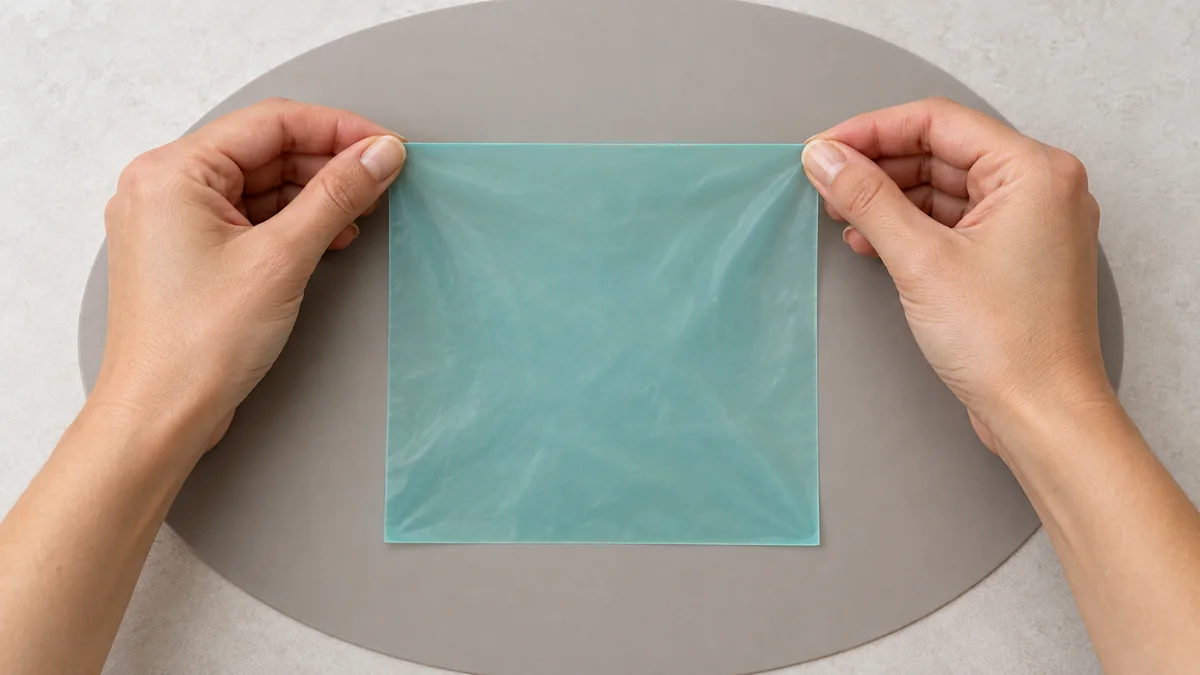
Bereiten Sie die Barriere vor, bevor jemand sie halten muss
Die Vorbereitung reduziert den Umfang der Handhabung während der Aktivität. Lesen Sie die Anweisungen auf dem jeweiligen Paket, das Sie haben, Überprüfen Sie das Datum, Öffnen Sie es vorsichtig, und prüfen Sie das Blatt bei gutem Licht. Der CDC-Leitlinien für Kofferdam sagt, jedes Mal einen neuen Damm zu benutzen, auf Risse oder Mängel prüfen, Ziehen Sie es an, bevor Sie mit dem Oralsex beginnen, Lassen Sie es eingeschaltet, bis es fertig ist, und legen Sie es flach über die Vulva oder den Anus.
Wenn Sie eine umfassendere Einführung benötigen, bevor Sie den Griff üben, Lesen Sie Callimis breitere Übersicht über Kofferdam. Für Kontext dazu, wo Staudämme unter anderem passen, Die Seite hat auch eine Überblick über orale Barriereoptionen. Diese Seiten bieten Themenkontext; Aktuelle CDC- und sexuelle Gesundheitsleitlinien sollten Gesundheits- und Konsumentscheidungen kontrollieren.
Schmiermittel können dazu beitragen, dass sich eine Barriere löst und die Reibung verringert wird, Die Kompatibilität hängt jedoch vom Barrierematerial und seinen Anweisungen ab. CDC empfiehlt Gleitmittel auf Wasser- oder Silikonbasis für Kofferdame und warnt davor, dass Produkte auf Ölbasis dazu führen können, dass Latexdämme brechen. Wenn das Material unsicher ist, Halten Sie an und überprüfen Sie das Paket, anstatt zu raten.
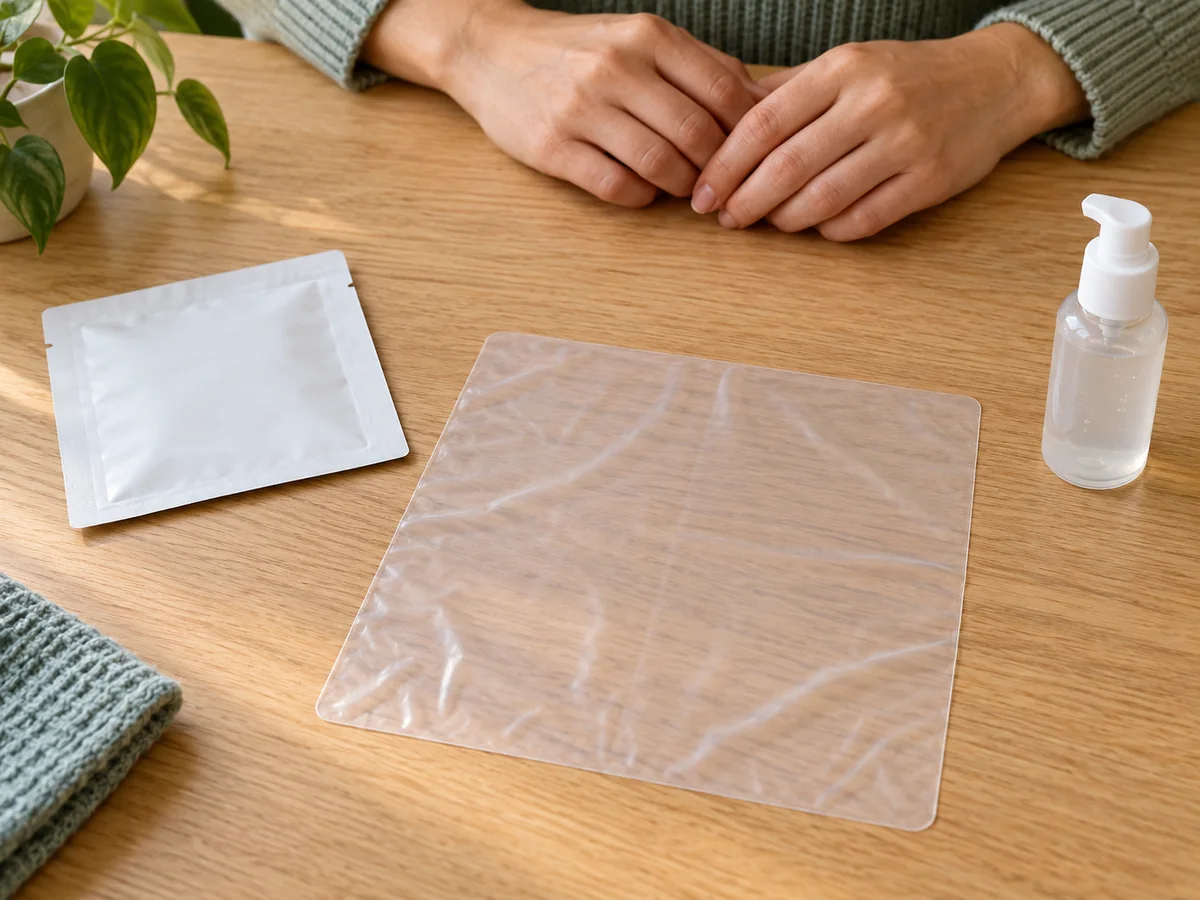
Wählen Sie einen sanften Griff, der das Blatt flach hält
Ein Zwei-Ecken-Griff funktioniert, wenn eine Person bequem eine Hand in der Nähe jeder Seite halten kann. Ein seitlicher Kantengriff kann sich stabiler anfühlen, wenn das Blatt größer ist oder sich die Position ändert. Das Ziel ist die Abdeckung, keine Spannung. Die CDC empfiehlt ausdrücklich, einen Kofferdam nicht zu dehnen, da er durch Dehnung reißen kann.
Kleine Bewegungen lassen sich leichter korrigieren als eine große Verschiebung. Wenn eine Kante anfängt, sich zu kräuseln, Halten Sie inne und glätten Sie die Kante, während Sie im Auge behalten, welche Seite am Körper anliegt. Drehen Sie das Blatt nicht um. Der Community Sexual Health Service des Homerton University Hospital empfiehlt, dass beim Wechsel zwischen Vagina und Anus ein Damm nur auf einer Seite verwendet und ersetzt werden sollte; es ist Anleitung für Kofferdam Sagen Sie auch, Sie sollten niemals eines wiederverwenden.
Entscheiden Sie, wer es halten soll und wie Sie den Besitzer wechseln
Jeder Partner kann den Damm halten. Wählen Sie die Anordnung, die es dem Halter ermöglicht, sein Handgelenk entspannt zu halten und die Kanten der Barriere zu sehen. Bevor es losgeht, Vereinbaren Sie einen einfachen Pausensatz wie „Warte mal“ oder „Lass uns zurücksetzen“. Wenn die Hand des Halters müde wird, Hören Sie zuerst auf, Übertragen Sie jeweils eine Kante, Stellen Sie sicher, dass das Blatt noch flach ist, und dann nur weitermachen, wenn alle wollen.
Auch diese Koordination ist eine Einwilligungspraxis. RAINNs Einwilligungsleitfaden beschreibt die Einwilligung als klar, freiwillig, und fortlaufend, mit Check-ins im Verlauf einer Aktivität. Das Halten der Barriere ersetzt nicht die Kontrolle der Bequemlichkeit, und jede Person kann jederzeit darum bitten, den Plan zu beenden oder zu ändern.

Was tun, wenn der Damm rutscht?, Falten, oder Tränen
Beenden Sie den Mundkontakt, sobald der vorgesehene Bereich nicht mehr bedeckt ist. Wenn sich das Blatt nur gefaltet hat, während seine dem Körper zugewandte Seite frei bleibt, Befolgen Sie die Anweisungen auf der Packung und glätten Sie es, bevor Sie fortfahren. Wenn es reißt, einen sichtbaren Defekt entwickelt, schaltet Kontaktbereiche, oder man kann nicht erkennen, welche Seite am Körper anliegt, Ersetzen Sie ihn durch einen neuen Damm. Dieser konservative Reset folgt den offiziellen Anweisungen, die Barriere bis zum Abschluss an Ort und Stelle zu halten, Verwenden Sie eine Seite konsequent, und verwenden Sie es niemals wieder.
Wenn das Ausrutschen wiederholt auftritt, Lösen Sie das Problem nicht durch stärkeres Ziehen. Setzen Sie das Blatt zurück, Überprüfen Sie die Schmierstoffverträglichkeit, und wählen Sie eine Position, in der die Arme des Halters gestützt werden. Wenn die vorhandene Barriere den vorgesehenen Bereich im flachen Liegen nicht bequem abdecken kann, Halten Sie inne und befolgen Sie die Anweisungen des Herstellers, anstatt einen Leistungsanspruch oder eine passende Lösung zu improvisieren.
Häufige Haltefehler, die Sie vermeiden sollten
- Spannen Sie das Laken fest. Ein Kofferdam sollte flach liegen, nicht wie ein Trommelfell gezogen werden.
- Beginnen Sie, bevor die Barriere zentriert ist. Legen Sie zuerst die Platzierung und die Handposition fest.
- Loslassen ohne Übergabe. Machen Sie eine Pause, bevor einer der Partner den Griff wechselt.
- Den Damm umdrehen. Achten Sie darauf, dass die zum Körper und zum Mund zeigende Seite konsistent ist.
- Verwendung des falschen Schmiermittels. Passen Sie das Schmiermittel an das Material und die Verpackungsanweisungen an; Produkte auf Ölbasis können Latex beschädigen.
- Weitermachen trotz Unbehagen oder Unsicherheit. Stoppen, einchecken, und ersetzen Sie die Barriere, wenn ihr Zustand oder ihre Ausrichtung unklar ist.
Häufig gestellte Fragen
Muss eine Person alle vier Ecken festhalten??
NEIN. Oft genügen zwei Ecken oder zwei Seitenkanten, um sanften Halt zu bieten, und jeder Partner kann sie halten. Was zählt, ist, das Laken flach zu halten und die Abdeckung aufrechtzuerhalten, ohne sich zu dehnen.
Soll ein Kofferdam festgezogen werden??
NEIN. Offizielle Leitlinien besagen, dass ein Damm nicht gedehnt werden darf. Halten Sie es vorsichtig und lassen Sie das Blatt flach aufliegen, anstatt es fest auf die Haut zu drücken.
Ist ein Kofferdam dasselbe wie ein Fingerkondom??
NEIN. Ein Kofferdam ist ein flaches Tuch, das zwischen Mund und Vulva oder Anus verwendet wird, während ein Fingerkondom eine fingerförmige Barriere ist. Callimis's Leitfaden zu verschiedenen Barriereformaten Bietet einen breiteren Kategorienkontext, Die spezifische Packungsanleitung des jeweiligen Produkts sollte jedoch als Leitfaden für die Verwendung dienen.
Was passiert nach dem Gebrauch??
Entfernen Sie die Barriere, ohne sie umzudrehen oder wiederzuverwenden, Befolgen Sie dann die Packungsanweisungen. Die detaillierte Entsorgung von Kofferdam ist ein separates Thema; Dieser Leitfaden stoppt bei den Halte- und Übergabeschritten.
Das Fazit
Die praktische Antwort auf wie man einen Kofferdam an Ort und Stelle hält besteht darin, zwei Ecken oder Kanten sanft zu stützen, Halten Sie das Blatt flach, und pausieren Sie, wenn sich die Abdeckung ändert. Vorbereitung, materialverträglicher Schmierstoff, eine bequeme Handhaltung, und klare Kommunikation machen es einfacher, diesen einfachen Halt aufrechtzuerhalten, ohne die Barriere zu dehnen oder ungestützte Schutzversprechen zu machen.