
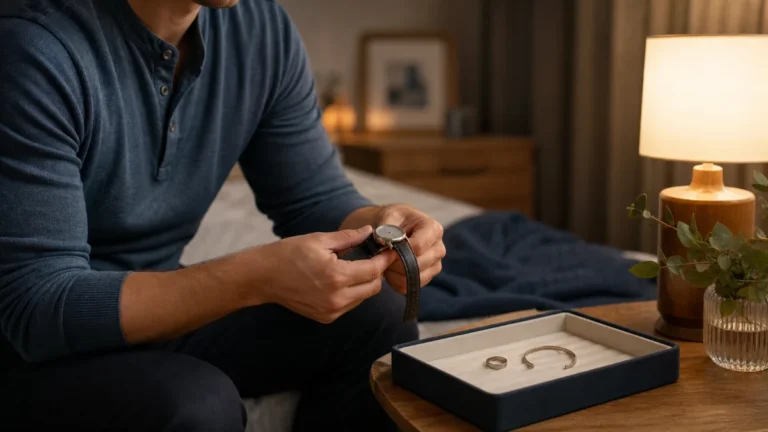
Checking jewelry before intimate touch is a small preparation step: remove any ring, bracelet, or watch that could enter the contact area, press, pinch, catch, shift, or distract either person. If you are unsure about an item, taking it off and placing it somewhere secure is the simplest choice.
This is not a rule that every smooth band must always come off, and jewelry removal cannot guarantee comfort or prevent every scratch. It is a practical check that makes room for a direct question: “Would you like me to take this off?” The answer can change with the activity, position, item, and person.
Why jewelry deserves its own check
Nail edges, hand cleanliness, and jewelry are separate things to review. A hand can be freshly washed and have short nails while still wearing a raised ring, a bracelet with a clasp, or a watch with a firm case. Those pieces may move as the wrist turns, and their position may be hard to notice once attention shifts elsewhere.
Start with the contact area rather than a blanket judgment about the jewelry. Ask which hand and wrist may touch another person, then look at every item on that side. A necklace or earring that will stay far from contact is a different question from a ring on the active hand.
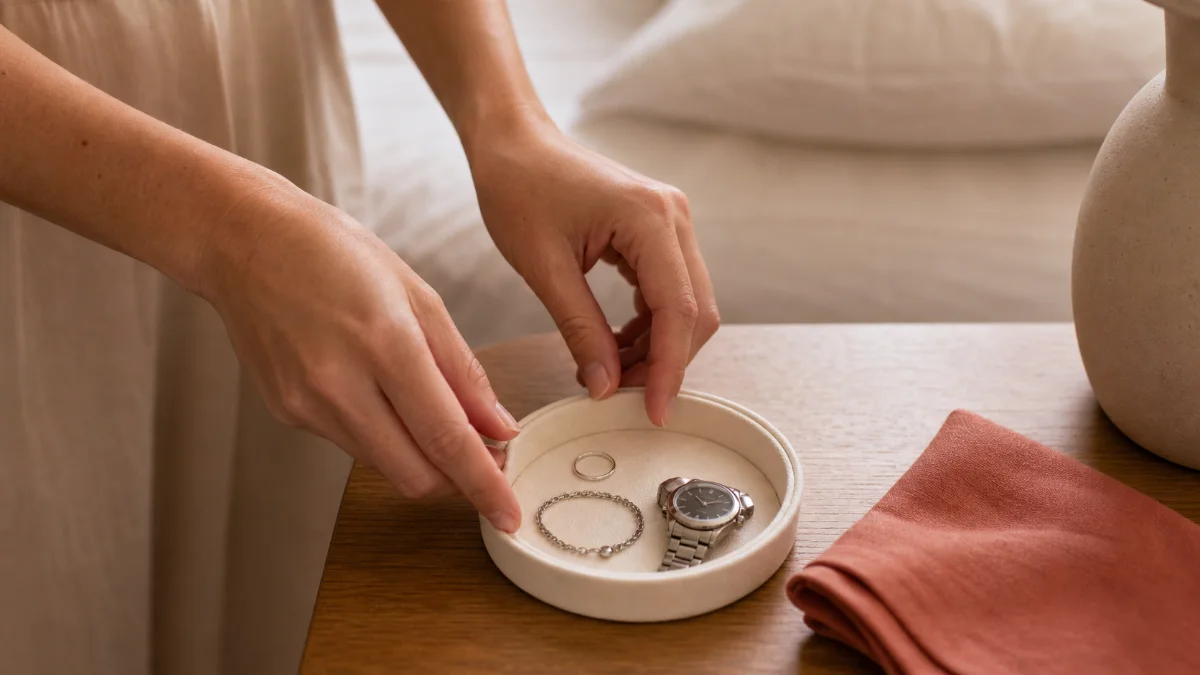
Your jewelry before intimate touch checklist
- Identify the contact hand and wrist. Check both sides if either may be involved.
- Look at the whole item. Notice raised settings, edges, clasps, charms, links, bands, and the watch case—not only the decorative front.
- Notice movement. Does the item rotate, slide, dangle, or become tighter when the hand bends?
- Remove uncertain pieces. Do not wait for a partner to feel an edge or ask during the moment.
- Store everything securely. Use a dish, pouch, or other known place away from bedding, drains, and busy walkways.
After removing the items, wash and dry your hands. Then check in about the planned touch. Preparation is complete only when the physical setup and the people involved both feel right about continuing.
Rings: smooth bands, raised settings, and loose fit
A plain band and a ring with a raised setting do not present the same contact surface. Prongs, stones, engraving, or an irregular edge deserve a closer look. A loose ring can rotate, moving a setting from the back of the hand toward the palm or side of a finger. A snug band may feel more noticeable when the finger bends.
Do not treat “smooth” as a guarantee. If a band could touch the other person, ask whether it should come off. Check the nails separately, too; Callimis has a separate guide to long-nail considerations, but this article does not rely on that page’s legacy medical or product claims.
Bracelets and watches: movement, clasps, and hard edges
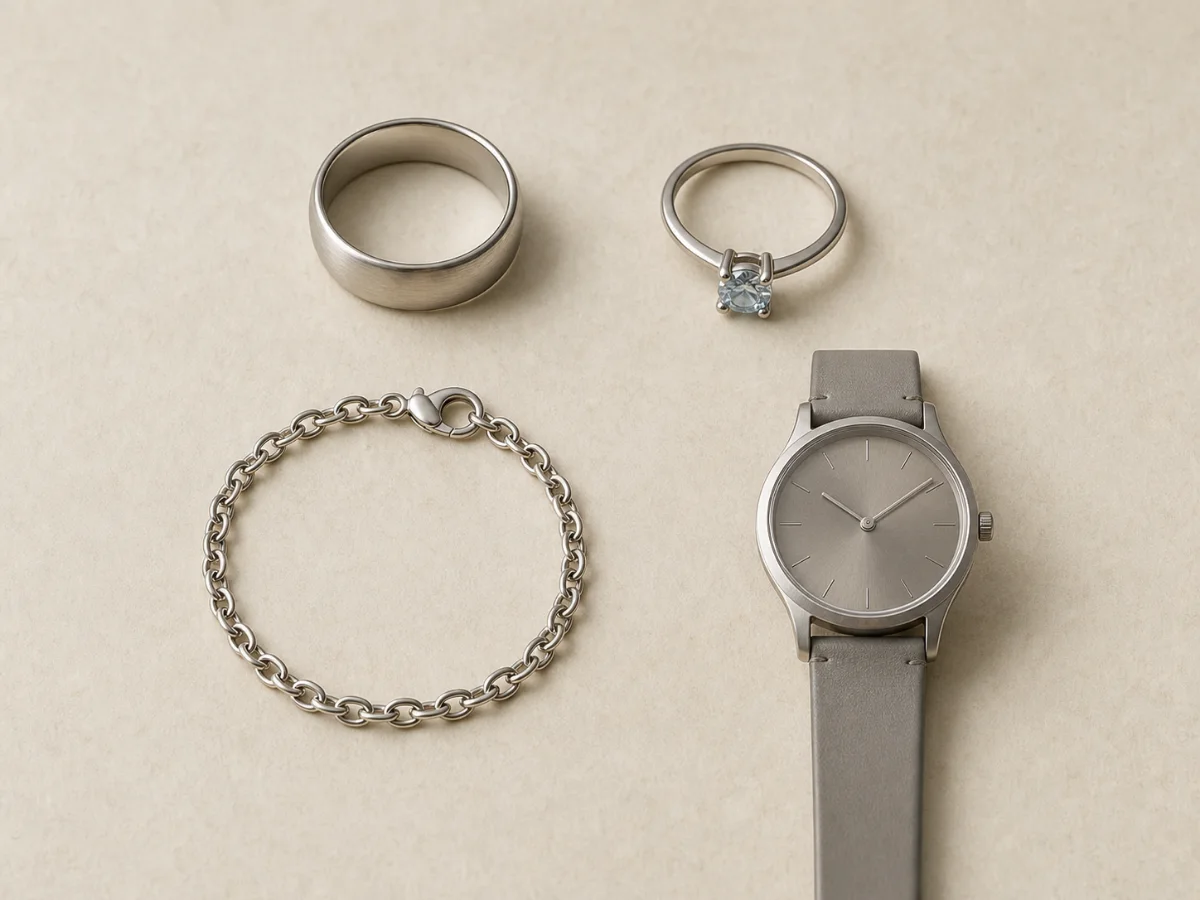
Bracelets can slide down the wrist, rotate a clasp, or bring a charm into the contact area. A watch adds a case, crown, buckle, or band edge that may press differently as the wrist changes angle. A soft-looking strap can still hold a firm watch case, so check the complete item rather than judging only the band material.
Remove a loose, bulky, dangling, rough, cracked, or distracting item before continuing. If someone wants a bracelet or watch to stay on, agree on where that wrist will be and keep checking whether the choice still feels comfortable. Either person can revise the plan without needing to defend the change.
How to raise the subject without blame
Make the request about the item and the shared plan, not about the person wearing it. Try: “Could we put the watch in the tray first?” or “That ring has a raised edge; would you mind taking it off for this?” Planned Parenthood’s sexual communication guidance emphasizes discussing likes, dislikes, pressure, and boundaries because partners cannot simply know what feels right for someone else.
For a broader approach to sensitive preparation conversations, see Callimis’s article on talking about intimate hygiene without blame. Keep the present question specific: remove this item, change where the hand rests, or pause. RAINN’s consent guidance also describes consent as ongoing and says partners should check in as an activity progresses. Agreement at the beginning is not a reason to ignore later discomfort.
Wash and dry hands after jewelry removal
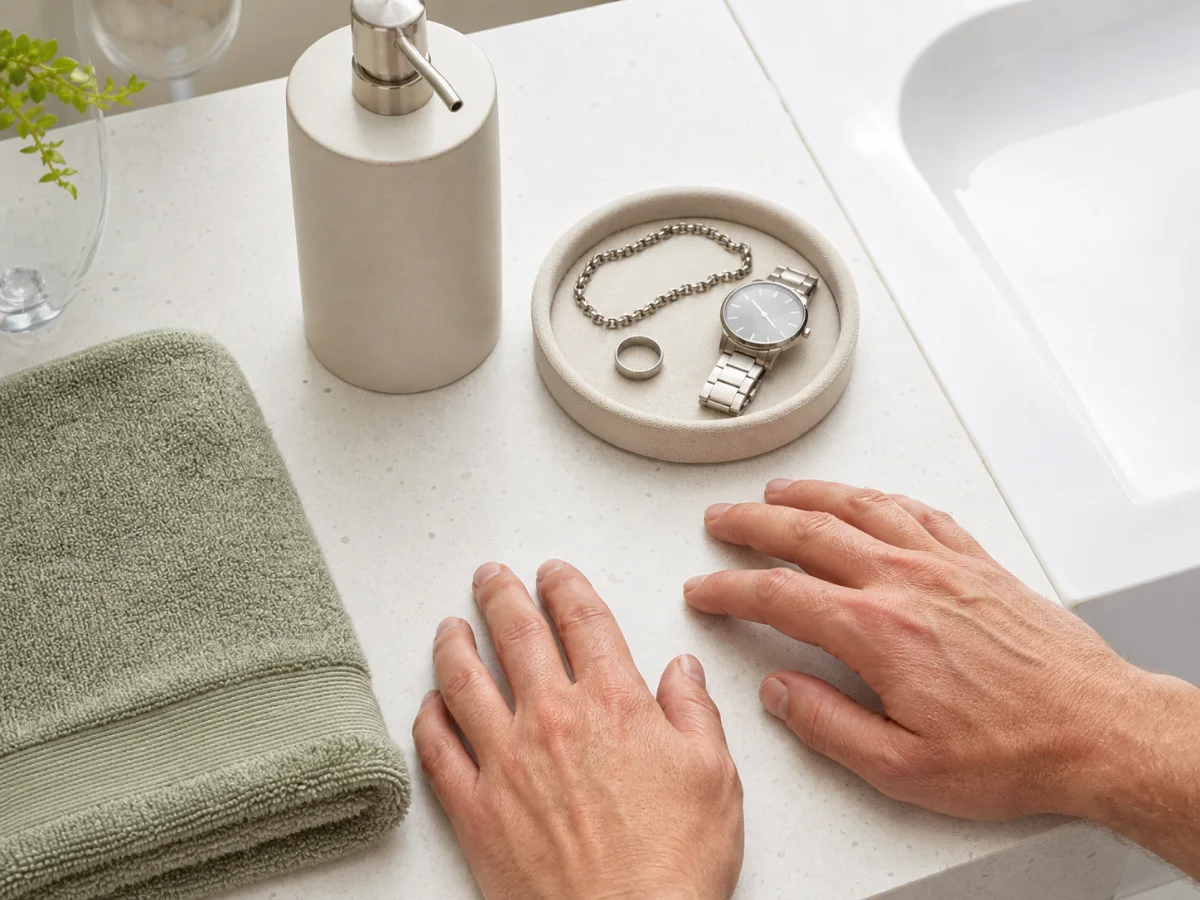
Remove jewelry before washing so you do not have to handle it again with clean hands. Follow the CDC’s five handwashing steps: wet with clean running water, apply soap, lather the backs of the hands, between the fingers, and under the nails, scrub for at least 20 seconds, rinse, and dry with a clean towel or air dryer.
Handwashing is a general hygiene step, not sterilization and not a promise that every health risk is gone. Readers who want the site’s broader discussion can visit the existing hand-hygiene context; the specific washing sequence here comes from the CDC rather than unsupported statistics in older content.
If jewelry causes a scratch or cut
Stop the activity rather than testing whether the discomfort will pass. Do not diagnose the injury or pressure someone to resume. The NHS offers general guidance for cuts and grazes, including cleaning minor wounds and getting urgent help for a serious cut or bleeding that cannot be controlled. Because that page is general rather than specific to intimate areas, seek individualized medical advice when the location, pain, bleeding, or any other concern makes the situation uncertain.
A 30-second final check
- Contact area: Which hands and wrists may touch?
- Rings: Any raised setting, rough edge, rotation, or pressure?
- Bracelets: Any dangling charm, loose link, clasp, or sliding movement?
- Watches: Any firm case, crown, buckle, or edge in the contact path?
- Storage: Are removed items together in a secure place?
- Hands: Washed with soap and water, then dried?
- Check-in: Does everyone want to continue, and can anyone pause easily?
That makes checking jewelry before intimate touch a short routine rather than a mood-breaking inspection. The goal is not perfection. It is to notice obvious contact points early and make a shared choice while changing course is easy.
Frequently asked questions
Does every piece of jewelry need to come off?
Not necessarily. Focus on items that may enter the contact area, move unexpectedly, press, pinch, snag, or distract. If you cannot confidently keep an item away from contact, removing it is the simplest option.
Can a smooth wedding band stay on?
There is no universal answer based only on the ring’s appearance. Consider whether it will make contact, rotate, feel tight when the finger bends, or bother either person. Ask directly and remove it if there is uncertainty.
Where should removed jewelry be stored?
Use a consistent, secure place such as a padded dish, closed pouch, or bedside container away from drains and bedding folds. Keeping the items together makes them easier to find later.
Does removing jewelry guarantee that no scratch will happen?
No. Removing jewelry addresses one practical factor only. Nail edges, pressure, movement, hand hygiene, communication, and ongoing comfort still need separate attention.
The bottom line
Jewelry before intimate touch deserves a quick, specific check: identify the contact hand, inspect rings, bracelets, and watches, remove uncertain pieces, store them securely, wash and dry your hands, and ask what feels comfortable. Keep the conversation open, and pause whenever an item or movement no longer feels right.