

Apprendimento come parlare di barriere per le dita inizia con la scelta di un momento di calma prima dell'intimità, dichiarando la tua preferenza senza giudicare il tuo partner, e chiedendo con cosa si sentono a proprio agio. Mantienilo specifico e a bassa pressione: spiega cosa intendi, invitare domande, e chiarisci che entrambe le persone possono fare una pausa o dire di no.

Come parlare delle barriere delle dita prima dell'intimità
Scegli un momento tranquillo
Non è necessario un annuncio formale. Un momento privato in cui nessuna delle due persone si sente affrettata può rendere più facile discutere l'argomento. Potresti sollevarlo mentre parli di ciò che piace a ciascuno di voi, sul testo prima di una data, o prima che inizi l'intimità fisica. Planned Parenthood consiglia parlando di sesso e confini prima dell'attività sessuale piuttosto che aspettare di essere già nel momento.
Guida secondo le tue preferenze, non un'ipotesi
Usa il linguaggio su ciò che ti aiuta a sentirti a tuo agio invece di fare una dichiarazione sul corpo del tuo partner, salute, o igiene. "Mi piace usare una barriera per le dita per suonare con le dita" è una preferenza. “Te ne serve uno perché non so se sei pulito” è un’accusa. Un confine personale descrive ciò che sei disposto a fare; non è necessario dimostrare che l'altra persona ha fatto qualcosa di sbagliato.
Fai una domanda che lasci spazio a una risposta onesta
Prova una domanda a cui il tuo partner può rispondere senza dover indovinare cosa vuoi sentire: “Ti sentiresti a tuo agio nell'usarne uno??" o "Come ti senti a riguardo?"?"Evita di presentare la domanda come una prova per verificare se si preoccupano per te. L’obiettivo è scoprire cosa funziona per entrambi, non indirizzarli verso una risposta predeterminata.
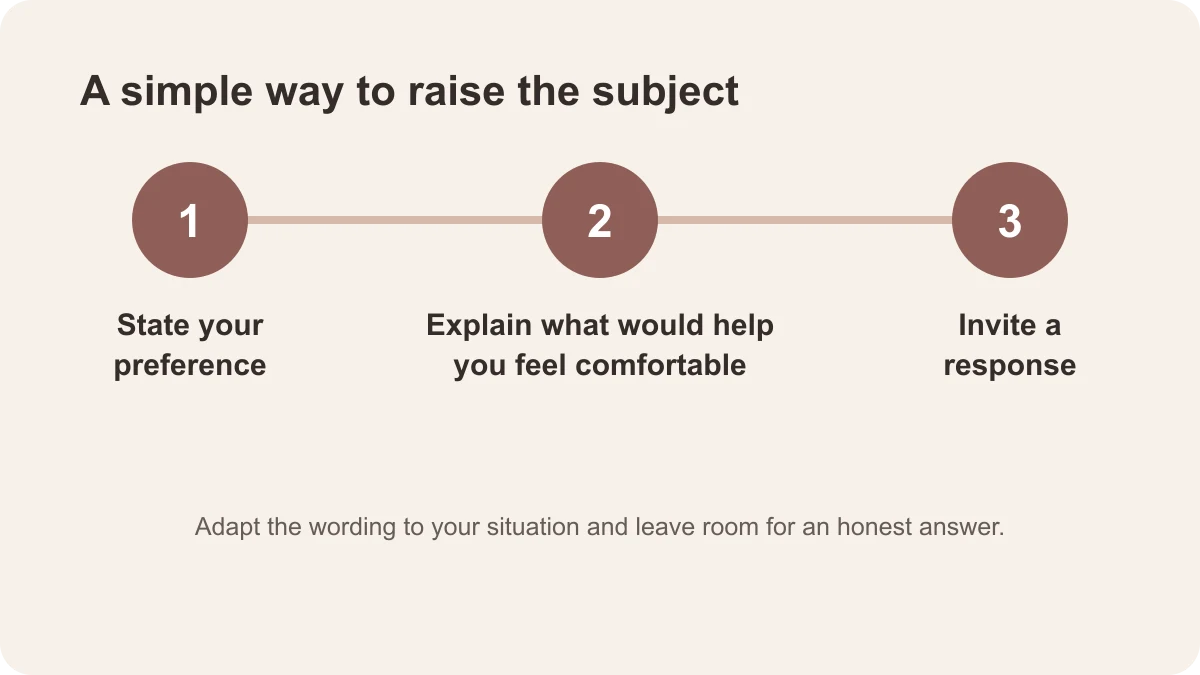
Semplici modi per iniziare la conversazione
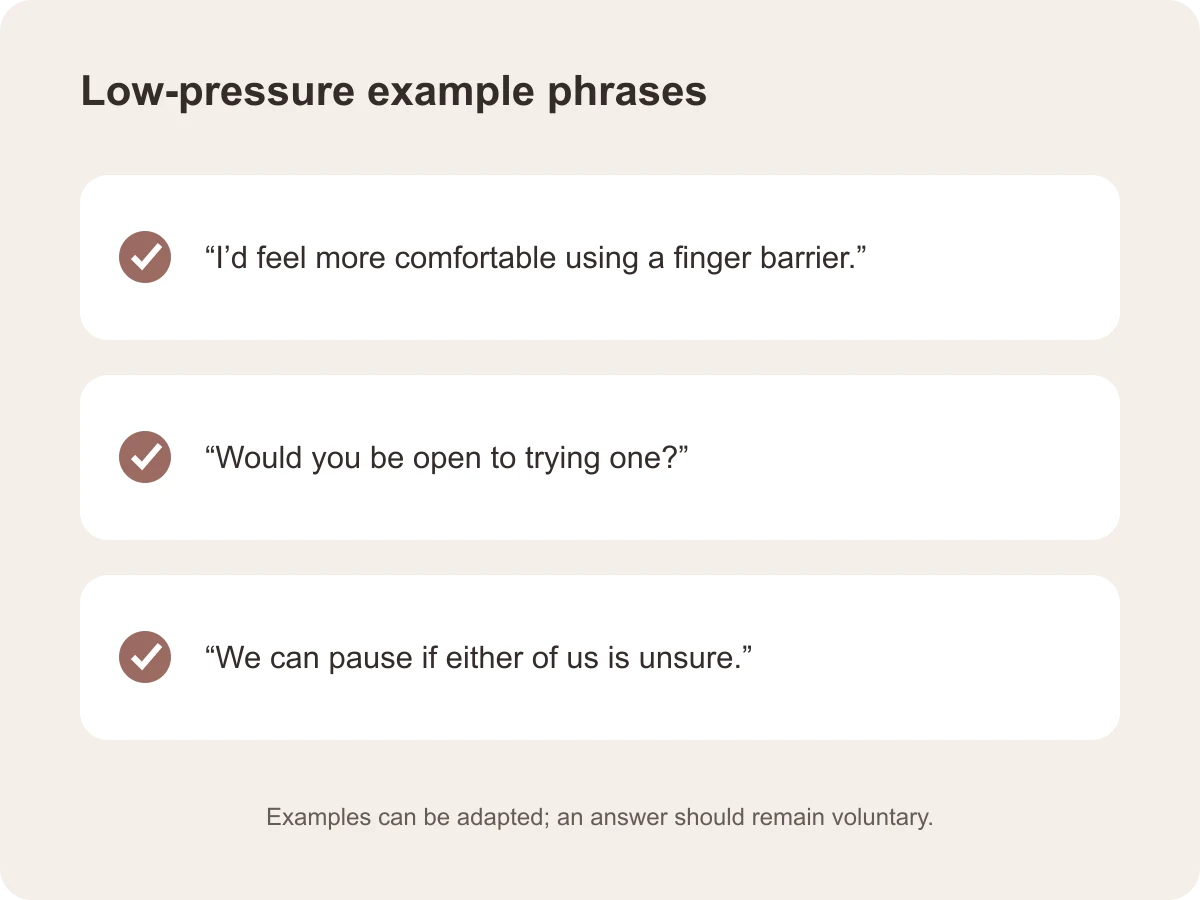
La tua formulazione può essere breve. Scegli una versione che suoni come te:
- “Mi piace usare una barriera per le dita per suonare con le dita. Ti sentiresti a tuo agio con quello?"
- “Prima di andare oltre, possiamo parlare del tipo di barriere che ognuno di noi preferisce?"
- “Hai già usato un preservativo per le dita?? Sono felice di spiegare cosa intendo.
- “Usarne uno è per me un limite con il gioco con le dita. Possiamo parlarne, scegliamo qualcos'altro che desideriamo entrambi, o fare una pausa.
- Per testo: “Un rapido controllo prima di incontrarci: Preferisco le barriere per le dita per suonare con le dita. È qualcosa a cui sei aperto??"
Questi sono esempi, non script magici. Il linguaggio diretto può sembrare migliore per una persona, mentre un altro potrebbe volere un po' più di contesto. Puoi adattare le parole purché la richiesta rimanga chiara e la risposta rimanga volontaria.
Spiega cosa intendi senza fare pretese
Se il tuo partner non ha familiarità con il termine, si può dire che una barriera per le dita, a volte chiamato preservativo per le dita o lettino per le dita, è una copertura indossata su un dito. La guida Callimis a a cosa servono i preservativi per le dita offre uno sfondo aggiuntivo. Mantieni la tua spiegazione modesta: una barriera può far parte dell’approccio personale di qualcuno all’intimità, ma non giustifica promesse di protezione completa o ipotesi sulla salute di un’altra persona.
Inoltre, non è necessario trasformare la conversazione in una presentazione del prodotto. Se stai discutendo di un'opzione specifica, attenersi ai fatti che è possibile verificare. Per esempio, I preservativi da dito prelubrificati Callimis sono realizzati in lattice naturale e utilizzano una base d'acqua, lubrificante senza silicone. Questo è un contesto sufficiente; non è una prova di efficacia medica, conforto universale, o idoneità per persone con allergie al lattice.
Mantieni il consenso al centro
Una buona conversazione non consiste solo nel dire la tua parte. Include ascoltare la risposta e notare se una delle persone ha bisogno di più tempo. RAINN descrive chiaro, volontario, e consenso continuo come processo attivo. In pratica, ciò significa che un sì a un'attività non è un sì a tutte le attività, e chiunque può fermarsi o cambiare idea.
Tratta l’incertezza come un motivo per fermarti
Se la risposta è “forse," "Non sono sicuro,"o silenzio, rallentare. Puoi dire, “Nessun problema, non dobbiamo decidere adesso,” oppure “Facciamo una pausa e facciamo qualcos’altro che desideriamo entrambi”. Fare una pausa non è una punizione, e non richiede che nessuna delle due persone difenda i propri sentimenti.
Lasciamo che due confini coesistano
Potresti voler giocare solo con le dita con una barriera, mentre il tuo partner potrebbe non volerne usare uno. Nessuna delle due preferenze deve diventare un'accusa. Il risultato pratico potrebbe semplicemente essere che suonare con le dita non è un'attività che scegliete insieme. Puoi discutere di un'altra forma di intimità che entrambe le persone desiderano sinceramente, o fermarsi per il momento. Non contrattare, vergogna, chiedere ripetutamente, o trattare l'affetto come una leva.
Rispondi alla curiosità o all'esitazione
"Che cos'è?"
Fornisci la breve definizione sopra, poi chiedi se vogliono maggiori dettagli. Non è necessario sopraffarli con affermazioni o linguaggio tecnico.
“Non ti fidi di me?"
Ritorna alle tue preferenze: “Si tratta di ciò che mi aiuta a sentirmi a mio agio, non un giudizio su di te. Quindi lascia spazio alla loro risposta. Puoi riconoscere che la richiesta potrebbe essere nuova senza abbandonare i tuoi confini.
"Non voglio usarne uno."
Accetta la risposta senza cercare di vendere l'idea. Puoi rispondere, “Grazie per avermelo detto. Suonare le dita senza uno non è qualcosa che voglio, quindi fermiamoci o scegliamo qualcos'altro che piace a entrambi.
“Come lo usiamo?"
Se entrambe le persone sono interessate, rivedere una guida dedicata su come usare un preservativo per le dita piuttosto che improvvisare istruzioni durante la conversazione. Se una delle due persone si sente ancora incerta, Aspettare.
Una lista di controllo per una rapida conversazione
- Sollevalo prima che inizi l'attività sessuale.
- Assegna un nome chiaro all'attività e alla barriera.
- Usa il linguaggio “I” per descrivere la tua preferenza o il tuo limite.
- Fai una domanda con spazio per il sì, NO, o non adesso.
- Rispondi alle domande senza fare promesse mediche o sui prodotti.
- Ascolta senza considerare l'esitazione come un difetto del carattere.
- Fai una pausa se una delle persone non è sicura o cambia idea.
I CDC suggerimenti per conversazioni sulla salute sessuale sottolinea anche la preparazione, scegliendo il momento e il luogo appropriati, e mantenere la discussione rispettosa e non giudicante. Puoi utilizzare questi principi senza trasformare una preferenza personale in una diagnosi o una richiesta.
Domande frequenti
Quando dovrei sollevare le barriere delle dita con un nuovo partner?
Scegli un privato, tempo libero prima che inizi a suonare con le dita. Ciò potrebbe avvenire durante una conversazione più ampia sulle preferenze o in un breve messaggio prima di un appuntamento.
E se il mio partner non ne avesse mai sentito parlare??
Offri una definizione di una frase e chiedi se vogliono saperne di più. La familiarità non è richiesta per una conversazione rispettosa, e la curiosità non è la stessa cosa dell'accordo.
Come faccio a dimostrare che questa è una preferenza, non un'accusa?
Descrivi cosa vuoi e cosa ti senti a tuo agio a fare. Evita affermazioni sulla pulizia del tuo partner, storia, o motivazioni.
Cosa succede se il mio partner non vuole usarne uno??
Rispetta il n. Se usare una barriera è il tuo confine, non procedere con la riproduzione con le dita; mettere in pausa o scegliere un'altra attività reciprocamente desiderata. Nessuna delle due persone deve all'altra una risposta diversa.
Le barriere per le dita rimuovono ogni rischio per la salute sessuale??
NO. Non considerare alcuna barriera come una garanzia né utilizzarla per avanzare richieste di protezione completa. Per domande sulla tua situazione, test, sintomi, o rischio, parlare con un operatore sanitario qualificato.
Mantieni il passaggio successivo a bassa pressione
Conoscere come parlare di barriere per le dita dà a entrambe le persone la possibilità di informarsi, scelta senza pressioni. Decidi cosa conta per te, scegli una frase che suoni naturale, e sollevarlo prima dell'intimità. Se in seguito desideri rivedere un'opzione specifica, puoi leggere i dettagli verificati per Preservativi per dita prelubrificati Callimis—senza alcun obbligo di acquistarli o utilizzarli.