
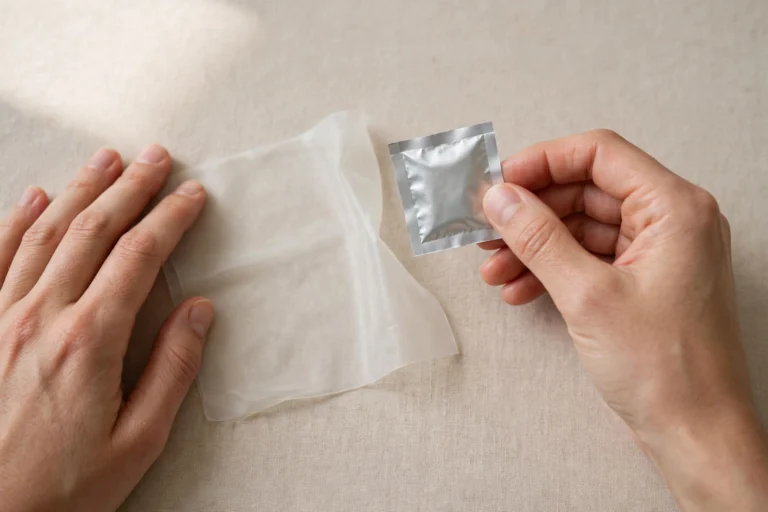
How to store dental dams is simpler than most people expect. Keep them sealed in their wrappers. Conservarli in un luogo fresco, dry place out of direct sunlight. Check the date and the wrapper before you use one.
Una diga dentale è sottile, flat sheet that works as a barrier during oral sex. It is single-use. Storage does not change what it is for. It decides whether the sheet in your hand is still in good shape when you need it.
A dam spends most of its life waiting in a drawer, a bag, or a box. The conditions it waits in are the whole story. Calore, sunlight, attrito, and moisture are the usual enemies of latex. None of this needs special equipment — just a decent spot and a habit of checking before use.
Why How You Store Dental Dams Matters
A dental dam is a single flat sheet. It is usually latex or polyurethane. It has no frame or shell to protect it. The sealed wrapper is its only protection, and it only works while it stays sealed. If the wrapper tears, gets damp, or gets crushed, the sheet inside has no protection left.
Latex is the common material for dams, and it ages faster when warm, umido, or in sunlight. Gli Stati Uniti. Food and Drug Administration states the rule plainly in its labeling guidance for latex condoms. Store latex condoms in a cool, dry place below 100°F. Keep them out of direct sunlight. The guidance covers latex condoms. Latex is the material in both cases, so the advice is the standard one for latex barriers. IL FDA latex condom labeling guidance is the source for the temperature figure. Your own packet’s directions are the final authority for the exact product in your hand.
Storage matters all the more because a dam is single-use. IL CDC dental dam page describes a dam as a barrier for oral sex. Check it for damage. Use it once. If the unit you reach for is past its date, take a fresh unit. If its wrapper is open, do the same.
Where to Keep Dental Dams at Home
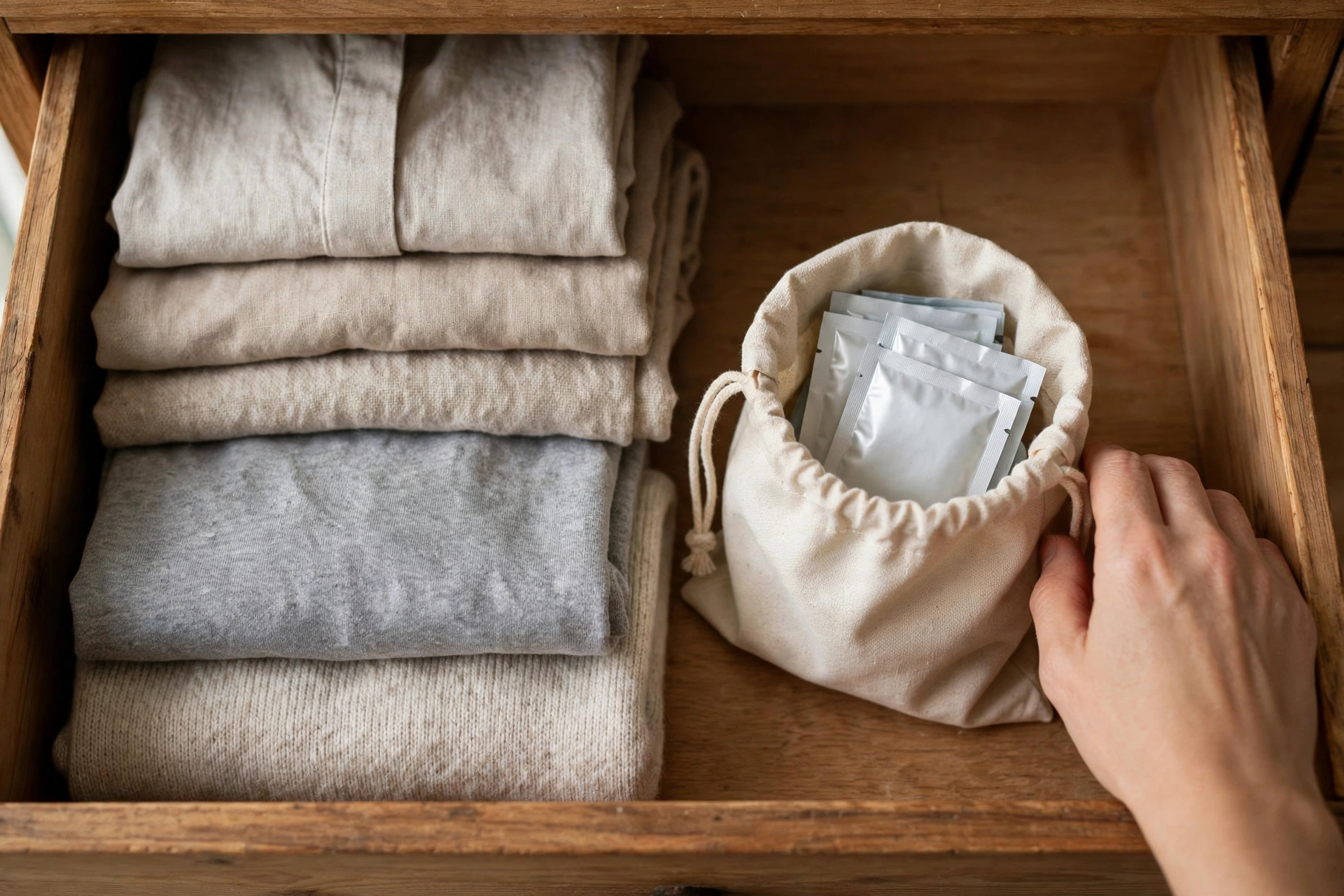
The best spot is boring. Use a drawer, a box, or a shelf in a room that stays at normal indoor temperature. A bedroom drawer works well. It is cool, Asciutto, and dark. Keep the packets in a small pouch or rigid box to keep them flat.
Keep packets flat rather than folded or rolled. A foil wrapper creased hard enough to crack will not protect the sheet inside. A packet crushed at the bottom of a drawer is easy to miss until you need it. Flat storage in a pouch solves both problems and keeps the count visible, so you know when to buy more.
Places to Avoid When You Store Dental Dams
Some spots feel handy and are quietly bad for a thin latex sheet. The classic example is a wallet. It sits in a back pocket, bends every time you sit, and warms up against your body. A car is worse. A parked car in summer can pass 100°F easily. The glove box holds that heat for hours. Windowsills, shelves above radiators, and bags left on sunny seats do the same damage more slowly.
Sharp objects are the other risk. Keys, forbici, and rough zippers can nick a foil wrapper without you noticing. A nicked wrapper is an open wrapper. Keep dam packets in their own pouch rather than loose in a bag with keys and tools.
| Spot | The problem |
|---|---|
| Wallet or back pocket | Constant bending, attrito, and body heat |
| Car glove box or door pocket | Heat builds fast in a parked car |
| Windowsill or sunny shelf | Direct sunlight and daily temperature swings |
| Bathroom shelf near the shower | Steam and humidity over months |
| Loose in a bag with keys | Sharp edges can nick the wrapper |
| Near oil-based products | Oil can weaken latex if it reaches the sheet |
How to Store Dental Dams for Travel
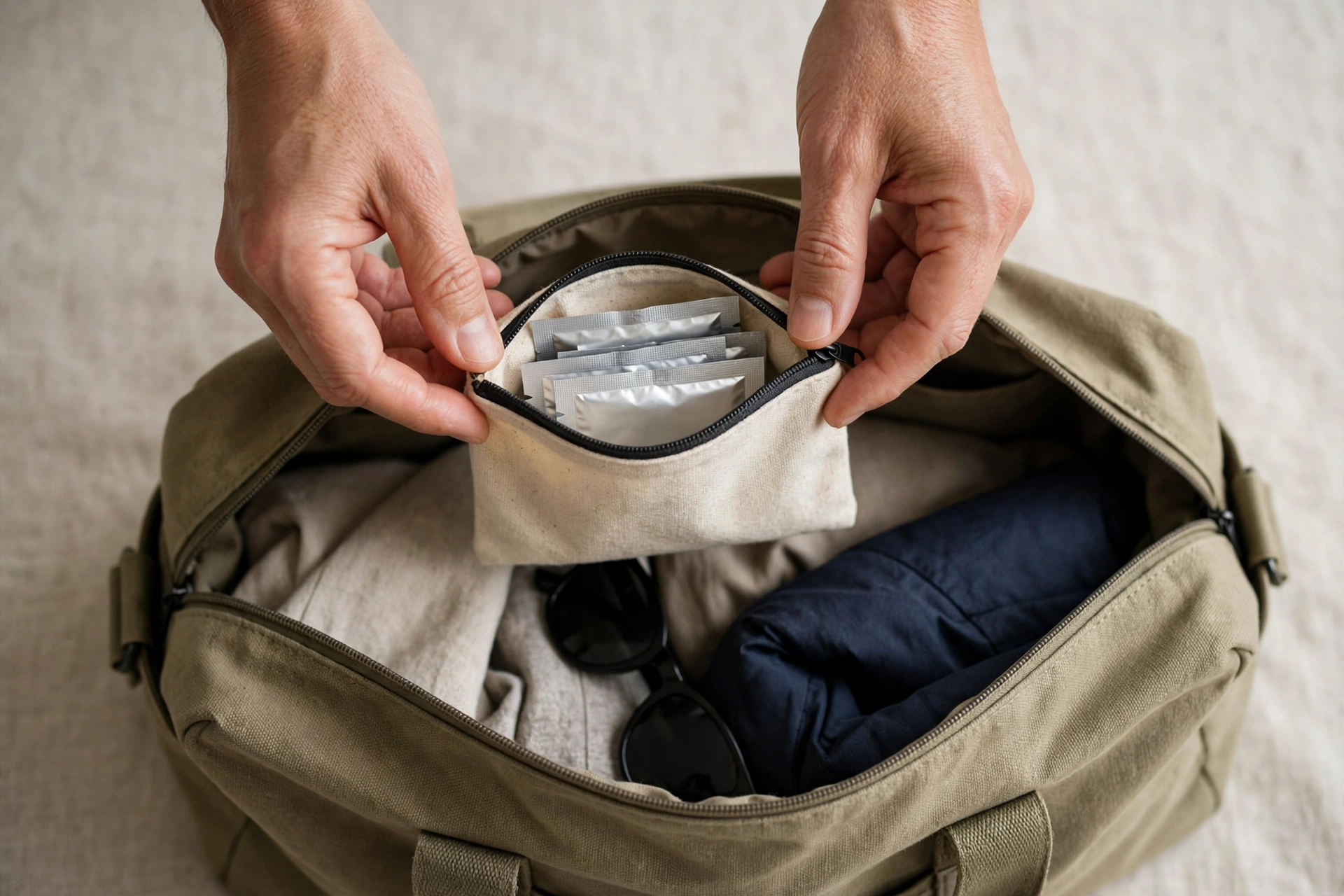
Travel is where good storage habits usually break down. The dam leaves its drawer and rides in a bag instead. Use the same pouch you use at home. Put a few sealed packets in a small zip pouch or rigid case. Keep it in your carry-on rather than checked luggage. Never leave the bag in a parked car.
On a trip, the pouch does three jobs: it keeps the packets flat, away from keys and zippers, and private. The guide on how to pack finger condoms for travel follows the same idea for a different barrier. The logic carries over directly: sealed, flat, protetto, and easy to find. Pack spares. You need a fresh dam for each use and each new area. One packet is rarely enough for a trip.
How Long Dental Dams Last — and Rotating Your Stock
Every packet carries a date. That date is the only shelf-life figure that matters for the unit in your hand. Latex condom labeling in the United States must include an expiration date. The FDA guidance (https://www.fda.gov/medical-devices/guidance-documents-medical-devices-and-radiation-emitting-products/labeling-natural-rubber-latex-condoms-classified-under-21-cfr-8845300-class-ii-special-controls) notes that manufacturers must back the date with shelf-life data. Dams follow the same principle. The packet tells you how long that unit is good for. Nothing else does.
Treat the date as a hard line. NHS advice on condoms puts it plainly. Check the use-by date has not expired. An expired condom may not be effective. The same caution applies to a dam. An expired unit may look fine. That is exactly the problem. You cannot judge the sheet’s condition from the outside of the wrapper. If the date has passed, bin it and take a fresh one. Rotate your stock the way a shop does: put new packs behind older ones and use the oldest packets first. A quick look at the dates once every few months catches anything about to expire.
The 30-Second Check Before You Use a Dental Dam
Storage only works if you check the unit first. Do this check every time, even for a packet that has been sitting in a good spot.
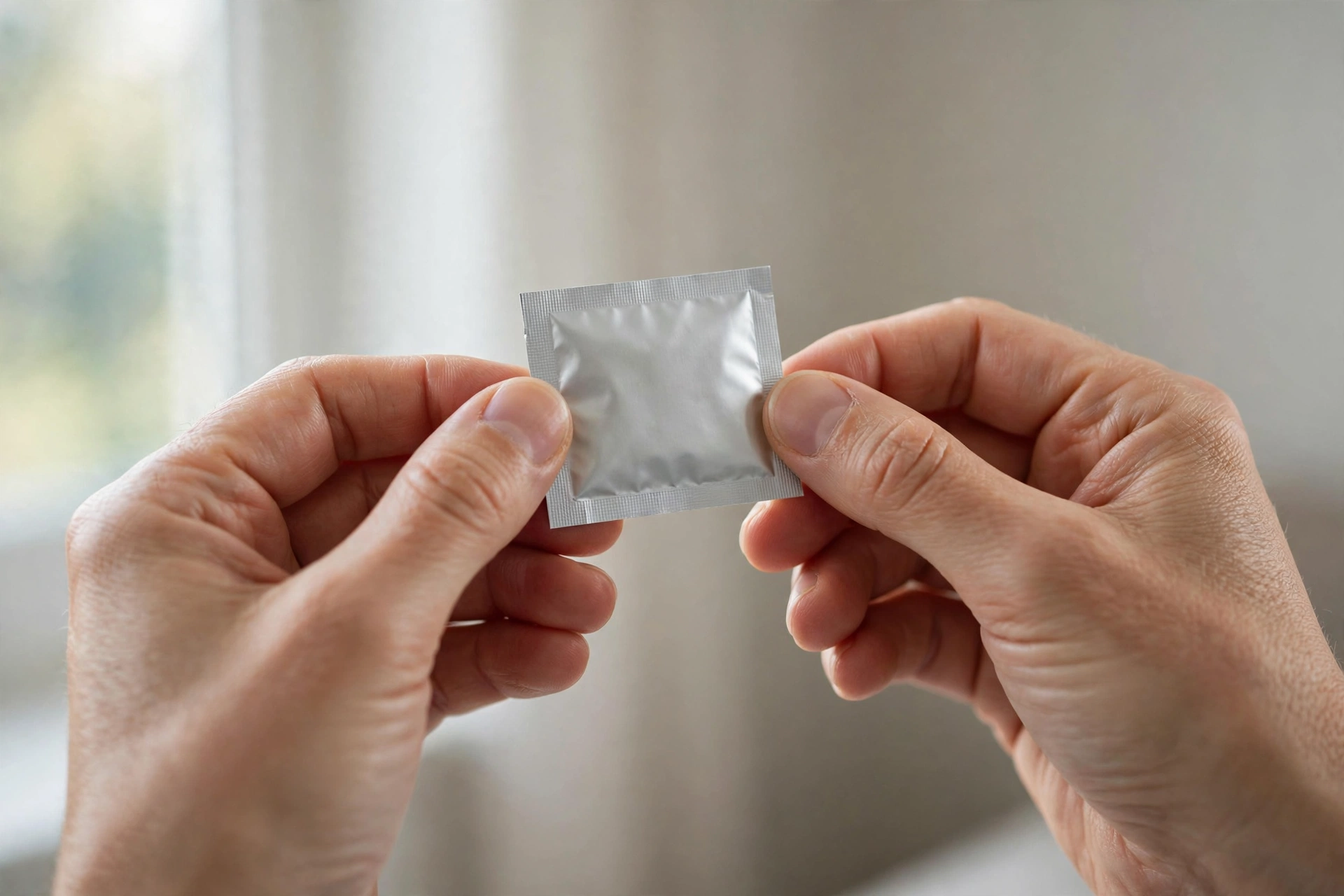
Primo, read the date on the packet. If it has passed, stop and take a fresh unit. Prossimo, look at the wrapper: if it is torn, aprire, macchiato, or crushed, do not use that unit. Open it with your fingers, not your teeth or scissors, and look at the sheet once it is out. If it looks torn, fragile, appiccicoso, or discolored, stop and take a fresh one.
The guide on how to use a dental dam picks up from here. It covers opening, unfolding, and holding the sheet in place. Storage ends where that guide begins: the check is the handoff between the two. One last rule: do not open a packet to inspect the sheet and then put it back for later. Once the seal breaks, the sheet sits exposed. Do not put it back into the drawer.
Storing Dental Dams Next to Other Barriers
A drawer often holds more than one kind of barrier. That is fine as long as each one stays sealed in its own wrapper. Dental dams and finger condoms can share a pouch. Both follow the same storage rules: sealed, flat, Freddo, Asciutto, and out of sunlight. The guide on come conservare i preservativi per le dita covers the finger-shaped barrier in more detail. The advice matches this guide almost exactly.
Keep oil-based products away from latex barriers in the same drawer, since oil can weaken latex. Water-based lubricant is the usual choice when you want extra glide. If you are choosing between the two formats, read the comparison in dental dams vs. preservativi per le dita. It explains which barrier fits which activity. The buying guide on what to look for when buying dental dams covers material, contare, and date before you buy.
Products Mentioned in This Guide
The products below are the ones this guide refers to. Check the product page for the current price, contare, and package directions before ordering.
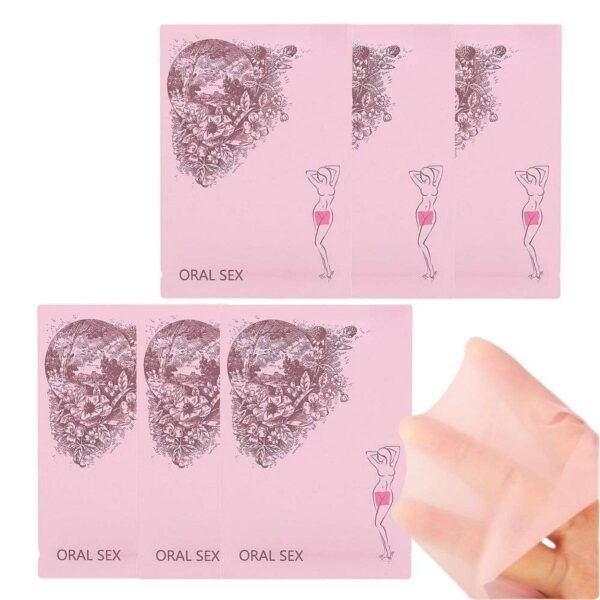
Diga dentale ultrasottile per uso orale, 6 contare
A flat sheet barrier for oral contact, the format this guide is about. $9.99 as listed on the site.

Diga dentale Callimis, Sesso orale in bocca, 8 contare
The same flat sheet format in a larger count, useful for keeping sealed spares on hand. $12.99 as listed on the site.

Preservativi da dito Callimis con lubrificazione, 12 contare
Lattice naturale, a forma di dito, monouso, prelubrificato con una base d'acqua, lubrificante senza silicone. The companion barrier for manual touch, stored the same way: sealed, flat, Freddo, e asciutto. $14.99 as listed on the site.
How to store dental dams comes down to a short routine. Keep sealed packets flat in a cool, dry place out of sunlight. Keep them in their own pouch, away from keys and heat. Rotate the oldest ones to the front. Check the date and the wrapper before every use. A dam that you stored well is ready when you need it. One that got bent, heated, or left past its date is not. The answer is always a fresh unit.
A dental dam is a single-use, flat sheet barrier for oral contact. Storage cannot fix a unit once damage or expiry has set in. Follow the packet when it says something different from this guide.
This article is general information, non un consiglio medico. It relies on general barrier guidance from public health sources and on the product facts in the site’s editorial record. It does not claim that any product prevents infections.