

Consenso al gioco con le dita è una conversazione in corso: chiedi prima di toccare, fai il check-in al ritmo, pressione, posizione, o cambiamenti di attività, e rendere facile per entrambe le persone mettere in pausa o fermarsi. Un sì chiaro si applica alla cosa specifica che hai chiesto, non a ogni tipo di tocco e non al resto della serata.
Se desideri una panoramica neutrale dell'attività stessa, cominciamo da questi nozioni di base sul gioco con le dita. Questa guida rimane focalizzata sulla comunicazione piuttosto che sulla tecnica.
Il consenso per il gioco con le dita inizia prima del tocco
Prima che tutto abbia inizio, nomina il tipo specifico di tocco che ti interessa e chiedi una risposta aperta, domanda a cui è possibile rispondere. “Vuoi che ti tocchi con le mie dita??” è più chiaro che supporre che ci si avvicini, baciarsi, o spogliarsi risponde alla domanda. Se un preservativo per le dita, guanto, lubrificante, o un'altra preferenza è importante per entrambe le persone, includilo nella conversazione prima di usarlo.
Panoramica del consenso di Planned Parenthood descrive il consenso come liberamente prestato, reversibile, informato, entusiasta, e specifico. In pratica, ciò significa che una persona può accettare di suonare con le dita ma non di un'altra attività, essere d'accordo con una condizione ma non con un'altra, o cambiare idea dopo aver iniziato.
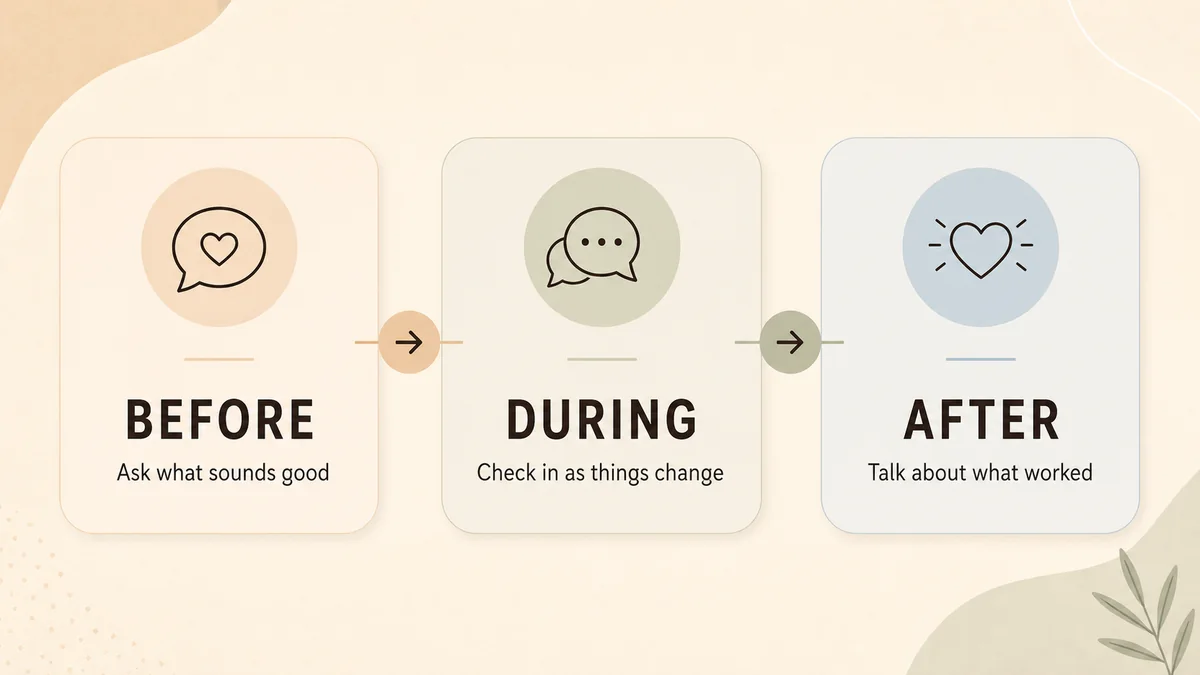
Come effettuare il check-in durante la riproduzione con le dita
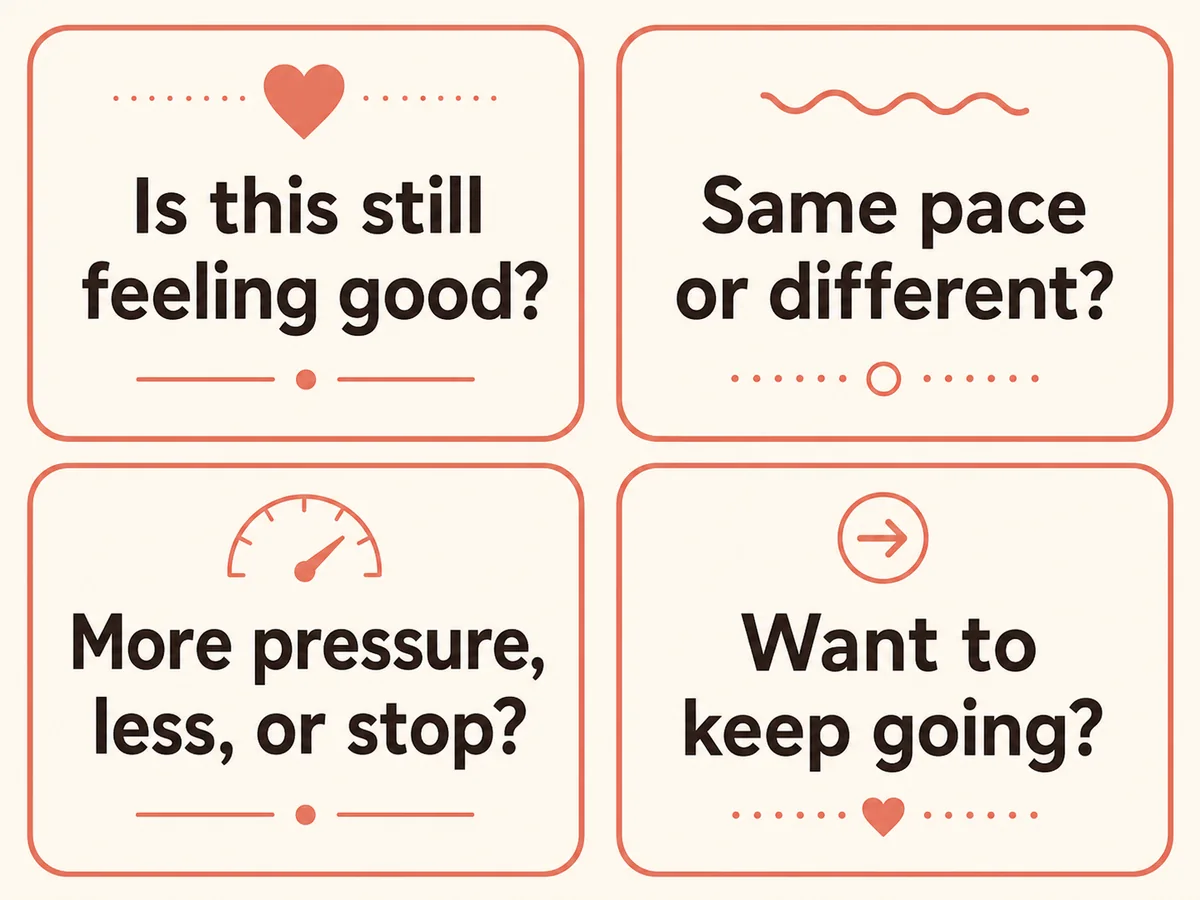
Un check-in può essere una breve frase. Non è necessario che interrompa l'atmosfera o diventi un'intervista formale. Chiedi cosa sta succedendo ora, quindi lascia abbastanza spazio per ascoltare la risposta:
- “Mi sento ancora bene??"
- “Stesso ritmo o diverso?"
- “Più pressione, meno, o fermati?"
- “Voglio andare avanti?"
Usa un tono neutro, ed evitare domande che implichino l'esistenza di una risposta preferita. “Stai bene, Giusto?” può sembrare più difficile essere in disaccordo rispetto a “Come va questa sensazione?" Se la risposta non è chiara, prima fai una pausa e poi chiarisci.
Controlla di nuovo quando qualcosa cambia in modo significativo: spostarsi in un’altra zona del corpo, aggiungendo un altro dito, cambiare pressione o velocità, introducendo una barriera o un lubrificante, o passare a un'attività diversa. Guida alla comunicazione sessuale della UC Davis spiega che il consenso è in corso, vale per ogni attività, e può essere ritirato in qualsiasi momento.
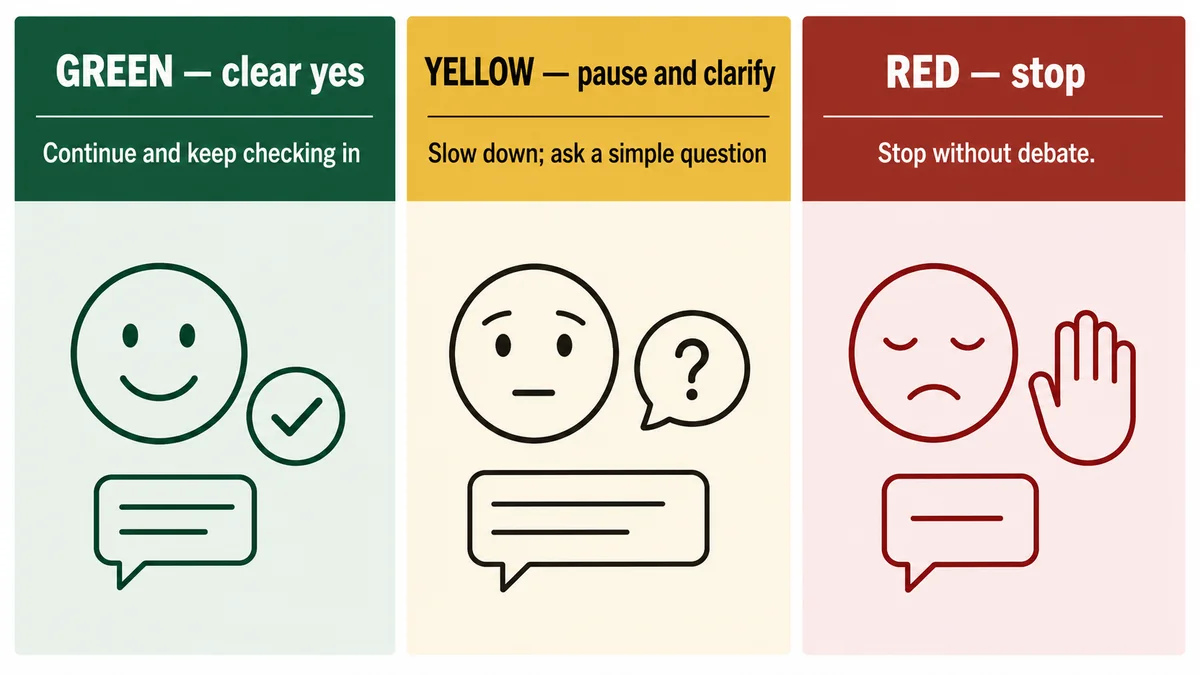
Un verde, Giallo, e il quadro di risposta rossa
Questo semplice quadro può aiutarti a decidere cosa fare dopo, ma non è un modo per indovinare cosa sta pensando qualcuno. Le parole e il comportamento devono essere considerati insieme, e l'incertezza appartiene alla categoria della pausa.
- Verde: un chiaro, sì volontario e partecipazione attiva. Continuare con l'attività specifica restando attenti.
- Giallo: esitazione, una risposta mista, silenzio improvviso, tensione, congelamento, allontanandosi, o un cambiamento di impegno. Fai una pausa e fai una semplice domanda.
- Rosso: "NO," "fermare," "non adesso," malessere, o qualsiasi revoca del consenso. Fermati senza dibattito o persuasione.
Una risposta del corpo come la lubrificazione, eccitazione, o l'orgasmo non sostituisce il permesso. Allo stesso modo, il silenzio o l’assenza di resistenza non è un sì chiaro. Il consenso di RAINN 101 guida sottolinea che il consenso non è un check-in una tantum e può essere revocato anche nel corso di un'attività.
Cosa fare quando la risposta cambia
Prima ferma il movimento. Togli la mano quando puoi farlo comodamente, dare spazio all'altra persona, e rispondi senza fargli gestire la tua delusione. Un semplice “Certo,"Grazie per avermelo detto.",” o “Possiamo fermarci” è sufficiente.
Non contrattare, chiedere ripetutamente una ragione, o suggerire subito una serie di alternative. Se l'altra persona vuole qualcosa di diverso, lascia che glielo diano un nome. Se non sono sicuri, fermarsi per il momento è un risultato completo e rispettoso. Per un linguaggio più ampio attorno alle preferenze e ai confini, vedere questa guida per parlare apertamente di intimità.
Effettua il check-in in seguito senza trasformarlo in una recensione
Un check-in post-terapia può aiutare entrambe le persone a comunicare ciò che hanno apprezzato, cosa cambierebbero, e cosa non vogliono la prossima volta. Mantienilo curioso piuttosto che valutativo: “Come ti senti??"C'era qualcosa che volevi più o meno."?” o “C'è qualcosa che vuoi che sappia per un'altra volta?"
Ascolta senza difendere le tue intenzioni. Il feedback successivo al momento non riscrive se il consenso era presente durante esso, ma può migliorare la comunicazione futura. Può anche rivelare che qualcuno preferisce parole diverse, segnali non verbali, o pause pianificate. L'obiettivo di consenso per il gioco con le dita non è eseguire una sceneggiatura perfetta; è mantenere la scelta visibile e facile da esprimere.
Elenco di controllo per il check-in del consenso rapido
- Chiedi informazioni sul tocco specifico prima di iniziare.
- Discutere i confini rilevanti, barriere, e preferenze sui lubrificanti.
- Usa breve, domande neutre durante l'attività.
- Effettua il check-in al ritmo, pressione, posizione, o cambiamenti di attività.
- Fai una pausa quando le parole o il comportamento sembrano incerti.
- Interrompersi immediatamente in caso di revoca del consenso.
- Rispondi senza sensi di colpa, pressione, o argomento.
- Parla in seguito solo se entrambe le persone lo desiderano.
Domande frequenti
Devo chiederlo ogni pochi secondi?
Nessun intervallo fisso funziona per tutti. Chiedi prima di iniziare, quando qualcosa cambia, quando noti incertezza, e ogni volta che una delle persone vuole rassicurazione. Il consenso continuo significa rimanere reattivi, non seguire un timer.
Cosa succede se il mio partner dice di sì ma sembra teso??
Pausa. Dai un nome a ciò che hai notato senza diagnosticarlo: “Sembri un po' teso: vorresti fermarti o cambiare qualcosa??"Continua solo dopo una risposta chiara e solo se la situazione non sembra sotto pressione.
Possiamo essere d'accordo sui segnali non verbali??
I partner possono concordare i segnali, soprattutto quando parlare può essere difficile, ma il significato dovrebbe essere discusso in anticipo. Un segnale non elimina la necessità di notare l’incertezza e di fermarsi quando non si è sicuri.
Accettare una volta copre il futuro gioco con le dita?
NO. L'interesse passato non crea il permesso per un'occasione successiva. Chiedi di nuovo, anche in una relazione consolidata, perché le preferenze e le circostanze possono cambiare.
Cancella check-in, spazio per una risposta onesta, e una risposta calma all'arresto sono il fondamento pratico di consenso per il gioco con le dita. Mantieni le domande specifiche, continua ad ascoltare mentre il momento cambia, e tratta ogni risposta come un'informazione da rispettare. Questo approccio supporta anche il più ampio lavoro di costruzione comfort e confini condivisi.