

A finger condom label glossary should tell you exactly what the printed product terms mean—and where their meaning stops. For the verified Callimis 12-count product, the key facts are natural latex, approximately 0.03 mm thickness, pre-lubrication with a water-based silicone-free lubricant, and 12 single-use finger condoms per box; none of those facts alone proves universal fit, comfort, sensation, medical status, or complete protection.
This guide treats each term as a limited piece of product information. The official 12-count product listing confirms the relevant product path, while the approved Callimis product-fact record governs every specification repeated here. Marketing statements outside that approved record are not used as evidence.
| Label term | What it means here | What it does not prove |
|---|---|---|
| Natural latex | The product material is natural latex. | Allergy suitability, sterility, medical grade, or FDA approval. |
| Approximately 0.03 mm | A verified approximate thickness specification. | Strength, durability, sensation, comfort, fit, or effectiveness. |
| Pre-lubricated | Lubricant is already applied to the product. | That every user will find the amount sufficient. |
| Water-based | The supplied lubricant uses a water base. | Compatibility with every added product or freedom from irritation. |
| Silicone-free | The supplied lubricant contains no silicone according to the verified record. | That the latex itself is silicone, non-latex, hypoallergenic, or suitable for everyone. |
| 12-count | The box contains 12 finger condoms. | That one unit equals one session or that a used unit can be reused. |
How to Read This Finger Condom Label Glossary
Read a label in categories: material, dimensions, lubricant, quantity, directions, and cautions. A fact in one category does not automatically answer a question in another. For example, “natural latex” identifies a material; it does not establish the wearer’s fit. “12-count” states quantity; it does not describe how many fingers or changes an activity may involve.
Authoritative labeling examples can help show why scope matters. The FDA’s natural-rubber latex condom labeling guidance separates material cautions, expiration information, directions, lubrication, and quantity. Its stated scope is male natural-rubber latex condoms—not Callimis finger condoms—so it is useful here as label-literacy context, not as Callimis testing, classification, or approval evidence.
Natural Latex Names the Material
“Natural latex” means that Callimis identifies natural latex as the material. It does not mean “latex-free,” and it should never be read as an allergy-safety promise. The FDA’s medical-glove material guidance notes that some people are allergic to natural-rubber latex. Medical gloves are a different product category, but the material caution is relevant: someone with a known or suspected latex allergy should not assume this product is suitable.
The material term also does not establish sterility, medical grade, regulatory approval, clinical effectiveness, or complete protection. None of those claims is verified for Callimis finger condoms in the approved project evidence.
Approximately 0.03 mm: a Measurement, Not a Promise
The verified specification says the product is approximately 0.03 mm thin. “Approximately” matters: the record provides an approximate nominal figure, not a consumer instruction to measure each unit. The number should be repeated as written rather than silently rounded, converted into a marketing superlative, or treated as a tolerance range that the source does not provide.
Thickness is one attribute, not a performance test. A smaller number does not by itself prove better sensation, greater comfort, stronger material, a particular fit, or a specific level of protection. Those outcomes would need separate, directly relevant evidence.

Pre-Lubricated, Water-Based, and Silicone-Free Are Separate Facts
These three phrases answer three different questions. “Pre-lubricated” says lubricant has already been applied. “Water-based” identifies the lubricant base. “Silicone-free” says the supplied lubricant does not contain silicone according to the approved record. The separate pre-lubricated finger-condom guide provides broader use context, but this glossary keeps the definitions narrow.
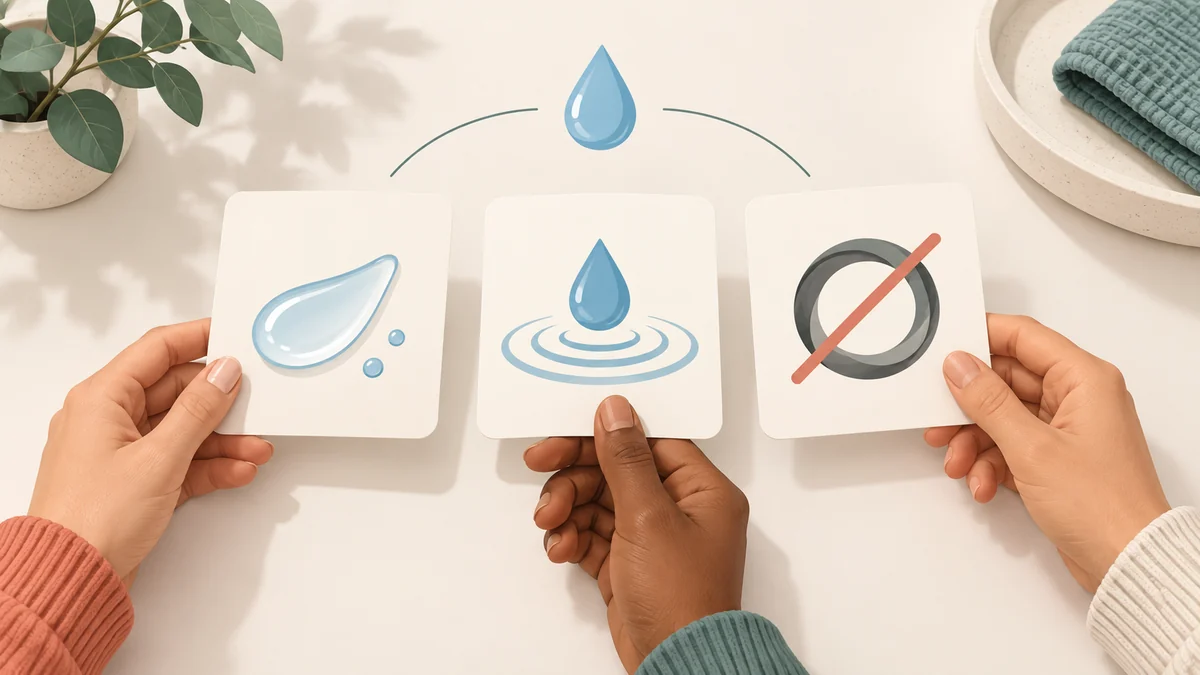
None of the three terms guarantees that the existing amount will feel sufficient for every person or activity. They also do not verify compatibility with every lubricant, personal-care product, toy, or material. If adding another product, read both current labels and follow the manufacturers’ directions instead of guessing from “silicone-free” alone.
As general latex-barrier context, the CDC’s external-condom lubricant guidance says oil-based products can weaken latex external condoms and advises water-based lubricant in that setting. External condoms are not finger condoms, so this source does not prove a Callimis-specific compatibility result. It supports a conservative label-reading habit: confirm both the barrier material and the added lubricant rather than relying on one familiar word.
12-Count: Package Quantity, Not a Use Schedule
“12-count” means the verified box contains 12 finger condoms. It does not mean 12 sessions, 12 people, or 12 reusable items. Callimis identifies each unit as single-use. If more than one finger will be active, or if the activity changes in a way that calls for a fresh barrier, the number of units used may be different from the number of occasions.
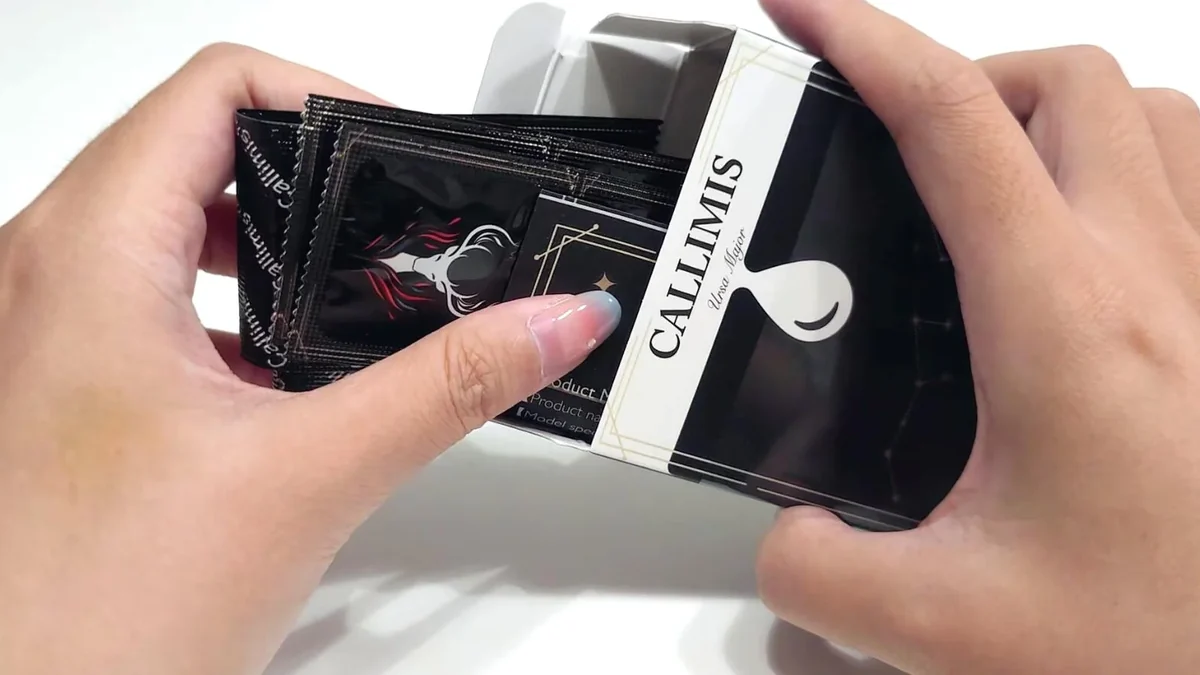
Quantity is its own labeling concept. The FTC’s packaging overview explains that net contents is a distinct disclosure for consumer commodities covered by the Fair Packaging and Labeling Act. That general explanation is not a legal classification of this product; it simply reinforces the reading rule that package count answers “how many,” not “how well” or “how often.”
What the Label Cannot Decide for You
A verified specification is not a personal fit result. Callimis has no approved size chart or universal-fit guarantee in the project evidence. Use the separate pre-use fit check for practical observations such as pressure, repeated rolling, slipping, movement, or discomfort. Stop if something hurts or feels uncertain; do not reinterpret a thickness or lubricant term as permission to continue.
- A material name does not prove allergy suitability.
- A thickness number does not prove performance.
- Pre-lubrication does not guarantee enough lubricant for everyone.
- Water-based and silicone-free do not guarantee compatibility with every added product.
- A count does not permit reuse.
- No term here guarantees STI prevention, infection prevention, pregnancy prevention, comfort, fit, or sensation.
A Practical Package-Reading Checklist
- Match the exact product and count to the item you intended to buy.
- Identify the material before considering any allergy concern.
- Read thickness as a specification, not a benefit claim.
- Separate pre-lubrication, lubricant base, and silicone content.
- Read the current directions and cautions on the box and individual packet.
- Check the wrapper and store unopened units according to the current package directions; the finger-condom storage guide offers a longer checklist.
- For application details, use the general finger-condom use guide while prioritizing the directions on the product in hand.
Frequently Asked Questions
Does approximately 0.03 mm mean every unit is exactly 0.03 mm?
No exact-unit claim or manufacturing tolerance is verified in the project record. The approved fact is the approximate 0.03 mm specification, so it should be stated with that qualifier.
Does silicone-free mean the product is latex-free?
No. “Silicone-free” describes the supplied lubricant. The product material is verified as natural latex.
Can the 12 units be washed and reused?
No. The verified product fact is single-use. After use, place the item in regular household waste and do not flush it.
The Bottom Line
Use this finger condom label glossary to keep each statement in its lane: natural latex is the material, approximately 0.03 mm is the stated thickness, pre-lubricated describes application, water-based and silicone-free describe the supplied lubricant, and 12-count describes quantity. Those verified facts are useful precisely because they are limited; they should not be expanded into medical, regulatory, fit, comfort, performance, or protection promises that the evidence does not support.