

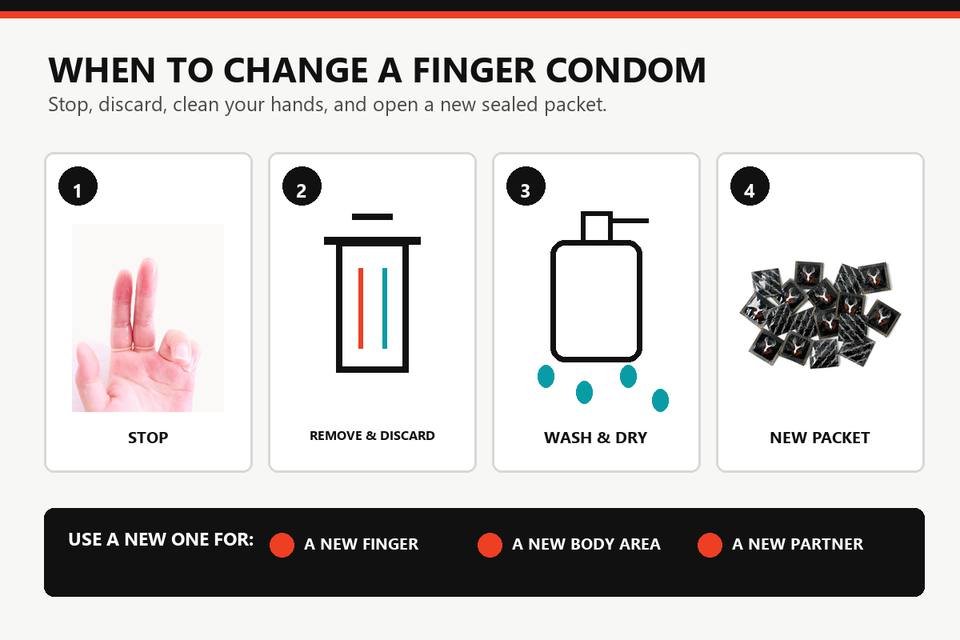
Double dip fingering should not involve reusing the same finger condom on another finger, a different body area, or another partner. Stop, remove and discard the used barrier, wash and dry your hands, then open a new sealed packet before continuing.
This rule is about reducing the transfer of body fluids and microbes from one contact point to another. A finger condom is a single-use barrier; wiping it, turning it inside out, or moving it to another finger does not make it new again.
What Does Double Dip Fingering Mean?
In this guide, double dip fingering means continuing intimate touch after moving the same finger, finger condom, or unwashed hand between fingers, body areas, or partners. The phrase is informal and may be used differently elsewhere, so the practical question is whether a used barrier is being carried into a new contact.
The safest simple rule is: new finger, new body area, or new partner means a new finger condom. That makes the decision easy before the moment becomes confusing.
When Should You Change a Finger Condom?
Change it whenever the contact changes or the barrier can no longer be treated as clean and intact.
- Changing fingers: use a separate barrier on each finger rather than transferring a used one.
- Changing body areas: use a new barrier before moving between vaginal, vulvar, anal, oral, or other contact areas.
- Changing partners: discard the used product, clean your hands, and open a new packet.
- After a tear or slip: stop immediately and replace the failed barrier.
- After removal: do not put the same product back on, even if contact was brief.
- When the surface is visibly soiled: stop, discard it, and clean your hands before continuing.
The current Callimis packet format is shown on the Callimis finger condom product page. Keep each unit sealed until it is needed.
Why Is Moving the Same Barrier a Hygiene Problem?
A used barrier may carry fluids or material from the first contact. Moving it can carry that material to a different finger, body area, or person. The exact health risk varies by the activity, the body sites involved, whether skin is broken, and whether an infection is present; a barrier does not make every type of skin contact risk-free.
The NHS explains that fingering is not a common way to spread sexually transmitted infections, but risks remain, especially when there are cuts or sores. Its sex activities and risk guidance also notes that fingering can transfer small amounts of faecal matter and recommends washing hands afterward.
Changing a barrier is particularly important before moving from anal contact to vaginal, vulvar, oral, or eye contact. The same new-barrier rule is also easy to apply in the other direction, avoiding the need to judge whether a used surface is clean enough.
Can You Wipe a Finger Condom and Keep Using It?
No. Wiping, rinsing, or adding more lubricant does not restore a used finger condom to its original sealed condition. Cleaning may also make it harder to confirm that the thin material remains intact.
Do not turn the product inside out and continue with the other surface. Removal can transfer material to the hand, and reversing a thin rolled barrier may damage or misapply it. Treat removal as the end of that product’s use.
How to Switch Safely in Four Steps
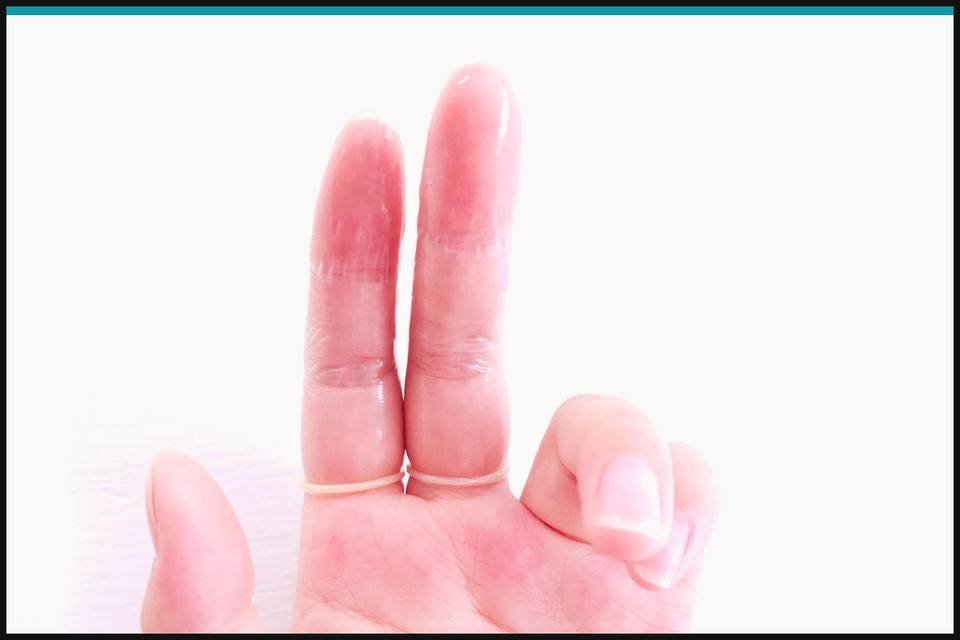
- Stop contact. Do not touch another body area while wearing the used barrier.
- Remove and discard it. Peel it away carefully and place it in household waste.
- Wash and dry your hands. Clean around the fingertips and nails before opening another packet.
- Apply a new finger condom. Check the wrapper, open it carefully, and follow the product instructions.
For application details, use the illustrated guide on how to use finger condoms. Do not open several packets in advance; leave unused products sealed.
How Many Packets Should You Prepare?
Plan one new finger condom for each finger you expect to use, then add another for every body-area or partner change. Keep a few extras available in case a wrapper is damaged, the fit is wrong, or a barrier tears or slips.
For example, using two fingers at the same time requires two separate finger condoms. If you later switch to another body area, both should be replaced. This is a planning example, not a fixed quantity for every person; prepare according to the number of fingers, transitions, and partners involved.
Place used products and wrappers in a small waste bag or household bin. The guide to discreet finger condom disposal explains how to contain and discard them without flushing.
Common Decision Points
Can the same finger condom be used with the same partner?
Only for one continuous use on the same finger and contact area, while it remains correctly fitted and intact. Change it when the finger, body area, or use changes.
Can I move from vaginal contact to anal contact with the same one?
Use a new barrier when changing body areas in either direction. This consistent rule reduces uncertainty and avoids carrying material from one site to another.
Can I move it from one finger to another?
No. Use one finger condom per finger. Remove the used product, clean and dry your hands, and open a new packet for the other finger.
Does adding lubricant make the barrier reusable?
No. Compatible lubricant may support comfort during one use, but it does not clean, reset, or repair a used barrier.
Key Takeaway
For double dip fingering, use an easy replacement rule: one finger condom for one finger, one body area, one partner, and one continuous use. When any of those changes, stop, discard the barrier, wash and dry your hands, and open a new sealed packet.
This article provides general educational information and does not replace product instructions or advice from a qualified healthcare professional.