
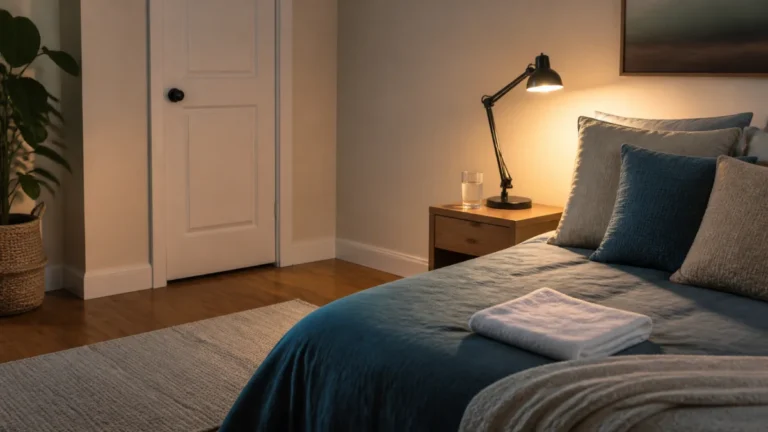
A comfortable space for finger play is private enough for the people involved, supports the positions they actually want, keeps agreed supplies within reach, and makes it easy to pause or change course. It does not need to look perfect. The useful question is whether everyone can settle in, speak freely, and adjust the room without pressure.
Comfort is personal. One person may prefer a brighter lamp and quiet; another may want softer light or background sound. Treat privacy, temperature, lighting, pillows, and supplies as choices to discuss, not as a universal recipe for relaxation or pleasure.
How to set up a comfortable space for finger play
- Ask what privacy means today. Consider doors, housemates, children, pets, calls, and other interruptions.
- Agree on light and sound. Make both easy to change rather than assuming dim and quiet is always best.
- Arrange stable support. Place pillows, a folded towel, or a firm surface where they can help without slipping or crowding the space.
- Gather only planned supplies. Put useful items within reach and leave unrelated clutter elsewhere.
- Choose a simple pause signal. A word such as “pause” or “hold on” should lead to an immediate stop and check-in.
This setup stays deliberately separate from technique. Readers seeking broader definitions can visit Callimis’s broader finger-play overview, but the present guide does not repeat that older page’s medical or product claims.
Start with privacy, not a perfect room
Privacy can mean closing a door, choosing a time without expected visitors, moving a pet out of the room, or agreeing that phones will be face down but still reachable for emergencies. A lock may help some adults relax and make others uncomfortable. Ask rather than treating any one arrangement as the correct one.
Also decide what will happen if someone knocks, a phone rings, or either person wants a break. A short plan keeps an interruption from becoming a test of commitment. Anyone can stop, get dressed, change rooms, or end the activity without needing to justify the choice.
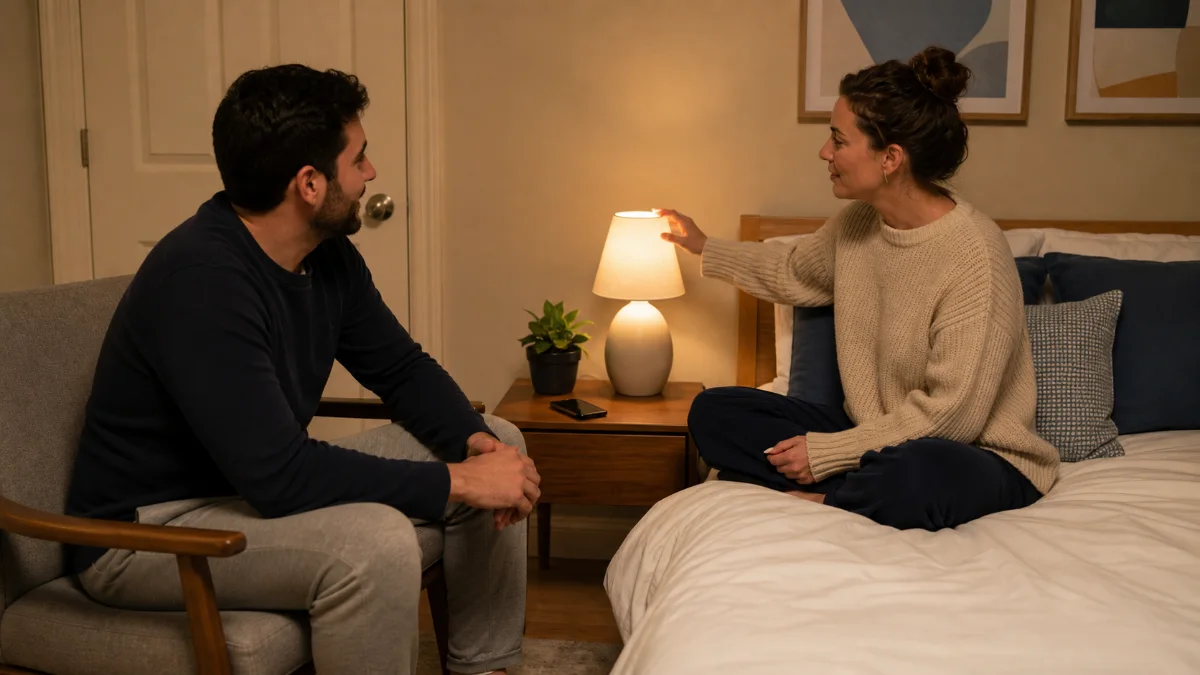
Choose adjustable lighting and limit interruptions
Use enough light for everyone to stay oriented and see what they need to see. That might be daylight, a bedside lamp, or an overhead light. If someone prefers dimmer light, keep the control nearby so the room can become brighter without fumbling or leaving the space.
Sound is another preference, not a requirement. Music may help cover household noise, but it should not be so loud that a check-in is hard to hear. Silence is equally valid. Set the volume together and keep the control accessible.
Support the body before the activity begins
Before starting, notice where backs, hips, shoulders, wrists, and knees will rest. Add or remove pillows while there is no urgency. A pillow that feels supportive for one person may feel too high, too soft, or too restrictive for another, so test the arrangement briefly and adjust it.
Choose a stable surface with enough room to move deliberately. Clear hard objects, jewelry, chargers, cups, and anything else that could press, spill, or become tangled in bedding. This is ordinary organization, not a promise that discomfort cannot occur.
Keep a short supply list within reach
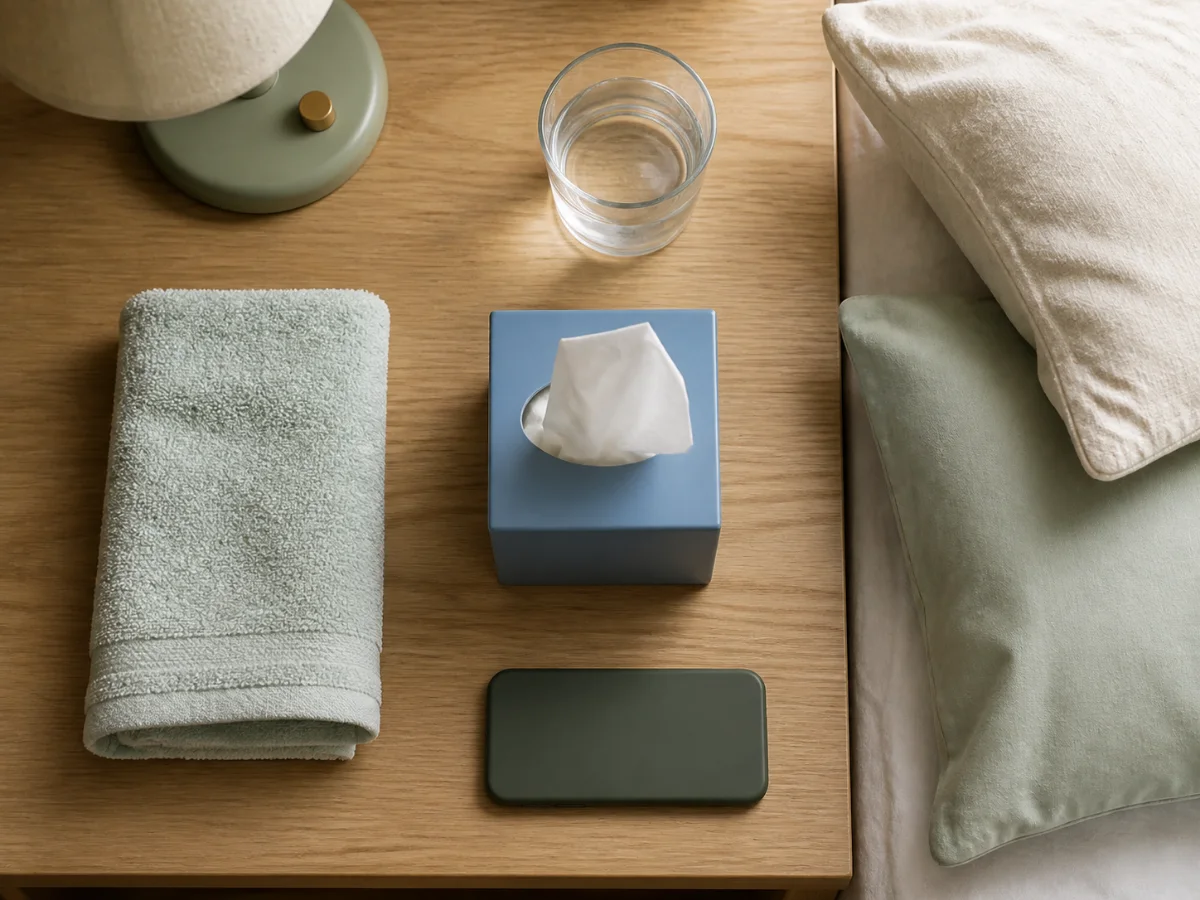
- A clean, dry towel for the agreed purpose.
- Drinking water in a stable container away from electronics.
- Tissues and a small wastebasket if they are likely to be useful.
- Any lubricant or barrier that everyone has already agreed to use, with its current label and directions available.
- Extra pillows or a folded blanket for support.
- A phone for emergencies, set to reduce ordinary notifications if everyone prefers.
Wash and fully dry hands as part of preparation. The CDC’s five handwashing steps use clean running water and soap, lather the backs of the hands, between the fingers, and under the nails, scrub for at least 20 seconds, rinse, and dry with a clean towel or air dryer. Handwashing is a general hygiene step; it does not sterilize hands or guarantee that every health risk is gone.
If finger condoms are part of the plan, discuss whether both people want them before the moment and keep only verified, appropriately stored supplies nearby. Callimis has an existing finger-condom comfort overview, but its older medical, material, sizing, and performance statements require separate verification and are not evidence for this article.
Make the room easy to pause and reset
A good setup should be easy to change. If a wrist becomes tired, a pillow shifts, the room feels too warm, or someone simply wants something different, stop and reset. Move support, change the light, take a drink, use the bathroom, or end the activity. A pause is information, not a failure.
- Stop movement and give the concern full attention.
- Ask one simple question: “What would feel better right now?”
- Change one part of the setup at a time.
- Confirm that everyone still wants to continue before restarting.

Check in before and during finger play
Before starting, ask specific questions: “Would you like more light?” “Is this pillow helpful?” “Do you want the door locked?” and “What word should we use to pause?” Planned Parenthood’s sexual communication guidance emphasizes discussing likes, dislikes, and boundaries because partners cannot automatically know one another’s preferences.
Keep the conversation available after the first yes. RAINN’s consent guidance describes consent as clear, voluntary, and ongoing, and says people can change their minds. A room can look calm while someone feels uncertain, so pay attention to words and behavior and stop if anything seems off.
For a related Callimis discussion, see talking about intimate hygiene with a partner. Use that page only for general conversation context; this draft does not adopt its unverified product or health claims.
When discomfort is more than a setup issue
Changing a pillow or light cannot explain or solve every kind of pain. Stop rather than testing whether pain will pass. ACOG’s guidance on painful sex advises seeing an ob-gyn or other health professional for frequent or severe pain during sex. Seek individualized care for symptoms or concerns that are not resolved by stopping and changing the setup.
Frequently asked questions
Does the room need to be dark?
No. Use the amount of light everyone prefers while keeping controls easy to reach. Darkness is not automatically more comfortable, private, or intimate.
Do we need special furniture?
No. Focus on a stable surface, enough room, and support that can be adjusted. Ordinary pillows and a folded blanket may be useful if they feel comfortable and stay in place.
What if we disagree about privacy or lighting?
Do not pressure either person to accept a setup that feels wrong. Try a different room, time, light level, or activity, or decide not to continue. An agreed setup matters more than preserving a particular plan.
How much should we prepare?
Prepare enough to avoid obvious interruptions, then stop. An elaborate arrangement can become another source of pressure. Privacy, support, a few agreed supplies, and an easy pause are a practical baseline.
The bottom line
A comfortable space for finger play is flexible: agree on privacy, choose adjustable light and sound, arrange stable support, keep a short list of useful supplies within reach, and make pauses easy. The room should serve the people in it. If a preference changes, change the setup or stop without turning that choice into a problem.